Polymer Cement in Peru: How Seismic Code E.030 and Reconstruction Spending Drive Repair Mortar Demand
Polymer Cement in Peru: How Seismic Code E.030 and Reconstruction Spending Drive Repair Mortar Demand
- Get link
- X
- Other Apps
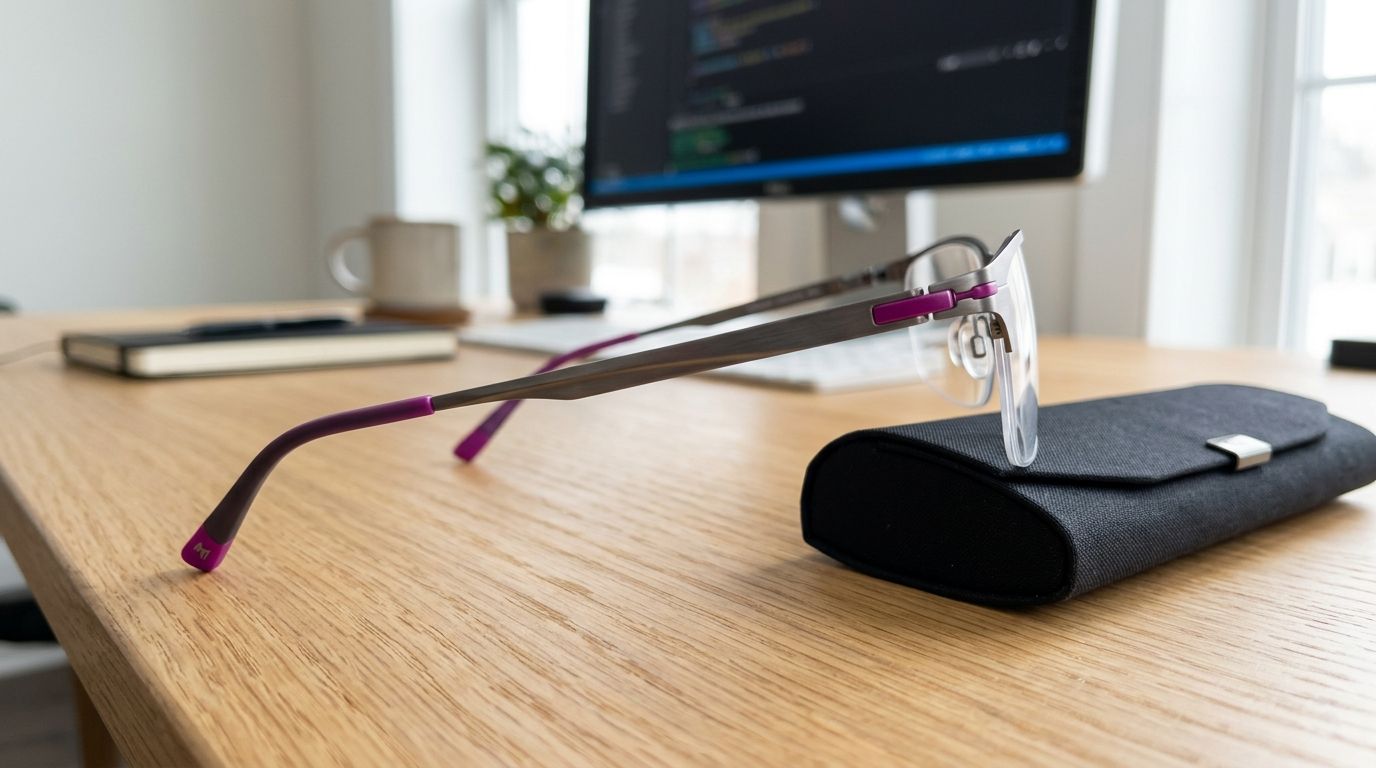
Frames labeled “beta titanium” that weigh more than 13g are very likely a steel alloy imitation — and four documented wholesale fraud tactics in this category make label verification alone insufficient, per HP Glasses. That is one of seven sourcing mistakes that Canadian buyers consistently make when importing Korean titanium eyewear frames (HS 9003.19), a product that enters Canada at 0% duty under CKFTA yet regularly generates costly returns, customs holds, and quality disputes. This guide covers each mistake with the specific field tests, document requests, and regulatory checkpoints that determine whether a first bulk order succeeds.
The good news is that none of these seven failures require specialized expertise to prevent. Each one is discoverable in the pre-production stage — before any significant financial commitment is made. The field tests are physical. The document requests are standard supplier deliverables. The regulatory requirements are published and specific. What creates the pattern of repeat losses is simply not knowing where the gaps are until after a shipment has arrived.
The most expensive mistake in this product category is treating a “PURE TITANIUM” stamp as sufficient evidence of material authenticity. Per HP Glasses, documented wholesale fraud tactics include etching titanium claims on cheap alloys, using shared production molds with customized plating to impersonate different suppliers, assembling frames from multiple cheaper-alloy components, and de-magnetizing steel to mimic the paramagnetic property that buyers use as a quick test. These tactics make label-based verification structurally unreliable.
Warning: 4 Common Titanium Frame Fraud Tactics in Wholesale Channels
Warning: 4 Common Titanium Frame Fraud Tactics in Wholesale Channels
Per HP Glasses: (1) Etching 'PURE TITANIUM' on cheap alloys. (2) Using shared molds across manufacturers with customized plating to pass as different suppliers. (3) Mixing frame components from multiple cheaper-alloy suppliers. (4) De-magnetizing steel to mimic titanium's paramagnetic property. Label verification alone is not sufficient — field testing is required before any bulk commitment.
A quick weight check provides the first filter: genuine titanium frames excluding lenses should weigh under 10g. Frames heavier than 13g that are not classified as oversized designs are very likely a steel alloy imitation, per HP Glasses. Use a precision scale accurate to 0.01g and compare bilateral balance between the left and right temples. The three field tests below confirm what the weight check suggests.
3-Step Field Test: Is This Frame Genuine Beta Titanium?
Step 1 — Magnet test: hold a standard magnet firmly against the frame body
Canada’s marking rules carry penalties that many first-time optical importers discover only after a customs hold. Under CBSA Memorandum D11-3-1, imported goods must display the country of origin — “Made in Korea” — clearly and legibly in English or French. The marking must be permanent enough to remain visible during normal handling until the product reaches the final purchaser, per CBSA.
Civil and criminal penalties apply for non-compliance. This requirement applies to both the frames themselves and the packaging. Shipments missing the required marking can be detained at the port of entry. Confirm CBSA-compliant marking protocols with your Korean supplier before production begins — CE marking and ISO certifications address performance, not Canadian customs labeling requirements.
CE marking and ISO 12870 compliance are legitimate quality signals that Canadian commercial buyers and opticians reference. But they are not substitutes for Canadian regulatory compliance.
Canada does not have a pre-market certification system for spectacle frames equivalent to the EU’s CE regime. What does apply is the Canada Consumer Product Safety Act (CCPSA), which prohibits products that pose a danger to health or safety, explicitly bans cellulose nitrate frames, and restricts nickel and lead in eyewear, per Health Canada citing CCPSA. Critically: under the CCPSA, importers and brand owners — not overseas manufacturers — bear legal responsibility for product safety. Delegating compliance to the Korean factory is not legally sufficient.
ISO 12870:2024 (Edition 5, published November 2024) is the current global standard for unglazed spectacle frames, covering mechanical performance, hinge robustness, nickel release testing, and biocompatibility, per the Swedish Institute for Standards. Canadian buyers should request evidence of compliance with this current edition. Nickel-free material certificates from the supplier provide direct documentation for Health Canada’s nickel restriction requirements.
The gap between sample quality and bulk shipment quality is well-documented in OEM titanium eyewear sourcing. Per Eyewearbeyond, hinge movement, frame alignment, and welding consistency vary significantly across a production run compared to the approved reference sample. Buyers who accept a bulk shipment based on the reference sample box alone frequently encounter finish inconsistencies, hinge defects, and dimensional deviations.
Seven primary structural failure points in OEM titanium frames have been identified by Eyewearbeyond: bridge area weld quality, endpiece connection integrity, hinge soldering and fastening, nose pad arm welds, rim joints under lens-fitting stress, temple root fatigue from flex cycling, and rimless connector drill-hole stress. Any of these can pass in the sample stage and fail in the production run.
Before accepting any bulk shipment, inspect random samples from 3 to 5 cartons — not just the approved reference box. Check color consistency between left and right temples, bilateral weight balance, hinge opening force, and logo placement alignment. Acceptable dimensional tolerance is ±0.5 to ±1mm across lens width, bridge width, and temple length, per Eyewearglobo. Deviations exceeding 2 to 3mm indicate a production run quality control failure.
Surface finish is not a cosmetic decision in the Canadian optical market — it affects product lifespan under cold-climate temperature cycling and daily handling. The difference between IP plating and conventional electroplating determines how frames hold up over a product lifetime.
IP plating — also called PVD (Physical Vapor Deposition) — operates in a vacuum chamber. Titanium particles are vaporized and deposited via ion bombardment, creating a chemically bonded coating with greater hardness and color stability than conventional methods, per Eyewearglobo. It is RoHS-compliant and produces no hazardous waste.
Conventional electroplating uses chemical baths and creates a less adherent coating that can peel or flake over time, particularly under the thermal stress of Canadian winters and repeated hinge cycling. For frames sold through optical retailers, IP-plated surfaces hold up significantly longer across the product lifetime that Canadian end-users expect. When evaluating suppliers, confirm whether surface finishing is vacuum IP plating or conventional electroplating — the two are not equivalent in durability.
Reputable titanium frame suppliers provide material certificates verifying titanium purity, nickel-free status, and anti-corrosion performance before production begins, per Eyewearglobo. Buyers who skip this step have no documented basis for a warranty dispute if bulk shipment quality fails, and no evidence for Health Canada CCPSA compliance on nickel content.
Two corrosion tests should be requested before bulk production approval: salt spray corrosion testing per ISO 9227 or ASTM B117 for 24 to 72 hours; and artificial sweat resistance testing for 24 to 48 hours, checking for discoloration or coating degradation, per Eyewearglobo. Both should be third-party lab reports — not self-reported by the factory. Titanium frame manufacturing involves 7 core production stages including micro-welding and IP surface finishing, per Eyewearglobo. Third-party lab verification at the point of surface finishing confirms whether the process was executed correctly.
The CBSA 2025 Customs Tariff assigns HS 9003.19 — spectacle frames of materials other than plastics — a Most Favoured Nation (MFN) duty rate of Free (0%). Under the Canada–Korea Free Trade Agreement (CKFTA), the Korea preferential tariff treatment is also Free, per CBSA. Korean-origin titanium eyewear frames enter Canada at 0% import duty.
To claim the KRT preferential rate, importers must present a CKFTA Certificate of Origin at CBSA clearance. Failing to obtain this document before shipment departs Korea is a common administrative oversight — one that can create compliance gaps in CBSA import records even when the duty rate happens to be the same under MFN. CKFTA implementation has driven Korea–Canada bilateral trade from C$8.2 billion in 2015 to C$16.9 billion in 2024, per the Asia Pacific Foundation of Canada. Maintaining proper origin documentation is part of the compliance record that CBSA audits.
The common thread across these seven mistakes is that each is discoverable before a bulk order is committed. The field tests, document requests, and regulatory confirmations below can be completed in the pre-production stage — before financial exposure scales to the full order value.
Canadian Importer Pre-Order Due Diligence Checklist
Under CBSA Memorandum D11-3-1, all imported goods must clearly display country of origin — “Made in Korea” — in English or French. The marking must be sufficiently permanent and visible during normal handling until the product reaches the final purchaser. Civil and criminal penalties apply for non-compliance. Confirm CBSA-compliant frame and packaging marking with your Korean supplier before production begins, not at the point of import.
Canada does not operate a pre-market certification system for spectacle frames equivalent to CE marking. However, under the Canada Consumer Product Safety Act (CCPSA), importers bear legal responsibility for product safety — not manufacturers. Health Canada restricts nickel and lead in eyewear. ISO 12870:2024 compliance documentation and material certificates confirming nickel-free construction are the practical standards Canadian commercial buyers and opticians use for supplier qualification.
The CBSA 2025 Customs Tariff assigns HS 9003.19 a Most Favoured Nation (MFN) duty rate of Free (0%). The Korea preferential tariff treatment under CKFTA is also Free. Korean-origin titanium frames enter Canada at 0% import duty. Importers must present a CKFTA Certificate of Origin at CBSA to claim the KRT preferential rate. GST/HST applies separately at the point of import.
Three field-verifiable tests: (1) Magnet test — real titanium is paramagnetic; a standard magnet shows no firm attraction; steel frames cling. (2) Weld inspection — genuine titanium requires argon arc welding leaving smooth, non-lumpy joints; cheap alloys show uneven marks. (3) Corrosion check — green or copper-colored rust signals non-titanium components, per HP Glasses. Verify weight: genuine titanium frames excluding lenses should weigh under 10g; frames over 13g are very likely a steel imitation.
Per Eyewearbeyond, hinge movement, frame alignment, and welding consistency vary across a production run compared to the approved reference sample. Before accepting any bulk shipment, inspect random samples from 3 to 5 cartons — not just the reference sample box — checking color consistency, bilateral weight balance, hinge opening force, and logo alignment. Acceptable size tolerance is ±0.5 to ±1mm across lens width, bridge, and temple length, per Eyewearglobo.
The regulatory information in this guide is provided for general reference only. Import requirements, tariff classifications, customs marking rules, and Health Canada consumer product safety standards are subject to change. For final compliance decisions, consult a licensed Canadian customs broker or a regulatory specialist experienced with CBSA and Health Canada requirements for imported eyewear. Always confirm current rules directly with CBSA and Health Canada before shipping. This information is not legal advice.
Comments
Post a Comment