Polymer Cement in Peru: How Seismic Code E.030 and Reconstruction Spending Drive Repair Mortar Demand
Polymer Cement in Peru: How Seismic Code E.030 and Reconstruction Spending Drive Repair Mortar Demand
- Get link
- X
- Other Apps
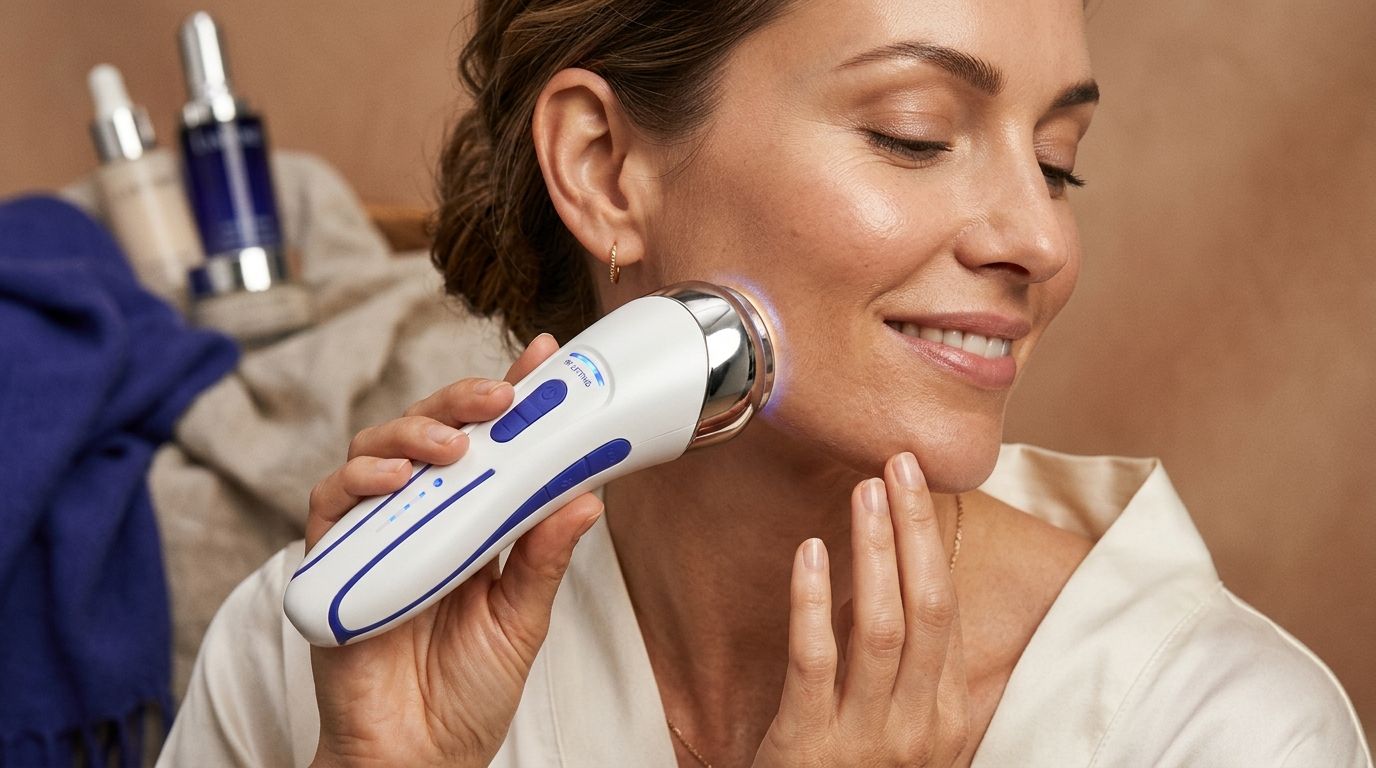
RF lifting wands that claim collagen regeneration qualify as Class B medical devices in Singapore — not cosmetic appliances — and that single misclassification is the root cause of most import compliance failures here. Per Health Sciences Authority (HSA), Singapore, distributing an unregistered Class B device in Singapore is a criminal offence under the Health Products Act, with penalties including product seizure and mandatory recall. These seven mistakes are the specific gaps most importers encounter; avoiding them makes the Abridged registration route (100 working days, ~SGD $2,570 in government fees per HSA) straightforward from the start.
Singapore attracts importers of home aesthetic devices for clear reasons. Per Precision Business Insights, the Singapore skin tightening devices market reached US$3.8 million in 2025 and is projected to reach US$6.7 million by 2032 at a CAGR of 8.5%. Non-invasive procedures hold 88% of that market, and RF technology leads the installed device base with 21 of 44 skin tightening units — ahead of ultrasound at 18 and laser at 5. For a home-use RF device targeting Singapore's tech-forward urban consumers aged 30–55, the demand signal is real.
The problem is not demand. It is Singapore's layered regulatory requirements, which trip up most first-time importers in the same ways. Here are the seven mistakes that delay or block RF device launches in Singapore — and what to do instead.
7 Singapore RF Device Import Mistakes at a Glance
Root cause. Many suppliers classify RF beauty devices as "cosmetic appliances" in factory documentation because it reduces their own compliance requirements. Importers inherit that classification without checking Singapore's specific rules.
Consequence. Per HSA's Regulatory Guideline for Devices for Modification of Appearance or Anatomy, any device that makes energy-based therapeutic claims — such as collagen regeneration, skin lifting, or skin elasticity improvement — is classified as a medical device under Singapore's Health Products Act (Chapter 122D). This applies regardless of how the manufacturer labels the product. Per Health Sciences Authority (HSA), Singapore, cosmetic products can be sold here with no pre-market registration; medical devices classified Class B–D cannot be imported or distributed commercially without a valid HSA registration number. The RF Lifting Wand's feature set — "clinically validated 1MHz RF for collagen regeneration and skin elasticity improvement" — falls in the medical device category by those criteria.
Fix. Use HSA's self-help classification tool at selfhelp.hsa.gov.sg. Enter the exact wording from your device labeling and marketing materials. Confirm your risk class before preparing any other documents. Per HSA, therapeutic RF devices with energy-based claims typically land in Class B (moderate risk), which requires full registration rather than the Class A notification-only path.
Is Your RF Device a Medical Device or a Cosmetic Product in Singapore?
Does your RF device claim to stimulate collagen regeneration, lift skin, or deliver energy-based therapeutic effects?
Root cause. Importers assume that listing the device for pre-order on Shopee or Lazada, or transferring stock to a local fulfillment partner, is acceptable as long as actual orders are fulfilled after registration comes through.
Consequence. It is not acceptable, and it is a criminal offence. Per HSA, commercial distribution of an unregistered Class B medical device in Singapore — including online marketplace listings — violates Section 19 of the Health Products Act. Consequences include product seizure, mandatory recall orders, and criminal penalties for the Registrant. The manufacturer's physical location outside Singapore does not limit enforcement; legal liability attaches to the Singapore Registrant.
Fix. No listings, no pre-orders, and no stock transferred to any distributor or retailer until you hold written confirmation from HSA that your registration number is active and your Dealer's Licence is valid.
Selling Before Registration Is a Criminal Offence
Selling Before Registration Is a Criminal Offence
Under Singapore's Health Products Act, distributing an unregistered Class B medical device — including listing it on Shopee or Lazada — violates Section 19 of the Act. Consequences include product seizure, mandatory recall orders, and criminal penalties for the Singapore Registrant. 'Pending registration' is not a legal exception. Wait for written confirmation that your HSA registration number is active before making the device available for purchase anywhere in Singapore.
Root cause. Importers see "Dealer's Licence" as the first formal HSA step, and assume warehousing certification can follow in parallel or after approval.
Consequence. Per HSA, the Importer's (Dealer's) Licence for Class B–D medical devices cannot be applied for without a valid Good Distribution Practice for Medical Devices in Singapore (GDPMDS) certificate compliant with SS 620:2016. The application is rejected at intake without it. Per ISOGuru Singapore (citing HSA licensing requirements), GDPMDS covers documentation control, storage conditions, staff training, traceability, complaint handling, and supplier management. SAC-accredited certification bodies include TÜV SÜD PSB and SOCOTEC Certification Singapore.
Fix. Engage a GDPMDS certification body before submitting anything to HSA's licensing desk. Get the SS 620:2016 audit scheduled and the certificate in hand, then apply for the Dealer's Licence. Treat GDPMDS certification as your true first distribution step, not a follow-on task.
Root cause. In the US and EU, manufacturers or authorized representatives engage directly with the regulatory authority. Many Korean and Chinese manufacturers assume Singapore works the same way.
Consequence. Per HSA (cited by Emerhub), foreign manufacturers cannot submit HSA medical device registration applications under any circumstances. Only a Singapore-based Registrant — a local subsidiary, a licensed importer or distributor, or a Singapore-registered regulatory services firm — can file with HSA. The Registrant holds the product licence and carries ongoing legal responsibility for compliance, adverse event reporting via the OSCAR system, and all device change notifications. Per MedDeviceGuide (citing HSA SHARE portal launch), all submissions go through the SHARE portal — Singapore's Health Product Access and Regulatory E-System, which replaced MEDICS in July 2025 — and SHARE access requires CorpPass credentials that only Singapore-registered entities can hold.
Fix. Appoint your Singapore Registrant before preparing any dossier documents. The Registrant must be in place, credentialed, and holding CorpPass access before you can take any formal step with HSA.
Root cause. A device with CE certification from a European Notified Body and FCC certification looks like it carries strong international coverage. Importers target the Immediate Class B Registration (IBR) route and are surprised when their application does not qualify.
Consequence. Per HSA, IBR requires either: (a) approval from at least one of HSA's five recognized reference agencies with a minimum three years of documented marketing history in that jurisdiction and no withdrawals or safety issues, or (b) approvals from at least two recognized reference agencies with no safety issues in the past three years. HSA's five recognized reference agencies are US FDA, EU Notified Bodies, Health Canada, Australia TGA, and Japan PMDA. FCC certification is not on that list. CE from a European Notified Body counts as one reference agency approval — but one approval without three years of documented marketing history does not satisfy IBR criteria. Per HSA fees effective July 2024, the IBR government fee is approximately SGD $1,560. The Abridged route, which does accept CE documentation as the dossier foundation, costs approximately SGD $2,570 with a processing time of 100 working days.
Fix. Confirm whether your documented EU marketing history reaches three years before targeting IBR. If it does, combine CE with that history (no withdrawals or safety issues) to qualify. If it does not, use the Abridged route: it accepts your CE technical file as the primary submission basis and is the realistic choice for most first-time Singapore entrants.
IBR vs Abridged Route for CE-Certified RF Devices
| Immediate Route (IBR) | Abridged Route | |
|---|---|---|
| CE Mark | Required + 3-yr EU history (or 2nd agency) | Sufficient as dossier foundation |
| Government Fee | ~SGD $1,560 | ~SGD $2,570 |
| Processing Time | Immediate on submission | ~100 working days |
| FCC Counts? | No — not an HSA reference agency | No — not an HSA reference agency |
| Best fit for | CE + TGA, or CE + confirmed 3-yr EU history | CE-only first-time Singapore entry |
Root cause. Freight forwarders and customs brokers who handle consumer electronics often flag the SAFETY Mark from Enterprise Singapore as a requirement for any powered electrical product. The RF Lifting Wand runs on a rechargeable battery — the assumption follows.
Consequence. Wasted time and budget spent on certification that carries no regulatory benefit for this product. Per the Consumer Product Safety Office (CPSO), Enterprise Singapore, RF home aesthetic devices are not included in the 33 categories of Controlled Goods under the Consumer Protection (Safety Requirements) Regulations (CPSR). The SAFETY Mark requirement covers household electrical appliances such as air conditioners, clothes irons, and rice cookers — not aesthetic medical devices. Pursuing it delays your launch without meeting any Singapore regulatory obligation.
Fix. Remove SAFETY Mark from your Singapore compliance checklist for the RF Lifting Wand. Your obligations are met through HSA medical device registration, GDPMDS certification, the Dealer's Licence, and IMDA ESER registration.
Root cause. The Bluetooth radio is embedded inside the device. Importers assume it is automatically covered under the HSA medical device registration, which does not address telecommunications equipment.
Consequence. Singapore's Infocomm Media Development Authority (IMDA) regulates radio frequency equipment separately from HSA. Per IMDA, Bluetooth short-range devices fall under the Enhanced Simplified Equipment Registration (ESER) scheme. A product with an unregistered Bluetooth module is non-compliant with IMDA regulations — a separate gap that HSA registration does not cure. Per IMDA, the dealer must also hold a Telecommunication Dealer's Licence before filing the ESER application.
Fix. Add IMDA ESER registration to your compliance checklist as a parallel track alongside HSA registration. Per IMDA, ESER is a zero-cost self-declaration pathway with a typical turnaround of 1–2 weeks. This is the lowest-effort compliance item in the entire Singapore entry process — and the one most consistently missed by importers focused solely on HSA.
Avoiding these seven mistakes places you in the correct order:
Per HSA, annual post-registration obligations include device retention fees (SGD $39–$134 per device per year), adverse event reporting via OSCAR, and notifications for any device changes. Per MedDeviceGuide (citing the HSA–MDA pilot program), from March 2026 Singapore's HSA registration also opens an expedited review pathway in Malaysia through the HSA–MDA regulatory reliance pilot — making Singapore a strong anchor for a broader ASEAN distribution strategy.
Last updated: 2026-06. This information is provided for reference purposes only. Singapore's regulatory classification of RF aesthetic devices, HSA registration fees, processing timelines, IMDA requirements, and licensing conditions are subject to change and depend on your specific device's intended-use claims, labeling language, and technical specifications. Always confirm current requirements with the Health Sciences Authority, an SAC-accredited GDPMDS certification body, IMDA, and a Singapore-licensed Regulatory Affairs Consultant before submitting any registration application.
Comments
Post a Comment