Polymer Cement in Peru: How Seismic Code E.030 and Reconstruction Spending Drive Repair Mortar Demand
Polymer Cement in Peru: How Seismic Code E.030 and Reconstruction Spending Drive Repair Mortar Demand
- Get link
- X
- Other Apps
France Market Entry · Medical Devices
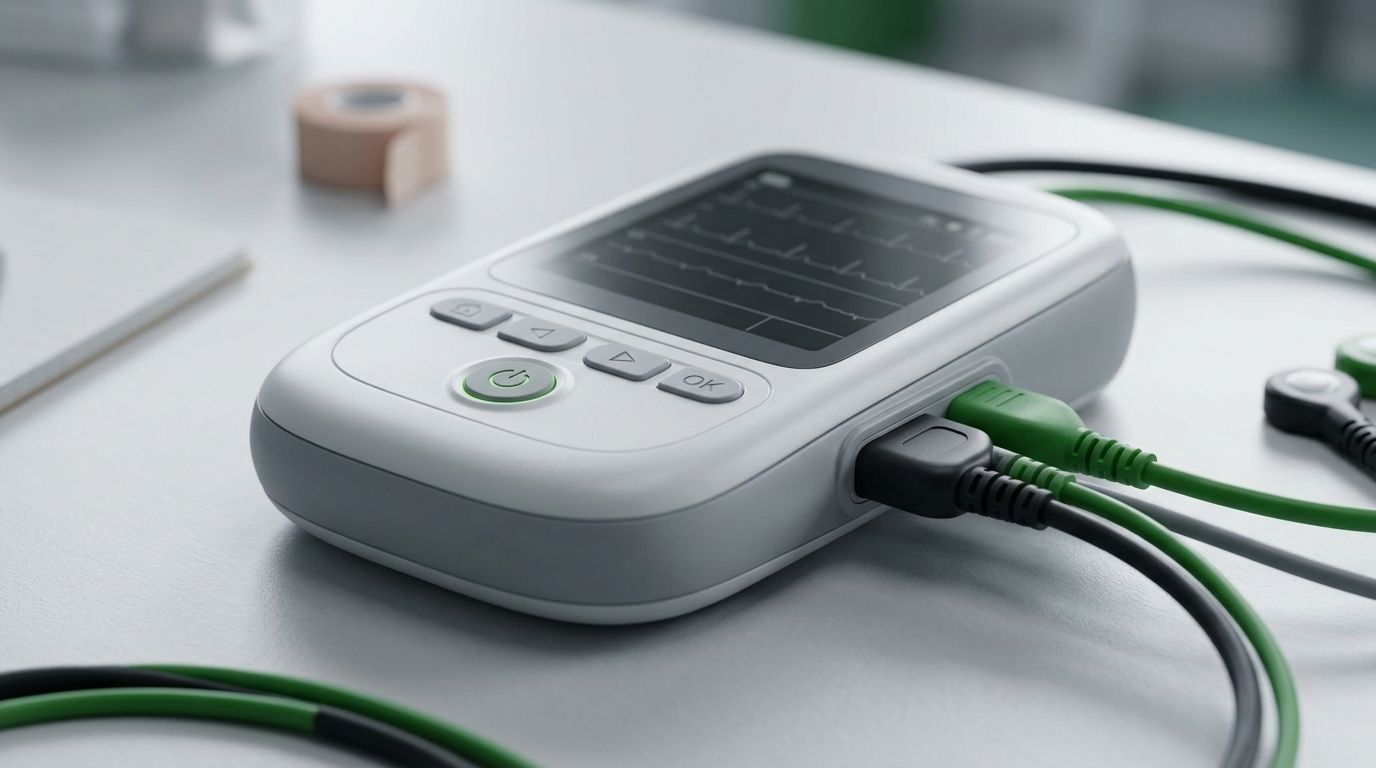
French importers bringing a portable ECG monitor from a Korean manufacturer must clear five distinct compliance layers before their first commercial sale — CE MDR certification via a Notified Body, EUDAMED Actor registration (mandatory from 28 May 2026), an EU Authorized Representative appointment, a France-specific materiovigilance correspondent, and French-language labeling under Loi Toubon. Korean-origin devices enter France duty-free at 0% under the EU–South Korea Free Trade Agreement, but the documentation trail from factory to customs clearance must be built in the right sequence or shipments will be held at the border.
Many importers discover this the hard way: a Korean supplier's valid CE MDR certificate is a prerequisite, not a destination. CE marking proves the manufacturer has met conformity requirements. It does not automatically satisfy four additional layers of obligation that sit specifically on the French importer.
Under EU MDR 2017/745 Article 13, the French importer must verify CE marking before releasing the device, confirm EUDAMED registration, add importer contact details to packaging, and maintain complaint records for 10 years. On top of these EU-wide obligations, France requires a registered materiovigilance correspondent with ANSM — a requirement that does not exist in most other EU member states. And Loi Toubon makes French-language labeling a legal obligation with financial penalties attached.
None of these obligations belong to your Korean supplier. They belong to you. The earlier you build the documentation trail, the shorter your path to first commercial sale.
7 Steps: Korean Supplier to French Commercial Sale
Confirm Class IIa Classification
Single-lead ECG with arrhythmia detection software = Class IIa under EU MDR 2017/745 Annex VIII Rule 10. Notified Body is required — self-declaration not permitted.
Engage a Notified Body for CE MDR
Supplier prepares EN ISO 13485 QMS, technical file (Annexes II–III), and clinical evaluation (Annex XIV). Budget €20,000–€65,000 and 6–12 months.
Appoint an EU Authorized Representative
Korean manufacturer designates an EU-established EU-AR per MDR Article 11 before CE mark is valid. The EU-AR is the ANSM contact point — not the importer.
EUDAMED Actor + Device Registration
Importer registers as Actor (gets SRN). Manufacturer registers device with UDI. Both must be complete before any device is placed on the French market.
ANSM Materiovigilance Correspondent
Designate and register a materiovigilance correspondent with ANSM. France-specific obligation with no EU MDR equivalent. Processing: 2–4 weeks. Fee: none.
Translate All Labeling and IFU to French
All device text, packaging, and Instructions for Use must be in French under Loi Toubon. Fines up to €150,000 for non-compliance.
Clear French Customs — Claim 0% Tariff
File DELTA customs declaration with EORI, CE Declaration of Conformity, and EUR.1 or supplier's declaration to claim 0% EU–Korea FTA preferential tariff.
A portable ECG monitor that captures a single-lead reading and uses software to detect atrial fibrillation, tachycardia, or bradycardia is classified as Class IIa under EU MDR 2017/745 Annex VIII, Rule 10. This classification requires Notified Body involvement — self-declaration is not permitted for Class IIa or above.
If your supplier claims the device is Class I to avoid Notified Body costs, request their classification rationale from the technical file. A device with automated arrhythmia detection software is a diagnostic medical device under MDR. Misclassification discovered at customs or by ANSM triggers immediate product hold and potential recall.
For a Class IIa portable ECG monitor, the Korean manufacturer must:
According to MedDeviceGuide, this process costs between €20,000 and €65,000 and takes 6–12 months from initial Notified Body engagement to certificate issuance. If your supplier already holds a CE MDR certificate, verify the certificate scope covers the exact model, firmware version, and Bluetooth connectivity you plan to import. Post-Market Clinical Follow-up (PMCF) studies and Periodic Safety Update Reports (PSURs) are ongoing obligations for Class IIa devices after market entry, per RegDesk.
Non-EU manufacturers must designate an EU Authorized Representative (EU-AR) established in an EU member state before the CE mark is legally valid for EU market placement, per EU MDR Article 11. This is the manufacturer's obligation, not the importer's — but verifying it is in place is your responsibility before signing a supply agreement.
The EU-AR acts as the point of contact for ANSM and other national competent authorities. Without a valid EU-AR, the CE mark is non-compliant, and placing the device on the French market exposes the importer to regulatory action.
EUDAMED Is Now Mandatory — No Exceptions
EUDAMED Mandatory From 28 May 2026
Under Commission Implementing Decision (EU) 2025/2371, four EUDAMED modules became mandatory on 28 May 2026: Actor registration, UDI/Device registration, Notified Body certificates, and Market Surveillance. The French importer must obtain a Single Registration Number (SRN) as an Actor before placing any new device on the market — this applies to you, not only to the Korean manufacturer. Devices already on the EU market before 28 May 2026 must complete EUDAMED registration by 28 November 2026.
EUDAMED registration creates two separate obligations for the French importer:
Actor registration (your obligation): Before placing any device on the French market, the French importer must register in EUDAMED as an Economic Operator — what the regulation calls an "Actor" — and receive a Single Registration Number (SRN). This obligation applies to you directly, not only to the Korean manufacturer, per Obelis. Registration is free and processed through the EUDAMED portal at eudamed.ec.europa.eu.
Device verification (your obligation): Before releasing any shipment, confirm the device and its UDI (Unique Device Identifier) are registered in EUDAMED. Request confirmation from the Korean supplier or EU-AR. Placing an unregistered device on the French market is a direct MDR violation from 28 May 2026.
According to MedDeviceGuide, ANSM has confirmed that completing EUDAMED Actor and Device registration simultaneously satisfies the French national notification requirement — one registration process covers both EU-level and French national obligations. There is no separate French national registration for most Class IIa devices.
French Importer Obligations — EU MDR Article 13
France imposes one significant obligation that most other EU markets do not: the materiovigilance correspondent. Before any medical device can be placed on the French market, the importer must designate a materiovigilance correspondent and register this person with ANSM, per MedEnvoy Global.
The materiovigilance correspondent is responsible for receiving, investigating, and reporting serious incidents involving the device to ANSM. This person can be an employee of the importing company or an external qualified consultant. ANSM does not charge a registration fee, and a complete submission is typically processed in 2–4 weeks, per MedDeviceGuide.
ANSM (Agence nationale de sécurité du médicament et des produits de santé) is France's national competent authority for medical devices, responsible for market surveillance, vigilance reporting, and enforcement of EU MDR requirements at the national level, per RegDesk. Any importer who skips the materiovigilance correspondent registration is exposed to French enforcement action even if all EU MDR requirements are fully met.
France's Loi Toubon (Law No. 94-665 of 4 August 1994) requires that all medical device labeling, Instructions for Use (IFU), and patient safety information be provided in French. This applies to the device itself, all packaging layers, and every accompanying document, per MedDeviceGuide.
Penalties for non-compliance are substantial: administrative fines up to €150,000 and mandatory product withdrawal from the French market. Even a bilingual Korean/English label — standard for devices certified under FDA 510(k) and CE MDR — is not sufficient for France without a French version.
Plan French labeling translation during the CE certification process, not after. The IFU referenced in the technical file must align with the French-language version supplied to customers. Late-stage label changes can trigger Notified Body review and delay certification.
Standard import documentation for a portable ECG monitor entering France includes:
The EORI number is free and issued within 24–48 hours via pro.douane.gouv.fr. All French customs declarations are filed electronically through the DELTA system, per Hayot Expertise.
Crucially, Korean-origin portable ECG monitors qualify for a 0% preferential import tariff under the EU–South Korea Free Trade Agreement, which eliminates duties on 98.7% of traded goods and has been in force since December 2015, per EUR-Lex. To claim the preferential rate at French customs, the importer must present either a EUR.1 movement certificate issued by Korean customs before export, or a supplier's declaration on the commercial invoice confirming Korean origin. Without this document, standard EU import duties apply automatically — your customs broker cannot claim the preferential rate retroactively without the origin proof.
If your Korean supplier already holds a valid CE MDR certificate for the exact device model you plan to import, the critical path for a French importer runs approximately 3–5 months:
If CE MDR certification is not yet in place, add 6–12 months for the Notified Body process before these steps can begin. Notified Body capacity in Europe is limited and appointment lead times have extended in recent years — engage early.
For importers aiming at the French public hospital segment, the LPPR reimbursement pathway (CNEDiMTS evaluation followed by CEPS price negotiation) adds a further 12–18 months, per MedDeviceGuide, but this is optional for initial market entry through private distribution.
Bringing a portable ECG monitor from a Korean supplier to the French market is a structured process, not a guessing game. The Europe Cardiac Monitoring Market reached USD 7.91 billion in 2025 and is growing at 7.16% CAGR through 2031, with ECG devices holding a 40.1% market share and home-care the fastest-growing segment at 8.11%, per Mordor Intelligence. France is an active participant in that growth. Importers who build their compliance documentation correctly from the start reach the market in 3–5 months; those who skip steps often spend months resolving holds after the fact.
This guide is for informational and reference purposes only. Regulatory requirements — including EU MDR, EUDAMED timelines, ANSM procedures, and customs tariff rates — are subject to change. Always confirm current requirements directly with ANSM, the European Commission's EUDAMED portal, your Notified Body, and a qualified French regulatory consultant before first market placement. This content does not constitute legal or regulatory advice.
No. CE MDR certification is a prerequisite, not a market authorization. As the French importer, you must independently complete EUDAMED Actor registration, verify the device is registered in EUDAMED, add importer contact details to packaging, designate a materiovigilance correspondent with ANSM, and confirm all labeling is in French. These obligations rest on you regardless of the supplier's CE MDR status.
Both. From 28 May 2026, the French importer must register in EUDAMED as an Actor and obtain a Single Registration Number (SRN) before placing any device on the market, per Obelis. The Korean manufacturer separately registers the device and UDI. Both registrations must be in place — neither substitutes for the other.
All device labeling, packaging text, and Instructions for Use must be in French under Loi Toubon, per MedDeviceGuide. This includes every word on the device and its packaging — not just the IFU document. Administrative fines reach up to €150,000, and ANSM can require mandatory product withdrawal from the French market for non-compliant labeling.
A materiovigilance correspondent is the person designated by the French importer to receive, investigate, and report serious device incidents to ANSM. This is a France-specific legal requirement with no EU MDR equivalent. You designate the person in writing and submit the registration to ANSM. Processing takes 2–4 weeks and carries no fee, per MedDeviceGuide. The correspondent can be an employee or a qualified external consultant.
At the time of export, ask your Korean supplier to obtain a EUR.1 movement certificate from Korean customs, or include a supplier's declaration on the commercial invoice confirming that the goods originate in the Republic of Korea. Present this document with your DELTA customs declaration in France. Without origin proof, French customs will apply standard EU import tariffs automatically, per EUR-Lex.
Comments
Post a Comment