Polymer Cement in Peru: How Seismic Code E.030 and Reconstruction Spending Drive Repair Mortar Demand
Polymer Cement in Peru: How Seismic Code E.030 and Reconstruction Spending Drive Repair Mortar Demand
- Get link
- X
- Other Apps
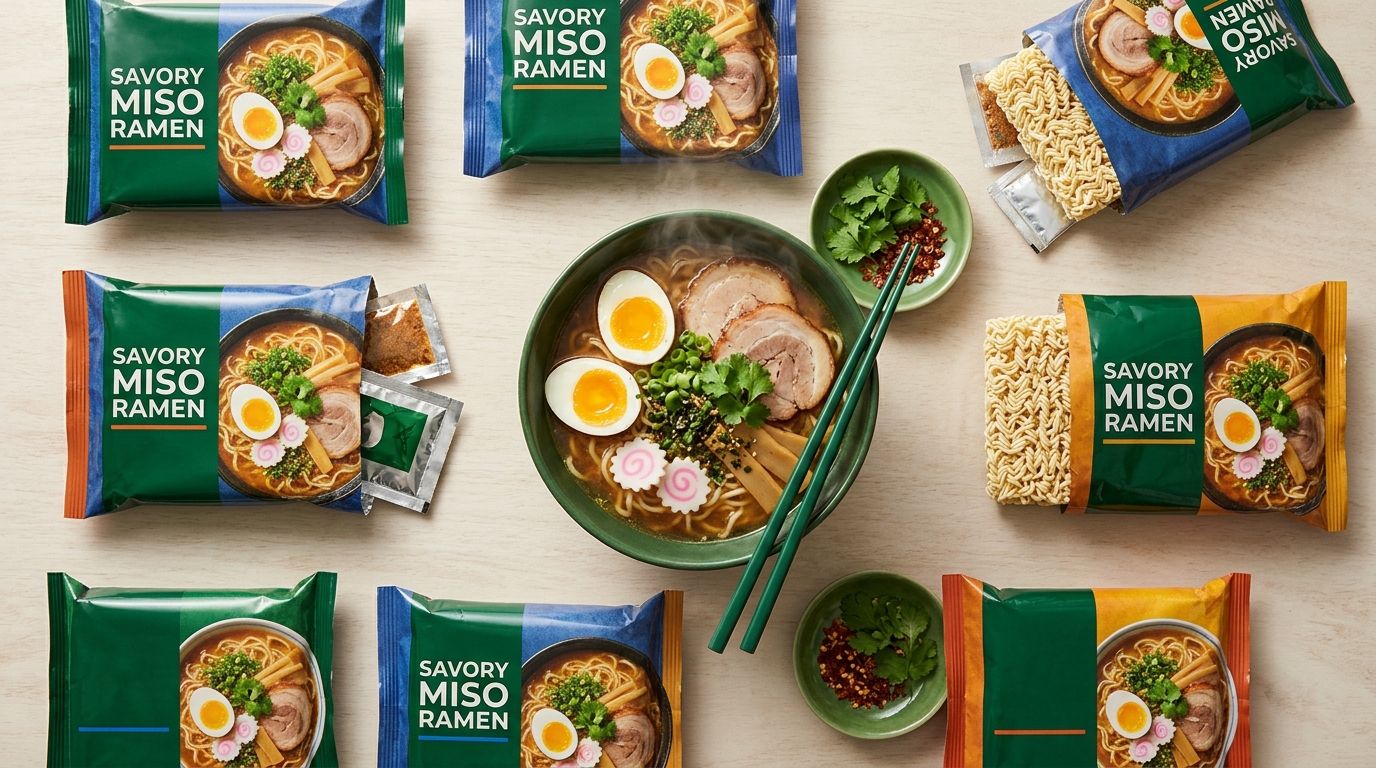
To legally import Korean instant ramen into Thailand, every importer must obtain a Form Orr. 7 license from the Thai FDA and register each product for a food serial number — skip either step and Customs will hold the container at Laem Chabang port until paperwork clears. Per Baker McKenzie, the import license takes about seven working days, but product serial number registration is a separate, longer step. This guide covers the TFDA certification path, Thai-language label rules updated in 2024, the 2025 azodicarbonamide removal, and how AKFTA can reduce import duty costs.
Thailand's Food Act B.E. 2522 (1979), Section 15, makes it a criminal offence to import food for sale without a license, per the Thai Food and Drug Administration (Thai FDA / TFDA). This law covers all commercial food imports — there are no exceptions for small trial shipments or first-time importers.
To understand what this means for instant ramen, you need to know how Thai FDA classifies food. Per the Thai FDA, the Food Act places all food into four categories:
Instant ramen falls under Category 3 (Food with Labeling Requirements). Per the Thai FDA, all products in Categories 1, 2, and 3 must have a food serial number beginning with "U1" — obtained through the Food e-Submission System — before they can be legally imported for sale.
What happens if a shipment arrives without this number? Per Carra Globe's importer-of-record guide on Thailand, TFDA agency review at the port of entry takes 3 to 10 business days depending on product class and document completeness. Customs will not release the cargo until that review is complete. For sea freight arriving at Laem Chabang — Thailand's main deep-sea container gateway, per Carra Globe — that means your shipment waits at port while paperwork catches up.
How to Apply for Form Orr. 7 — Step by Step
Establish a Thai Legal Entity
Form Orr. 7 must be held by a Thai-registered company. Ensure commercial registration and a Thai business address are in place before applying.
Prepare Required Documents
Gather commercial invoice, packing list, bill of lading, and food production system standards certificate (GMP, ISO 22000, or HACCP) from the Korean manufacturer.
Submit via Food e-Submission System
Log in at accounts.egov.go.th using Open ID. The system is in Thai — local regulatory assistance is recommended for non-Thai-speaking applicants.
TFDA Review
Thai FDA reviews the complete application. Processing takes approximately seven working days for Form Orr. 7, per Baker McKenzie.
Receive License and Food Serial Number
Upon approval, Form Orr. 7 is issued and a U1-prefix food serial number is assigned to each registered product.
Proceed with Shipment
With Form Orr. 7 and the food serial number confirmed, the shipment can depart Korea and proceed through Thai Customs at Laem Chabang.
Form Orr. 7 is officially titled the "License for Importation or Ordering of Food into the Kingdom," per the Thai FDA. It is the document your Thai importer entity must hold before the first ramen shipment can legally enter Thailand.
Who can hold this license?
Per the Thai FDA, the licensee must:
This means the license must be held by a Thai-registered company — either a Thai importer of record or a Thai subsidiary of the Korean exporter. A Korean manufacturer cannot hold Form Orr. 7 directly.
How to apply:
Applications go through Thailand's Food e-Submission System, authenticated via Open ID at accounts.egov.go.th, per Artixio citing the Thai FDA e-Submission System. The platform interface and most documents are in Thai, so most foreign exporters work with a local regulatory agent or Thai importer of record to handle the submission.
Required documents for processed food imports, per the U.S. International Trade Administration, include: commercial invoice, packing list, bill of lading, and a food production system standards certificate — GMP, ISO 22000, or HACCP — from the Korean manufacturing facility.
One useful update from November 2024: per ChemLinked citing the Thai FDA Notification of November 27, 2024, accreditation certificates that can be verified online through an IAF-member body's database no longer require a physical certified copy. If your Korean factory's GMP or HACCP certificate is in a recognized online database, an electronic copy is now accepted.
Processing time: Per Baker McKenzie's Asia Pacific Food Law Guide on Thailand, a complete Form Orr. 7 application takes approximately seven working days to process. Incomplete submissions restart that clock. The license is valid for three years and must then be renewed, per the Thai FDA.
Thai Label Mandatory Elements for Imported Instant Ramen (MOPH Notification No. 450)
Per Tilleke & Gibbins citing MOPH Notification No. 450 B.E. 2567 (2024), effective July 19, 2024, all prepackaged consumer food sold in Thailand must carry a Thai-language label. For instant ramen importers, these elements are mandatory:
Products labeled before July 19, 2024, may continue to be sold through existing stock until July 18, 2026, per Tilleke & Gibbins. New production destined for Thailand should comply with Notification No. 450 before the shipment departs Korea.
On sticker labeling: Thai regulation does not prohibit using a sticker to add the Thai-language label, but the sticker must be applied before Thai Customs releases the goods. Common approaches include stickering at a bonded warehouse near Laem Chabang, or printing Thai labels at the Korean factory before export.
Per ChemLinked citing MOPH Notification No. 468 B.E. 2568 (2025), effective December 12, 2025, Thailand replaced its food additive regulation with a revised framework aligned with Codex Alimentarius and JECFA safety reviews.
The change that directly affects instant ramen: azodicarbonamide has been removed from Thailand's permitted food additives list. This compound is a flour improver and bleaching agent found in some processed wheat noodle products. Under Notification No. 468, products containing azodicarbonamide cannot be registered for a Thai food serial number, and any existing shipments entering Thailand after the grace period ends must also be free of this compound.
A two-year grace period applies for products that were already compliant with the superseded MOPH Notification No. 444 (2023), per ChemLinked. New registrations and shipments entering Thailand from December 12, 2025, must meet Notification No. 468 requirements.
Practical step before registration: Request a full ingredient specification sheet from your Korean ramen manufacturer. If azodicarbonamide appears in the noodle block or in any seasoning component, ask for written confirmation of its removal or identify a compliant product variant before filing for a food serial number.
Per BusinessKorea, South Korean ramen exports to Thailand reached approximately USD 30.07 million, placing Thailand among the top markets for Korean instant noodles in 2024. For importers managing costs, the ASEAN-Korea Free Trade Agreement (AKFTA) can meaningfully reduce import duties.
Per the AKFTA Secretariat, AKFTA eliminates tariffs on approximately 80% of goods traded between South Korea and ASEAN member states, including Thailand. Normal Track tariff eliminations were complete by 2012; Sensitive Track reductions phased out by 2020.
To claim an AKFTA preferential duty rate on instant ramen (HS code 1902.30), your shipment needs:
Most Korean ramen manufactured entirely in Korea with Korean ingredients will meet the 40% RVC threshold. However, the exact preferential tariff rate for HS 1902.30 should be confirmed with a Thai customs broker or Thailand's Department of Foreign Trade before relying on it in your cost models — specific rates are not available through publicly accessible static sources.
Last updated: 2026-06. This information is provided for reference purposes only. Food and drug regulations in Thailand change. Thailand's food import licensing requirements, labeling rules, permitted additives, and applicable tariff rates are subject to revision and depend on your specific product's formulation, classification, and shipment details. Verify your product's current compliance status directly with the Thai FDA at en.fda.moph.go.th or consult a qualified Thai regulatory affairs specialist before exporting.
Comments
Post a Comment