Polymer Cement in Peru: How Seismic Code E.030 and Reconstruction Spending Drive Repair Mortar Demand
Polymer Cement in Peru: How Seismic Code E.030 and Reconstruction Spending Drive Repair Mortar Demand
- Get link
- X
- Other Apps
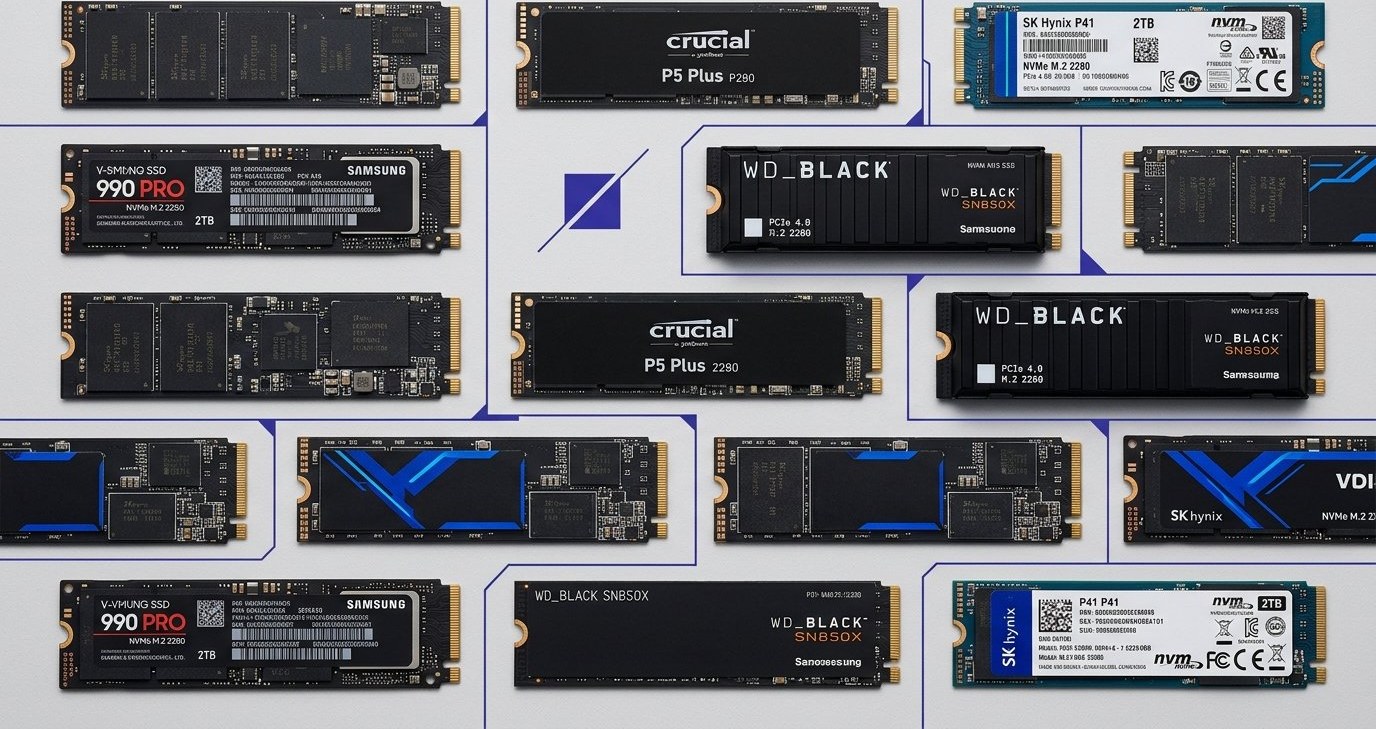
Importing solid-state drives into Canada carries a 0% duty rate under HS 8523.51 — but that tariff advantage does not mean a simple clearance process. Every SSD shipment must satisfy two compliance requirements that regularly catch first-time importers off guard: an ICES-003 Supplier's Declaration of Conformity (SDoC) and a bilingual CAN ICES-003 / NMB-003 label on every unit. Since January 1, 2026, commercial importers must also hold their own Business Number (BN9) and a CARM account, because a customs broker's BN can no longer release or account for your goods at CBSA. This guide walks Canadian distributors and importers through all five compliance steps.
Solid-state drives are classified as information technology equipment (ITE) — specifically, as unintentional radiators. They generate timing signals above 9 kHz through digital circuits used for data storage and processing.
Per ISED Canada (Innovation, Science and Economic Development Canada), ICES-003 Issue 7 — mandatory since October 15, 2021 — is the applicable standard for all ITE including solid-state drives. This is an electromagnetic compatibility (EMC) standard, not a radio licensing regime. SSDs are not radio apparatus and do not require a radio licence or an ISED-issued identification number.
The legal basis comes from Section 4(3) of Canada's Radiocommunication Act (RSC 1985, c. R-2), per the Department of Justice Canada. It prohibits any person from manufacturing, importing, distributing, leasing, offering for sale, or selling interference-causing equipment unless it complies with the applicable technical standards. Compliance with ICES-003 satisfies that prohibition.
ICES-003 SDoC Compliance Path for SSD Importers
Confirm ITE Classification
Verify the SSD has no embedded wireless module — standalone SSDs are unintentional radiators (ITE) under ICES-003, not radio apparatus requiring an ISED licence
Obtain EMC Test Report
Test to CAN/CSA-CISPR 32:17 or ANSI C63.4 at any qualified facility; the two methods cannot be combined within a single evaluation
Issue and Sign the SDoC
Manufacturer, Canadian importer, or distributor may act as the responsible supplier; no government pre-approval or ISED number is assigned
Apply Bilingual Label to Every Unit
CAN ICES-003(A or B) / NMB-003(A or B) — permanent, clearly legible, affixed to each unit
Retain Records
Keep the SDoC and test reports for the full period goods are manufactured, imported, distributed, leased, offered for sale, or sold in Canada
FCC Part 15 Does NOT Cover Canada
A US FCC Part 15 declaration alone does not satisfy Canadian ICES-003 requirements. Canada requires a separate SDoC with a bilingual CAN ICES-003 / NMB-003 label on every unit. Although FCC Part 15B and ICES-003 share the ANSI C63.4 test method, the two compliance packages must be issued independently. Per ComplianceTesting.com, both tests can be done in a single lab engagement to reduce cost — but you still need separate Canadian and US compliance documents.
ICES-003 compliance uses a self-declaration model. According to ISED Canada — ICES-Gen General Requirements, no ISED pre-approval and no government-issued certification number are required. Instead, the manufacturer, importer, or distributor prepares and signs a Supplier's Declaration of Conformity (SDoC).
Who can sign the SDoC? A Canadian importer or distributor — not only the overseas manufacturer — may act as the responsible party and issue the SDoC, according to ISED Canada — ICES-Gen General Requirements. The Canadian party must be involved in importing, distributing, offering for sale, or leasing the equipment in Canada. This is practical for distributors sourcing from overseas suppliers who have FCC documentation but no ICES-003 package: your Canadian entity can take on the responsible-party role.
Testing requirements: Per ISED Canada — ICES-003 Issue 7, emission testing must follow either CAN/CSA-CISPR 32:17 (Canada's adoption of IEC CISPR 32:2015) or ANSI C63.4. These two methods cannot be combined within a single evaluation. Testing does not need to be conducted at an ISED-accredited laboratory — any qualified facility may carry out the measurements.
Record retention: Keep the SDoC and supporting test reports for as long as the product is manufactured, imported, distributed, leased, offered for sale, or sold in Canada, per ISED Canada — ICES-Gen General Requirements.
Per ISED Canada — ICES-003 Issue 7, every SSD unit sold or distributed in Canada must carry a permanent, legible, bilingual label. The required identifier is:
CAN ICES-003(A or B) / NMB-003(A or B)
The letter in parentheses designates the emission class:
The label format is the manufacturer's or importer's choice, as long as the required information — the standard identifier and class designation — is present, indelible, and clearly legible. Electronic display of the marking is permitted where physical labelling is not practical.
An English-only FCC label does not meet this requirement — the bilingual NMB format (Norme sur le matériel brouilleur) is mandatory in Canada.
Per HTSHub — Canada HS Tariff Database, SSDs are classified under HS 8523.51.00.00 (Solid-state non-volatile storage devices). This heading covers M.2, U.2, and 2.5-inch SATA form factors — the physical interface does not change the HS code.
The MFN (Most-Favoured-Nation) tariff rate for HS 8523.51 is Free (0%), per HTSHub — Canada HS Tariff Database. This applies to all WTO-member countries, including South Korea, Taiwan, and China. Country of origin does not affect the duty rate for SSD imports from WTO members.
On CUSMA documentation: Per HTSHub — Canada HS Tariff Database, the CUSMA preferential rate for this heading is also Free. Because the MFN rate is already 0%, there is no duty saving available through CUSMA. Obtaining a CUSMA Certification of Origin for SSD shipments from a US-based distributor is not required and provides no benefit on this tariff line.
Budget for 5% GST on the customs value of goods, including shipping costs — this applies to all imports regardless of origin and is separate from the duty calculation. For documentation, prepare a Canada Customs Invoice (Form CI1) and a B3 customs accounting document.
Per CBSA — Customs Notice 24-27: CARM October Implementation, the CBSA Assessment and Revenue Management (CARM) system launched on October 21, 2024. It changed the administrative requirements for all commercial importers.
Two deadlines affect every SSD importer:
January 1, 2026: Per CBSA — CARM Import-Export Program Account, a customs broker's BN can no longer be used to release or account for commercial goods on an importer's behalf. You must hold your own Business Number (BN9) from the Canada Revenue Agency (CRA) and be directly registered in the CARM Client Portal.
RPP financial security: To release goods before duty and tax payment is settled, enrol in CARM's Release Prior to Payment (RPP) program and post your own financial security — either a surety bond or a cash deposit. Per CBSA — Customs Notice 24-27, self-posted financial security became mandatory for RPP participation on May 20, 2025.
If your BN9 and CARM account are not in place before your first shipment, your goods may be held at the border. Register well ahead of your planned import date — do not wait until goods are in transit.
Pre-Shipment Compliance Checklist for SSD Importers
Canadian import law prohibits goods produced with forced labour. Per Baker McKenzie — 2025 Canadian Trade and Customs Outlook: Forced Labour, Section 202 of the Customs Tariff has been in force since July 1, 2020 as part of Canada's CUSMA commitments. It applies to all imports from all countries.
According to the Government of Canada — Women and Gender Equality Canada, Bill S-211 (Fighting Against Forced Labour and Child Labour in Supply Chains Act) came into force on January 1, 2024. It extended the prohibition to child labour and added an annual reporting obligation for government institutions and large private-sector entities on their supply chain due diligence steps.
A significant legislative development: per Parliament of Canada — Bill C-35, 45th Parliament 1st Session, Bill C-35 (Ban on Importing Goods Made with Forced Labour Act) was tabled in the House of Commons on June 12, 2026. If passed, it would allow the Minister of Foreign Affairs to maintain a list of suspect goods by country, region, or manufacturer. Importers of listed goods would face a reverse burden of proof — they would need to provide evidence to CBSA that their products were not produced with forced labour.
Practical implication for SSD importers: Electronics supply chains, including NAND flash production, have upstream concentration in regions that appear in international forced labour monitoring programs. Document your supplier chain now: who manufactures the drives, where, and what third-party audits or attestations exist. This documentation is your defence if CBSA requests evidence of compliance.
Per CBSA — Memorandum D11-3-1, Marking of Imported Goods, SSDs at HS 8523.51 are not on Canada's mandatory country-of-origin marking list. A "Made in [Country]" label is not legally required, though voluntary marking is commercially common.
No. Per ComplianceTesting.com, FCC certification applies to the US market only. Canada requires a separate ICES-003 SDoC with a bilingual CAN ICES-003 / NMB-003 label on every unit. An FCC marking without the required Canadian label is non-compliant. Testing can be performed in a combined lab engagement to reduce costs, but the Canadian and US compliance packages must be issued as separate documents.
Per ISED Canada — ICES-003 Issue 7, each unit must display: CAN ICES-003(A or B) / NMB-003(A or B). The parenthetical letter identifies the emission class — B for residential or light commercial use, A for commercial/industrial-only deployments. The label must be indelible, clearly legible, and permanently affixed to each unit.
Yes. Per CBSA — CARM Import-Export Program Account, as of January 1, 2026, a customs broker's BN can no longer release or account for commercial goods on your behalf. You must register in the CARM Client Portal and obtain your own BN9 from the CRA before your first shipment. Do not wait — set up your account well ahead of your import timeline.
Either party can act as the responsible party. According to ISED Canada — ICES-Gen General Requirements, the manufacturer, Canadian importer, or distributor may issue the SDoC, as long as the signing party is involved in importing, distributing, offering for sale, or leasing the equipment in Canada.
No. Per HTSHub — Canada HS Tariff Database, the MFN tariff rate for HS 8523.51 is Free (0%) for all WTO-member countries including South Korea, Taiwan, and China. Origin does not affect the duty rate. Because the MFN rate is already 0%, CUSMA Certification of Origin provides no duty saving and is not required.
Importing solid-state drives into Canada is manageable when you know the five compliance gates: an ICES-003 SDoC package, a bilingual CAN ICES-003 / NMB-003 label on every unit, correct classification at HS 8523.51 with zero MFN duty, your own CARM account and BN9 from CRA, and supply chain documentation for forced labour compliance. Getting each step right before your first shipment prevents delays at CBSA and keeps your product legally marketable across Canada.
This information is provided for reference and informational purposes only. Regulatory requirements, technical standards (including ICES-003 issue revisions), and customs procedures may change. Always confirm current ISED Canada, CBSA, and CRA requirements with qualified regulatory experts, trade counsel, or the relevant government authorities before importing. Korea Industry Insights does not provide legal or regulatory advice.
Comments
Post a Comment