Polymer Cement in Peru: How Seismic Code E.030 and Reconstruction Spending Drive Repair Mortar Demand
Polymer Cement in Peru: How Seismic Code E.030 and Reconstruction Spending Drive Repair Mortar Demand
- Get link
- X
- Other Apps
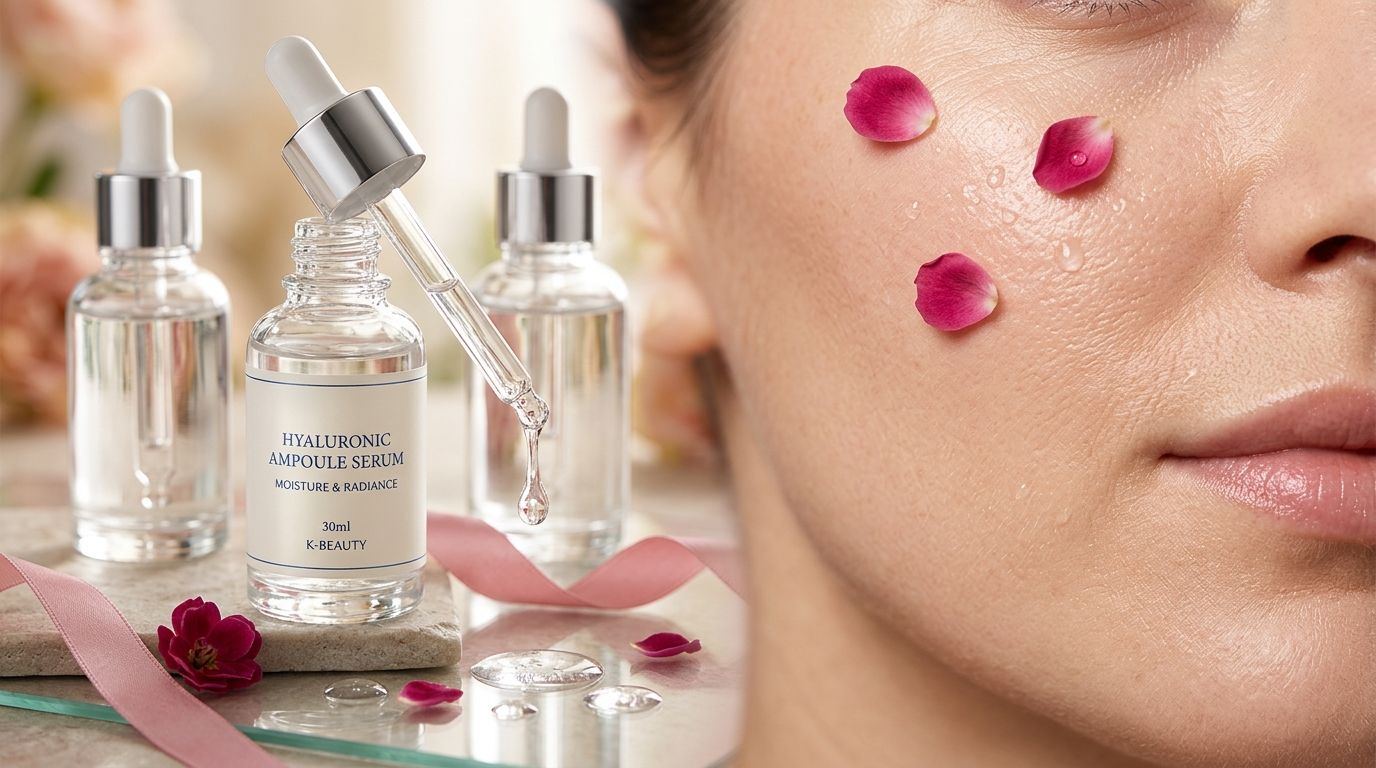
Canadian importers who claim the CKFTA 0% tariff on Korean hyaluronic serum save CAD $650 in import duty on every CAD $10,000 order — a structural cost advantage that competitors sourcing from China, France, or the United States cannot access. Building a full Canadian landed cost model for Korean cosmetics requires mapping ten sequential cost components, from FOB invoice through inland freight, in the order CBSA uses to calculate them. This guide provides that formula, a worked numerical example, freight mode comparison for Korea–Canada routes, and gross margin benchmarks for skincare serum importers in Canada.
The Canada–Korea Free Trade Agreement (CKFTA) came into force on January 1, 2015. Under the agreement, Korean-origin cosmetics classified under HS code 3304.99 — which covers hyaluronic ampoule serums — qualify for the Korea Tariff (KRT) preferential rate of 0% import duty, per Canada Border Services Agency (CBSA) Customs Notice CN14-030.
The standard Most Favoured Nation (MFN) rate for HS 3304.99 is 6.5%. This rate applies to equivalent cosmetics from countries without a Canadian FTA, including China, France, and the United States. Per CBSA CN14-030, the CKFTA duty elimination creates a direct 6.5 percentage-point cost advantage for Canadian importers of Korean cosmetics versus importers sourcing from non-FTA countries.
On a CAD $10,000 shipment, that advantage is CAD $650 — avoided entirely by presenting one document at CBSA: a Certificate of Origin completed by the Korean exporter and issued by the Korea Chamber of Commerce. At consistent monthly order volumes, the savings accumulate to several thousand dollars per year, all flowing directly to gross margin.
CKFTA vs. MFN: Duty and Margin Impact for HS 3304.99 Cosmetics
| Korean Serum (CKFTA KRT) | Non-FTA Cosmetics (MFN) | |
|---|---|---|
| HS Code | 3304.99 | 3304.99 |
| Import Duty Rate | 0% — Korea Tariff (KRT) | 6.5% — Most Favoured Nation |
| Duty on CAD $10,000 Shipment | CAD $0 | CAD $650 |
| Margin Advantage | +6.5 percentage points vs. MFN | Baseline — no FTA benefit |
| Key Requirement | Certificate of Origin from Korean exporter | N/A |
Two conditions must both be satisfied to claim the KRT preferential rate, per CBSA CN14-030 and TruFulfillment (Canadian Import & Fulfillment Advisory):
Condition 1 — Korean origin: The goods must be of Korean origin, proven by a Canada–Korea Certificate of Origin completed by the Korean exporter.
Condition 2 — Direct shipment: The goods must travel directly from Korea to Canada. If a shipment passes through a third country — for example, the United States — without documentary evidence proving the goods remained under customs control in transit, the CKFTA preferential rate is forfeited. The standard 6.5% MFN rate then applies, adding CAD $650 of avoidable cost on every CAD $10,000 shipment.
Both conditions are straightforward to satisfy when working with a Korean exporter familiar with Canadian FTA documentation requirements.
Per TariffCalc.ca (Canadian Customs Tariff Calculation Tools), the complete landed cost for Korean cosmetics entering Canada has ten sequential components:
A key Canada-specific advantage: per the Customs Act Transaction Value Method (CBSA), import duties are assessed on the FOB transaction value only. International freight and marine insurance are excluded from the duty calculation base — reducing the taxable value compared to CIF-based duty systems used in many other countries.
CBSA Sequential Duty and Tax Calculation for Korean Cosmetics
Convert invoice to CAD
Multiply the USD FOB invoice by the Bank of Canada rate on the date of direct shipment. Example: USD $5,000 × 1.37 = CAD $6,850 transaction value.
Apply customs duty
Under CKFTA KRT: 0% × $6,850 = $0 duty. Without CKFTA (MFN): 6.5% × $6,850 = CAD $445.25 in duty on the same shipment.
Form the GST base
Add duty to transaction value. Under CKFTA: $6,850 + $0 = $6,850. Without CKFTA: $6,850 + $445.25 = $7,295.25.
Apply 5% federal GST
Under CKFTA: $6,850 × 5% = CAD $342.50. Without CKFTA: $7,295.25 × 5% = CAD $364.76. Registered B2B importers recover this GST as an input tax credit.
Per CBSA (Guide to Importing Commercial Goods: Step 3), the calculation runs in this order:
Step 1: Convert the USD FOB invoice to CAD at the Bank of Canada rate on the date of direct shipment. Example: USD $5,000 × 1.37 CAD/USD = CAD $6,850 transaction value.
Step 2: Apply the customs duty rate. Under CKFTA KRT: 0% × $6,850 = $0 duty. Without CKFTA (MFN): 6.5% × $6,850 = CAD $445.25 in duty.
Step 3: Form the GST base: transaction value plus duty. Under CKFTA: $6,850 + $0 = $6,850. Without CKFTA: $6,850 + $445.25 = $7,295.25.
Step 4: Apply 5% federal GST to the GST base. Under CKFTA: $6,850 × 5% = CAD $342.50. Without CKFTA: $7,295.25 × 5% = CAD $364.76.
The CKFTA-claimed importer pays CAD $342.50 at the border. The non-FTA importer pays CAD $810.01 ($445.25 duty + $364.76 GST) on the same USD $5,000 order — a difference of CAD $467.51 that comes directly from forgoing one Certificate of Origin.
GST at the Border Is Recoverable for Registered B2B Importers
GST Is a Cash Flow Timing Item — Not a Permanent Cost
Per TariffCalc.ca (citing Canada Revenue Agency): businesses registered for GST/HST recover import GST as an input tax credit (ITC) on their regular GST/HST return. For a Canadian importer selling wholesale to retailers, the $342.50 GST paid at CBSA on a USD $5,000 order is fully recoverable — it adds to working capital requirements for 4–8 weeks but is not a permanent cost line in your margin model. The final consumer bears GST/HST. Provincial HST rates for cosmetics: Ontario 13%, BC 12%, Quebec 14.975%, Alberta 5%, Nova Scotia 14%, New Brunswick/PEI/NL 15%.
Canadian importers of Korean ampoule serums have two primary freight options, per FreightAmigo (International Freight Intelligence Platform):
Air freight moves cargo from South Korea (Incheon or Gimpo) to Canadian airports — Toronto Pearson or Vancouver YVR — in approximately 2–8 business days. Per-unit freight cost is higher. Air freight is best for initial trial orders of 1,000–3,000 units, time-sensitive reorders, or high-value serums where freight cost is a small proportion of product value.
Ocean freight (LCL or FCL) runs from the Port of Busan through Pacific routing to Vancouver or Prince Rupert (West Coast) or Montreal (East Coast) in approximately 15–50 days. Per-kg freight cost is significantly lower. Ocean freight is the preferred method for established importers placing regular volume orders. At product values of USD $5–$10 per unit or higher, ocean freight savings on a per-unit basis improve gross margin directly.
For a first-time Canadian importer, air freight allows faster market validation with lower capital commitment. Once the market position is confirmed, shifting to ocean freight reduces landed cost per unit and strengthens the margin model.
Per Supliful (Beauty Product Business Resource Platform), skincare serums and ampoule treatments command 60–80% gross margins in direct-to-consumer (DTC) channels, driven by high perceived value relative to manufacturing cost per unit. In wholesale and distributor channels, gross margins for imported skincare serums typically range from 20–50%, depending on product tier, volume commitments, and retailer markup requirements. Canadian importers selling into retail typically achieve 15–40% gross margin on the retail buyer price.
Serums outperform basic moisturizers (30–45% gross) and commodity body care products (15–25%) on margin potential — a key reason Canadian buyers evaluate K-beauty sourcing for premium skincare categories.
Per Supliful, new importers should target a minimum 40% gross margin on landed cost to absorb regulatory compliance setup, Canadian bilingual labeling, and brand establishment expenses before reaching sustainable volume.
First-time importers face a one-time setup cost layer that should be modeled into the margin calculation before placing an initial order. Per Cosmetic Regulations (CRC, c. 869), typical first-time compliance setup costs range from CAD $500 to $3,000, covering bilingual label design and printing, the Health Canada Cosmetic Notification Form (CNF) — which is free to submit but requires a Canadian address — and any Canadian Responsible Person arrangement needed to meet the March 2025 Section 4 update.
Additional one-time requirements: a CBSA CARM importer (RM) account and a Canada Revenue Agency Business Number (BN) — both free. These fixed setup costs should be amortized over expected order volume in your first-year margin model to calculate the realistic break-even unit count. In autumn 2026, Sephora and CJ Olive Young — Korea’s dominant health and beauty retailer with 1,351 stores — are launching a strategic partnership featuring dedicated K-beauty zones in Sephora locations across Canada, per CJ Olive Young official press release via PR Newswire. For Canadian importers, this partnership signals that K-beauty ampoule serums are transitioning from specialty import channels into mainstream retail with institutional backing — strengthening the long-term demand case in Canadian distribution planning.
Pre-Import Cost Model Checklist for Canadian Serum Importers
The landed cost formula in this guide applies to any Korean cosmetic under HS 3304.99. Where the supplier matters is in whether their documentation, formulation, and OEM flexibility support efficient Canadian market entry.
Horizon Pacific Co.’s Hyaluronic Ampoule Serum — 2% hyaluronic acid, 5% niacinamide, 50ml PET container, paraben-free, alcohol-free, pH 5.5, 24-month shelf life — is produced at a Korean facility with OEM and ODM capability. The 1,000-unit MOQ fits trial-order economics under the air freight model. The 50,000-unit monthly capacity supports the shift to ocean freight once a Canadian market position is confirmed. Both actives — hyaluronic acid and niacinamide — are permitted under the Health Canada Cosmetic Ingredient Hotlist. If your distribution plan also covers the US market, our guide on FDA MOCRA registration for Korean cosmetics covers the parallel US compliance and import pathway.
Under the CKFTA, Korean-origin cosmetics under HS code 3304.99 qualify for the Korea Tariff (KRT) preferential rate of 0% import duty, per CBSA Customs Notice CN14-030. The standard MFN rate for the same code is 6.5%, applied to cosmetics from countries without a Canadian FTA. To claim the 0% rate, the Korean exporter must complete a Certificate of Origin, which you present to CBSA at the time of import. The 5% federal GST and applicable provincial taxes apply on top of the duty-inclusive value regardless of tariff treatment.
It is not automatic — you must actively claim it, per TruFulfillment (Canadian Import & Fulfillment Advisory). Present a Canada–Korea Certificate of Origin, completed by the Korean exporter, to CBSA at the time of import. If you do not present the certificate, CBSA applies the 6.5% MFN rate. The claim is per shipment; you cannot retroactively apply the KRT rate after CBSA has assessed MFN duties.
Yes, if you are a GST/HST-registered business. Per TariffCalc.ca (citing Canada Revenue Agency), registered businesses recover import GST as an input tax credit (ITC) filed on their regular GST/HST return with the CRA. For a wholesale importer distributing to Canadian retailers, import GST is a cash flow timing item — paid at the border and recovered in the following filing period — not a permanent cost line in your gross margin calculation.
Per Supliful (Beauty Product Business Resource Platform), new importers should target a minimum 40% gross margin on landed cost to cover one-time regulatory compliance setup, bilingual labeling, and brand establishment costs. Established importers in wholesale and distributor channels typically achieve 20–50% gross margin, depending on volume and retailer requirements. DTC channels support 60–80% gross margins for premium serums.
It depends on your order size and timeline. Per FreightAmigo, air freight from Korea to Canada takes 2–8 business days and suits initial trial orders or time-sensitive reorders. Ocean freight from the Port of Busan to Vancouver or Prince Rupert takes 15–50 days and offers significantly lower per-unit cost, making it the preferred method for established importers at volume. At product values of USD $5–$10 per unit or higher, the per-unit freight savings from ocean shipping materially improve gross margin.
The financial and regulatory information in this guide is provided for general reference only. Canadian import duty rates, CKFTA tariff classifications, CBSA documentation requirements, freight costs, exchange rates, and provincial tax rates are subject to change and may depend on your specific shipment, product, and province. Gross margin benchmarks are market estimates; your actual results will vary based on supplier pricing, freight rates, and channel mix. For final compliance and cost decisions, consult a licensed Canadian customs broker and a qualified cosmetics regulatory consultant. Always confirm current duty rates with CBSA and regulatory requirements with Health Canada before importing. This information is not legal or financial advice.
Comments
Post a Comment