Polymer Cement in Peru: How Seismic Code E.030 and Reconstruction Spending Drive Repair Mortar Demand
Polymer Cement in Peru: How Seismic Code E.030 and Reconstruction Spending Drive Repair Mortar Demand
- Get link
- X
- Other Apps
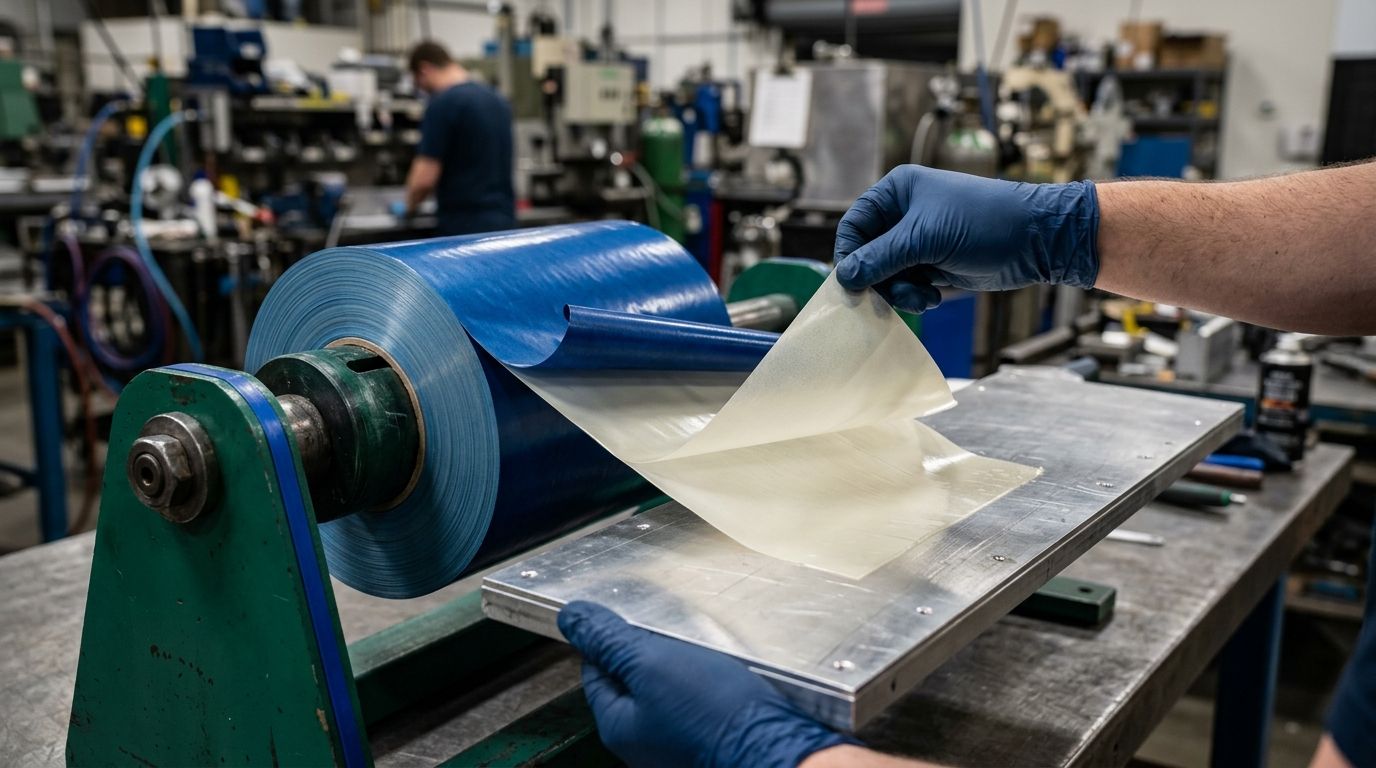
Taiwan's printed circuit board and semiconductor packaging industries are projected at USD 39.9 billion in 2025 — with the materials sub-segment growing 13.4% year-over-year, the fastest-growing division in the PCB composite — and South Korea is already an established net exporter of industrial adhesive films serving this demand. TSMC's CoWoS advanced packaging capacity is expanding 113% year-over-year in 2025, with every packaging layer consuming specialty bonding and adhesive films. This analysis maps the three procurement segments driving structural adhesive film demand in Taiwan, the specifications OEM buyers require, and a verified market entry path for Korean suppliers.
Taiwan's printed circuit board industry is projected to reach USD 39.9 billion in 2025, representing 5.8% year-over-year growth from USD 37.7 billion in 2024, which had itself grown 8.1% the prior year. The figure combines PCB production output, materials, and equipment, per a joint report by the Taiwan Printed Circuit Association (TPCA) and the Industrial Economics and Knowledge Center (IEK) of ITRI, as reported by Printed Circuit Design & Fab.
Within this total, the materials division posted the strongest expansion — growing 13.4% to USD 10.7 billion, per the same TPCA/ITRI report. High-end copper-clad laminates and low-loss materials drove demand for 800G network switches and AI/HPC servers. Flexible PCB materials specifically — which include adhesive layers, polyimide substrates, and lamination films — grew 8.5% and are projected to reach USD 11.6 billion, supported by emerging applications including AI wearables and smart glasses.
At the manufacturer level, the global flexible PCB market reached USD 19.7 billion in 2024 and is projected at USD 20.72 billion in 2025, per TPCA forecasts cited by Printed Circuit Design & Fab. Taiwan-headquartered companies — Career Technology, Flexium Interconnect, and Zhen Ding Technology — rank among the largest flexible PCB producers globally, each expanding capacity to serve AI device and automotive electronics demand. Looking further out, the Taiwan PCB market is projected at USD 16.16 billion by 2031 at a 5.32% CAGR, with flexible circuits the fastest-growing sub-segment at 6.87% CAGR, per Mordor Intelligence.
Taiwan adhesive film demand: PCB lamination vs semiconductor packaging
| PCB / FPCB Lamination | Advanced Semiconductor Packaging | |
|---|---|---|
| Key buyers | Unimicron, Zhen Ding, Compeq, Nan Ya PCB, Kinsus (~50% domestic PCB output) | TSMC (CoWoS), ASE Technology (CoWoP), Powertech Technology |
| Growth rate | Flexible circuits: 6.87% CAGR through 2031 (Mordor Intelligence) | TSMC CoWoS +113% YoY 2025; ASE CoWoP tripling output (TrendForce) |
| Film application | Lamination layers, bonding sheets, cover-lay adhesive for rigid-flex and HDI boards | Die-attach films, wafer bonding films, underfill at each packaging layer |
| Qualification timeline | 3–6 months for spec optimization within existing material category | 24–36 months for new process development (Digitimes / Henkel) |
| Korea trade position | Korea is a net exporter of industrial adhesive films to Taiwan (IndexBox) | Asia Pacific = 43.8% of global semiconductor adhesive film sales (Verified Market Reports) |
Not all Taiwan electronics buyers share the same purchasing profile. Three segments account for the majority of structural adhesive film demand in Taiwan, each with distinct volume scales, specification requirements, and qualification timelines.
PCB and FPCB Lamination Manufacturers
Taiwan's top PCB manufacturers — Unimicron Technology, Zhen Ding Technology, Compeq Manufacturing, Nan Ya PCB, and Kinsus Interconnect Technology — together capture approximately 50% of domestic PCB output, per Mordor Intelligence. These companies are concentrated purchasers of lamination films, bonding sheets, and cover-lay adhesive for rigid-flex and high-density interconnect (HDI) board production. For a Korean adhesive film exporter, this group offers repeat, volume procurement on defined specifications — a practical first target within Taiwan's supply chain.
Advanced Semiconductor Packaging
TSMC's CoWoS (Chip-on-Wafer-on-Substrate) advanced packaging capacity is surging 113% year-over-year in 2025, with CoWoS-L and CoWoS-S lines fully booked, driven by AI GPU and HPC demand from major global chip designers, per TrendForce. TSMC is expanding from 75,000–80,000 wafers per month toward 120,000–130,000 monthly wafers by end-2026 through new Advanced Packaging 8 (AP8) and AP7 facilities in Southern Taiwan. Advanced packaging processes at TSMC consume specialty bonding films, die-attach films, and underfill materials at each packaging layer.
ASE Technology Holding, Taiwan's largest OSAT (Outsourced Semiconductor Assembly and Test) provider, is scaling its CoWoP (Chip-on-Wafer-on-PCB) advanced packaging capacity to 20,000–25,000 wafers per month by end of 2025 — more than tripling current output — per TrendForce. ASE's expansion is driven by global chip designers seeking a second advanced packaging source. This segment carries the highest specification bar for adhesive films and the highest unit value per film consumed.
Consumer Electronics ODMs
Hon Hai Precision Industry (Foxconn) ranked 28th in the 2025 Fortune Global 500 with annual revenues of USD 213.69 billion, per Taipei Times. Other major Taiwan-headquartered ODMs — Quanta Computer, Wistron, Inventec, Compal, and Pegatron — represent a large procurement base for industrial adhesive film used in chassis bonding, thermal management, and component assembly. Specifications here are generally less demanding than advanced packaging, but RoHS and REACH compliance documentation remains required when assembled products ship to European and US brand customers.
The global dicing die attach film market — overlapping with structural adhesive films used in semiconductor packaging — was valued at USD 2.16 billion in 2024 and is projected at USD 2.32 billion in 2025, growing to USD 4.39 billion by 2034 at a 7.34% CAGR, per Precedence Research. Polyimide-based films are the fastest-growing sub-segment through 2034, driven by demand for high-temperature-rated materials in AI chip packaging. Asia Pacific accounted for approximately USD 2.1 billion in semiconductor adhesive paste and film revenue — 43.8% of total global sales in 2025 — per Verified Market Reports, with Taiwan's TSMC, ASE Group, and Powertech Technology collectively anchoring a significant share of global advanced packaging capacity.
South Korea is an established net exporter of adhesive and bonding films to Taiwan, China, and ASEAN for integration into electronic devices and semiconductor packages. Per IndexBox Market Intelligence, over 70% of Asia Pacific's adhesive film demand is served by production within the region, with Japan, South Korea, and China accounting for the bulk of upstream film manufacturing — confirming an established Korea-to-Taiwan trade flow at the specification grades relevant to Taiwan's electronics OEM market.
The competitive landscape includes incumbent global material suppliers with local presence. Henkel Adhesive Technologies operates a Taiwan Electronics Adhesives Technical Center in Zhubei City, per Digitimes. For new process development, Henkel's collaboration timeline is 2–3 years; for spec optimization within existing material categories, it is 3–6 months, per Digitimes. A Korean supplier with an already-certified, specification-compatible product can target the 3–6 month optimization pathway rather than the multi-year new-process track.
Market entry path for Korean adhesive film suppliers in Taiwan
Find a Taiwan local agent or distributor
Per the U.S. International Trade Administration, most new-to-market exporters in Taiwan begin with a local partner — agent, distributor, or representative. Taiwan has a broad base of SMEs in industrial materials trading who can represent foreign suppliers with established OEM buyer relationships.
Build your qualification documentation package
Prepare RoHS and REACH certificates, ISO 9001:2015 certification, ASTM D1876 peel adhesion test data, a GHS-compliant Safety Data Sheet, and a full constituent chemical list. Taiwan OEM buyers request this package before scheduling any sample evaluation.
Submit samples for OEM process testing
For spec optimization within an existing material category, Taiwan OEM qualification takes 3–6 months, per Digitimes reporting on Henkel. For new process development, plan 24–36 months. A specification-compatible film with existing certifications compresses this timeline.
Set payment and shipping terms
Irrevocable letters of credit are standard in Taiwan industrial B2B transactions and widely accepted by Taiwanese financial institutions, per U.S. ITA. MFN tariff for HS 3926.90 is approximately 4.8% of CIF value — a predictable, budgetable landed cost.
Execute first PO and build approved-vendor status
Realistic timeline from first contact to first purchase order is 12–24 months in the PCB lamination segment. On-time delivery and specification consistency on the first order determine whether a Korean supplier reaches the approved vendor list for repeat procurement.
Per the U.S. International Trade Administration, most new-to-market exporters in Taiwan begin with a local partner — an agent, distributor, or representative. Taiwan has a broad base of small- and medium-sized enterprises in industrial materials trading that can represent foreign suppliers, negotiate with OEM procurement teams, and coordinate chemical import compliance tasks with the Taiwan importer of record.
For HS 3926.90, the MFN (most-favored-nation) tariff is approximately 4.8% of CIF value, per U.S. ITA. No Korea–Taiwan bilateral FTA exists; WTO MFN rates apply. This is a known, budgetable cost for landed price calculations before the first shipment.
The OEM qualification process begins with documentation. Taiwan electronics manufacturers request a full compliance package before scheduling any sample evaluation: RoHS and REACH certificates, ISO 9001:2015 certification, ASTM D1876 peel adhesion test data, a GHS-compliant Safety Data Sheet, and a complete constituent chemical list. Having all documents ready before the first buyer meeting reduces the lag between initial contact and sample testing — the rate-limiting step in what is already a long qualification cycle.
Irrevocable letters of credit are standard in Taiwan industrial B2B transactions and widely accepted by Taiwanese financial institutions, per U.S. ITA. Plan for a realistic timeline of 12–24 months from first contact to first purchase order in the PCB lamination segment, and longer for advanced semiconductor packaging.
Ironwood Global's high-strength structural adhesive film is classified under HS 392690 and carries RoHS, REACH, and ISO 9001:2015 certifications — the compliance documentation Taiwan OEM buyers request at first qualification. The modified epoxy/polyimide composite substrate operates from −40°C to 180°C, with peel adhesion ≥15 N/25mm per ASTM D1876, available in 0.05 mm–0.3 mm thickness on rolls up to 1,000 mm wide. Slitting to custom widths for OEM packing specifications is available, with monthly capacity of 50,000 units and minimum order quantity of 1,000 units.
Last updated: 2026-06. This is a market overview for general information. Market data and supply chain conditions change. Confirm buyer specifications, compliance requirements, and trade terms with your Taiwan agent and a qualified trade consultant before entering procurement discussions.
Comments
Post a Comment