Polymer Cement in Peru: How Seismic Code E.030 and Reconstruction Spending Drive Repair Mortar Demand
Polymer Cement in Peru: How Seismic Code E.030 and Reconstruction Spending Drive Repair Mortar Demand
- Get link
- X
- Other Apps
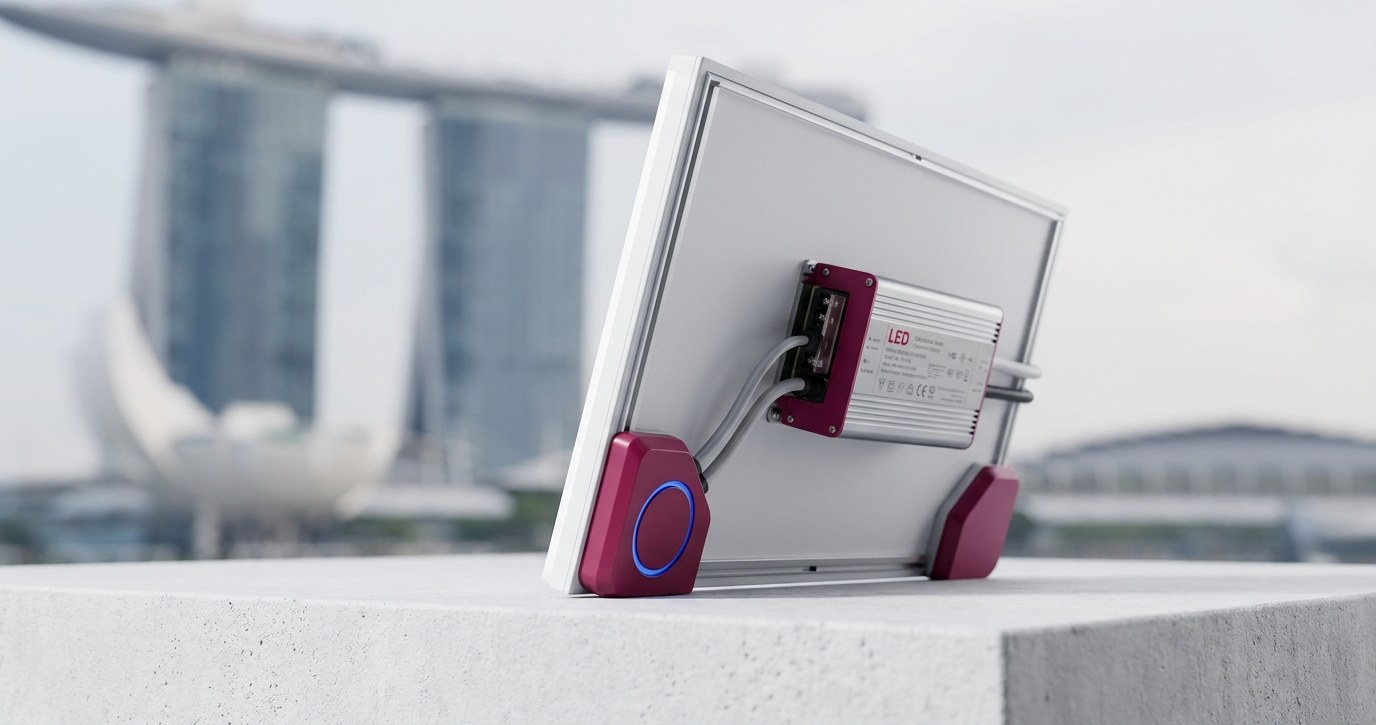
Most markets require one safety certification for LED lighting. Malaysia requires two — and a shipment missing either can be legally detained at customs before it reaches any buyer. Importing a Smart LED Panel Light into Malaysia means clearing a Certificate of Approval (COA) from Malaysia's Energy Commission (Suruhanjaya Tenaga) plus the mandatory ST-SIRIM safety label under the Electrical Supply Act 1990, and — from January 2025 — a separate Certificate of Energy Efficiency (COE) under the new Energy Efficiency and Conservation Act (EECA) 2024. Your Korean supplier's CE and RoHS certificates are supporting evidence, not a substitute for either approval. This guide covers the dual-certification path, required documents, MEPS testing process, import duty options, and a pre-shipment checklist for Smart LED Panel Light importers.
Most markets require one safety certification to import and sell LED lighting. Malaysia requires two separate government approvals, and missing either one means your product cannot legally be imported, sold, or even advertised in Malaysia.
Gate 1 — ST COA + ST-SIRIM Safety Label. Under Malaysia's Electrical Supply Act 1990 and Electrical Regulations 1994, all LED lighting products — including Smart LED Panel Lights — must hold a Certificate of Approval (COA) from Malaysia's Energy Commission (Suruhanjaya Tenaga). According to JJR Lab, the product must also carry the ST-SIRIM safety label supplied by SIRIM Berhad before it can be manufactured, imported, sold, or advertised in Malaysia.
Gate 2 — Certificate of Energy Efficiency (COE). From 1 January 2025, the Energy Efficiency and Conservation Act (EECA) 2024 — Act 861 — requires a separate COE for all lamps and regulated energy-using products, per Suruhanjaya Tenaga. This replaces the older Efficient Management of Electrical Energy Regulations (EMEER) 2008 framework. Both the COA and the COE are required. One does not substitute for the other.
Understanding both gates before engaging a supplier saves weeks of back-and-forth once shipment planning begins.
ST COA Application Process — Batch Scheme Path
Appoint a Malaysian Certificate Holder
The COA must be held by a locally registered Malaysian company. Foreign manufacturers cannot hold it directly. Identify your Malaysian importer or agent and formalize the appointment before any application begins.
Gather Technical Documentation
Collect the CB certificate or full IEC 62612 test report, product data sheet (wattage, lumens, colour temperature range, lifespan), CE and RoHS certificates as supporting evidence, and product photos.
Submit COA Application (Batch Scheme)
Submit to SIRIM using your existing IEC test reports under the batch scheme pathway. This is faster and lower-cost than the PCS License route, which requires factory audits.
Affix ST-SIRIM Label on Each Product Unit
Once approved, the ST-SIRIM safety label must be placed on the product itself — not just the outer carton. Required since February 2022; shipments with packaging-only labels may be detained at Malaysian customs.
File COE Application Under EECA 2024
Apply to Suruhanjaya Tenaga's online portal with the MS 62612(P) MEPS test report. Fee: RM 250 per model. Both COA and COE must be active before any unit is imported or sold.
The ST COA must be held by a locally registered Malaysian company. Per JJR Lab, foreign manufacturers — including Korean exporters — cannot hold the certificate directly. Your Malaysian importer, distributor, or an appointed local agent must be the certificate holder.
This is the first step to resolve before any application begins. The certificate is tied to the Malaysian entity, so choose a partner you expect to work with long-term. Without a confirmed certificate holder, the rest of the process cannot move forward.
Two routes exist for obtaining the ST COA, per JJR Lab.
The batch scheme uses existing CB scheme test reports or full IEC 62612 test reports from accredited overseas laboratories. It is faster and lower cost than the PCS License route and is the standard path for LED panel light importers with existing IEC-compliant test documentation from their Korean supplier.
The PCS License requires factory audits and is used by manufacturers applying for an ongoing production license. Most Malaysian importers of Korean LED products do not need this route.
For a 40W Smart LED Panel Light with existing CE and IEC documentation from a Korean supplier, the batch scheme is the practical choice.
Label on the Product — Not Just the Outer Carton
Label on the Product — Not Just the Outer Carton
Since February 2022, the ST-SIRIM safety label must be affixed directly to each LED product unit. Per Blue Asia Labs, shipments where the label appears only on the cardboard packaging may be detained at Malaysian customs. Confirm unit-level labeling with your Korean supplier before any shipment is prepared — fixing this after manufacture is costly.
Since February 2022, the ST-SIRIM safety label must be affixed directly to each LED product unit. This is not the same as labeling the outer carton. Per Blue Asia Labs, shipments where the label appears only on the cardboard packaging may be detained at Malaysian customs.
Confirm unit-level labeling with your Korean supplier before any production run intended for the Malaysian market. Fixing this after manufacture is costly.
The ST COA is valid for one year from the date of issuance, per JJR Lab. Annual renewal is required. If the COA lapses, you cannot legally import or sell the product until renewal is completed. Build this renewal deadline into your compliance calendar alongside your regular procurement cycle.
The EECA 2024 (effective 1 January 2025, with fee enforcement beginning 24 February 2025) introduced the mandatory Certificate of Energy Efficiency (COE) for all lamps and other regulated energy-using products sold in Malaysia, per Suruhanjaya Tenaga. This applies to Smart LED Panel Lights regardless of wattage.
The COE fee is RM 30 (application) plus RM 220 (issuance), totalling RM 250 per product model, per Suruhanjaya Tenaga. The COE is valid for one year and requires the same annual renewal discipline as the COA.
Malaysia's Minimum Energy Performance Standards (MEPS), now enforced under EECA 2024, require LED lamps to meet minimum efficacy and lumen maintenance requirements under Malaysian Standard MS 62612(P). The specific minimum threshold applicable to your wattage bracket must be confirmed directly with Suruhanjaya Tenaga or your accredited test laboratory before filing.
Testing must be conducted at SIRIM QAS International or QAV Technologies (both Standards Malaysia-accredited), or via full IEC 62612 test reports from an overseas ILAC-accredited laboratory, per the Clean Energy Solutions Center policy database. Your Korean supplier's existing IEC 62612 documentation from an accredited lab may be submitted directly, reducing or eliminating the need for local retesting.
The testing process follows two milestones, per the Clean Energy Solutions Center policy database: an interim performance report at 1,000 operating hours, which may be submitted to initiate the COA application; and a full report at 6,000 hours that must follow. Accredited labs are required to notify Suruhanjaya Tenaga if the product registers failures at any point during this sequence.
A 40W Smart LED Panel Light producing 4,400 lm delivers a rated efficacy of 110 lm/W. Malaysia's energy efficiency label displays a 1–5 star rating based on efficacy performance. A high lm/W product positions well for the energy efficiency label's higher star tiers — a visible commercial advantage when serving office building managers and commercial developers who track building energy costs.
Prepare the following before submitting to SIRIM:
Under the batch scheme, the ST COA typically takes 4–8 weeks from complete document submission to certificate issuance and ST-SIRIM label delivery. The COE application runs in parallel through Suruhanjaya Tenaga's portal. Filing both processes at the same time is the most efficient approach — waiting to start one after the other extends your total timeline unnecessarily.
Start documentation preparation as early as possible, especially if your supplier's IEC test reports need updating or if you are arranging local lab testing for the first time.
Malaysia's standard (MFN) applied average tariff for industrial goods is approximately 6.1%, per the U.S. International Trade Administration. For Smart LED Panel Lights under HS code 9405, the applicable rate depends on the origin of your goods and whether you use a preferential trade agreement.
Korea-origin goods (AKFTA). Under the Korea–ASEAN Free Trade Agreement (AKFTA), Korean-origin LED products may qualify for preferential import duty rates in Malaysia. A Form AK Certificate of Origin issued by the Korean exporter is required, and rules of origin must be satisfied. The exact HS 9405 rate under AKFTA can be confirmed through Malaysia's official JKDM HS Explorer portal (ezhs.customs.gov.my), per the U.S. International Trade Administration.
ASEAN-origin goods (ATIGA). Under the ASEAN Trade in Goods Agreement (ATIGA), Malaysia has eliminated import duties on 98.74% of tariff lines, per the Ministry of Investment, Trade and Industry Malaysia (MITI). LED lighting products under HS 9405 from qualifying ASEAN member states may enter at 0% duty with a valid Form D Certificate of Origin.
Confirm the applicable rate and documentation requirements with your freight forwarder or trade compliance team before finalizing your landed-cost calculation.
All LED lighting products sold in Malaysia must display an energy efficiency label showing the SIRIM logo, energy efficiency grade (1–5 stars, with 5 being highest), rated wattage, luminous flux in lumens, and rated lifespan, per China Purchasing Agent. The efficacy value (lm/W) must also appear on the product packaging.
Malaysian commercial buyers managing electricity costs across offices and retail premises use this label when evaluating products. More than 160 LED product SKUs were registered under Malaysia's MEPS framework as of 2023, reflecting an active compliance environment where unlabeled products face increasing scrutiny, per Ken Research.
LED lighting consumes approximately 80% less energy than traditional incandescent or fluorescent lighting and can last up to 40,000 hours compared to around 1,000 hours for incandescent bulbs, per Ken Research — a driver of rapid commercial adoption across Malaysia's nearly 80% urbanized population.
If your buyers are supplying commercial construction projects seeking Green Building Index (GBI) or GreenRE certification in Malaysia, MS1525:2019 applies. Per the Sustainable Energy Development Authority (SEDA) Malaysia, this standard sets lighting power density limits and recommended illuminance levels of 300–500 lux for offices and classrooms. Compliance with MS1525:2019 is a prerequisite for both GBI and GreenRE certifications.
A 40W Smart LED Panel Light with smartphone app control, voice recognition compatibility, and a 50,000-hour lifespan is well suited for GBI-targeted commercial projects. Per Justlight Concept, smart LED systems with occupancy sensing and automated scheduling can reduce commercial building lighting energy use by an additional 20–30% within the first year, on top of the 50–70% energy cost savings that LED already delivers versus conventional lighting. Malaysia's commercial lighting market is growing at approximately 9.7% CAGR through 2031, driven by commercial real estate expansion and the adoption of connected building systems, per Mobility Foresights.
Pre-Shipment Compliance Checklist for Malaysia
Before your first shipment departs Korea, confirm each item in the checklist above. Missing any one can result in customs detention, forced product withdrawal, or an inability to sell in Malaysia.
Regulatory requirements in Malaysia change on an annual cycle — the EECA 2024 COE requirement became enforceable in January 2025, and future updates are possible. Always verify current requirements directly with Suruhanjaya Tenaga (Energy Commission Malaysia) or a qualified local compliance consultant before each new product introduction.
Last updated: 2026-06. This information is provided for informational purposes only. Regulatory requirements change frequently. We recommend consulting a qualified Malaysian compliance specialist or Suruhanjaya Tenaga for the most current requirements before proceeding with any import or sale.
This information is provided for reference purposes only. Regulatory requirements, certification standards, and trade policies are subject to change. Always verify current requirements with Suruhanjaya Tenaga (Energy Commission Malaysia), SIRIM, and qualified compliance consultants before importing or selling LED lighting products in Malaysia.
Comments
Post a Comment