Polymer Cement in Peru: How Seismic Code E.030 and Reconstruction Spending Drive Repair Mortar Demand
Polymer Cement in Peru: How Seismic Code E.030 and Reconstruction Spending Drive Repair Mortar Demand
- Get link
- X
- Other Apps
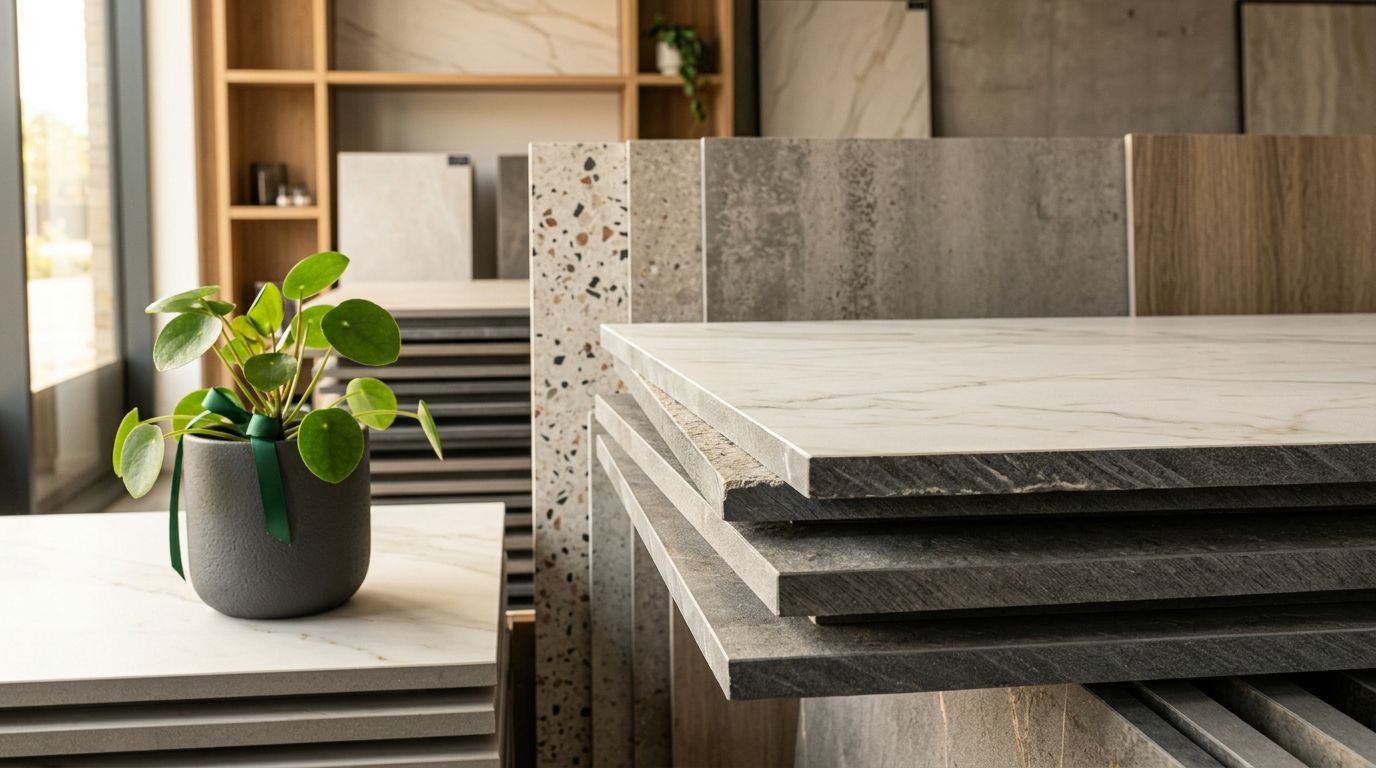
Malaysia's ceramic tile market is forecast to reach USD 1.28 billion by 2031, with porcelain tiles expanding at 4.89% CAGR — the fastest segment — driven by 150,000 planned housing units and a Kuala Lumpur commercial building stock averaging 28 years old that is entering a renovation cycle. Korean large format porcelain slab tile exporters hold two structural advantages here: 0% AKFTA import duty versus non-FTA competitors, and 1200×2400mm certified slabs that compete in the USD 4–15/m² premium tier where China's USD 3.50 commodity average cannot follow. This article maps the market size, regional demand pockets, the competitive landscape, and the concrete entry path for Korean suppliers evaluating Malaysia now.
Malaysia's ceramic tile market was valued at USD 0.99 billion in 2025 and is forecast to reach USD 1.28 billion by 2031, growing at a CAGR of 4.24%, according to Mordor Intelligence. That is a USD 290 million expansion in six years — large enough to absorb new international suppliers without displacing established ones.
Within this market, porcelain tiles hold a 41.94% revenue share in 2025 and are expanding at a 4.89% CAGR — faster than the overall tile market. Floor tiles account for 58.91% of 2025 revenue. Residential consumption drives 70.83% of the market.
Two structural forces create this demand. First, new housing: Malaysia's construction sector was valued at RM 38.55 billion in 2025 and is growing at 8.55% CAGR through 2033, supported by 150,000 planned affordable apartment units and active private condominium launches, per Market Report Analytics. New builds specify tiles from the ground up.
Second, renovation: 61.72% of Malaysia's tile spend in 2025 comes from renovation and replacement, not new construction. Kuala Lumpur's average commercial building age has reached 28 years, generating renovation demand at an 8.10% CAGR. These renovation projects upgrade from older, smaller-format tiles to large format porcelain slabs — exactly the category Korean exporters supply.
Large format porcelain slab tiles are not a specialty item in Malaysia's commercial construction sector. They are the increasingly standard specification for commercial lobbies, shopping mall corridors, and premium condominium interiors.
The commercially relevant sizes in Malaysia run from 800×1600mm through 1600×3200mm. Commercial developers and high-end condominium projects specify 750×1500mm and larger for seamless finishes with minimal grout lines, per Face Impex Malaysia Market Analysis. The 1200×2400mm format creates a near-continuous surface effect that Malaysian developers now request by name in specifications.
Malaysia's tropical climate creates two non-negotiable performance requirements. First, water absorption must be below 0.5% for vitrified tiles; Korean-grade fully vitrified porcelain at 0.05% or below resists moisture-induced cracking, staining, and bacterial growth in Malaysia's year-round high humidity and rainfall. Second, Class 4–5 abrasion resistance per MS ISO 13006:2014 is required for commercial lobbies and high-traffic corridors — tiles must demonstrate this in certification testing before Malaysian commercial developers will specify them.
On pricing, large format porcelain slabs trade at USD 4.00–15.00 per square meter in Malaysia versus USD 1.50–3.00 for basic ceramic tiles, per Market Report Analytics. The premium is real and buyer-driven, not supplier-imposed.
China vs. Korean Porcelain Tile: Competitive Positioning in Malaysia
| China (Commodity Tier) | Korea (Premium Tier) | |
|---|---|---|
| Average Import Price | ~USD 3.50/m² | USD 4–15/m² (large format) |
| Typical Slab Sizes | 600×600mm to 800×800mm common | 1200×2400mm, 900×1800mm, 1600×3200mm |
| Surface Print Technology | Standard 2D inkjet | Italian 4D inkjet (marble, concrete, wood texture) |
| Water Absorption | ≤0.5% standard vitrified | ≤0.05% fully vitrified (bitrefied) |
| AKFTA Duty (HS 690721) | Not applicable — China excluded | 0% with Form AK Certificate of Origin |
| Certification Depth | SIRIM testing required from scratch | ISO 13006 + KS L 1001 + CE pre-qualified |
China exported USD 219.6 million worth of ceramic tiles to Malaysia in 2024 at an average price of approximately USD 3.50 per square meter, per Mordor Intelligence. China accounts for approximately 86% of Malaysia's ceramic tile imports by value. Vietnam holds 6.6% in second place.
That 86% figure needs context. China's dominance is concentrated in the commodity tier — standard-size tiles at USD 1.50–3.50/m² competing on volume and price. The premium large format porcelain slab segment (USD 4–15/m²) is a separate contest that China's average price point does not address.
Korean large format porcelain slab tiles hold three structural advantages in this premium tier:
Surface technology: Italian 4D inkjet printing reproduces natural marble, concrete, and wood textures at resolutions commodity producers at the USD 3.50/m² price point do not replicate. Malaysian commercial developers specifying high-end lobby finishes require this surface resolution and reject standard digital prints on close inspection.
Certification depth: Korean tiles with ISO 13006, KS L 1001, and CE marks arrive with the test evidence that SIRIM's MS certification and CIDB's Schedule 4 compliance pathway build upon. This reduces compliance work for Malaysian distributors and developers evaluating a new supplier — a practical differentiator when competing for a multi-unit condominium specification against China suppliers who must go through the same SIRIM process without the pre-existing international test foundation.
AKFTA tariff: Under the ASEAN-Korea Free Trade Agreement, Korean exporters who meet rules of origin — 40% Regional Value Content (RVC) or Change in Tariff Heading (CTH) — qualify for 0% import duty on ceramic tiles (HS 690721) in Malaysia versus the standard rate of up to 20%, per Malaysia's Ministry of International Trade and Industry (MITI). China has no equivalent FTA benefit in Malaysia at this duty tier. This tariff gap directly improves Korean landed-cost competitiveness. A 10% Sales Tax on the CIF value still applies and is not waived under AKFTA.
East Malaysia: An Early-Mover Window for Korean Exporters
East Malaysia: An Early-Mover Window for Korean Exporters
East Malaysia (Sabah and Sarawak) is expanding at 5.30% CAGR through 2031 — the fastest growth rate in Malaysia — driven by government infrastructure investment and rising urbanization in Kota Kinabalu and Kuching. Far fewer international tile suppliers have built distribution relationships in East Malaysia compared to the saturated Klang Valley channel. Korean exporters willing to supply in container quantities to Sabah and Sarawak ports, and who arrive with SIRIM MS certification ready, can secure distributor shelf position before the region becomes contested.
Malaysia's tile market is not uniformly distributed. Entry strategy should be region-specific.
Central Malaysia and Klang Valley (35.73% of 2025 tile revenue): Greater Kuala Lumpur and Selangor form the primary entry channel for any new international tile supplier. The mature condominium and commercial development market here generates the highest absolute volume and the most established distributor network. Renovation demand from KL's 28-year-average commercial building stock creates a consistent replacement pipeline.
East Malaysia (5.30% CAGR through 2031 — fastest-growing region in Malaysia): Sabah and Sarawak are expanding on infrastructure investment and urbanization. East Malaysia presents an early-mover advantage: far fewer established international supplier relationships exist in Kota Kinabalu and Kuching compared to the saturated Klang Valley channel. Korean exporters willing to supply container quantities to Sabah and Sarawak ports, with SIRIM-ready documentation, can build distributor shelf position before the region becomes as contested as the peninsula.
Other peninsular markets: Penang, Johor Bahru, and Iskandar Malaysia attract commercial development activity, but Klang Valley remains the standard first entry point for building distributor relationships before regional expansion.
Korean Supplier Malaysia Market Entry Checklist
Entering Malaysia effectively requires three parallel tracks: compliance, product positioning, and channel selection.
Compliance: SIRIM MS certification under MS ISO 13006:2014 and CIDB Schedule 4 compliance (Certification of Standard Compliance — PPS) are both mandatory for tiles used in Malaysian construction projects, per CIDB Holdings Malaysia. Korean suppliers with ISO 13006, KS L 1001, and CE documentation can accelerate the SIRIM testing process — glazed porcelain testing takes approximately two weeks at RM 3,000–4,000 per batch, per EdgeProp Malaysia. Build this timeline into your first-shipment planning. Korean exporters who have already navigated similar certification and customs workflows in the Singapore market will find the documentation process structurally comparable — for a detailed step-by-step reference, see our Large Format Porcelain Slab Tile Singapore Import Guide.
Product positioning: Lead with the Certificate of Analysis, not the price sheet. A verified 0.05% water absorption rating, Class 4–5 abrasion certification, R11 slip resistance for wet zones, and a 4D inkjet surface catalogue for 1200×2400mm formats are more persuasive with Malaysian commercial developers than a cost comparison to China commodity tiles. The buyer for premium large format slabs is a developer specification manager, not a commodity purchasing agent.
Channel: Identify Klang Valley distributor partners first, then develop East Malaysia as a secondary channel. Malaysian tile distributors serving commercial developers evaluate new suppliers on container export capability for large format slabs, sample lead time, SIRIM documentation readiness, and minimum order quantities. Korean suppliers with OEM capacity and low MOQ (500m² or below) can address project-specific pattern and colour requirements in the renovation segment — a capability commodity China suppliers at the USD 3.50/m² tier do not routinely offer.
Yes. Malaysia's ceramic tile market is growing from USD 0.99 billion in 2025 to a projected USD 1.28 billion by 2031 at a 4.24% CAGR, with porcelain tiles — the segment where large format slabs compete — expanding at the faster rate of 4.89%, according to Mordor Intelligence. Large format tiles and digitally printed designs show strong adoption among Malaysian commercial developers and condominium projects. The renovation cycle adds consistent demand: 61.72% of Malaysia's tile spend in 2025 comes from renovation and replacement, with buyers upgrading from smaller legacy formats to large format porcelain slabs.
By competing in a different price tier. China's average ceramic tile export price to Malaysia is approximately USD 3.50 per square meter, per Mordor Intelligence — commodity-grade product sold on volume. Korean large format porcelain slab tiles with 0.05% water absorption, Italian 4D inkjet surface technology, and full SIRIM and CIDB certification documentation compete in the USD 4–15/m² premium tier, per Market Report Analytics. Korea also holds a cost advantage China cannot replicate: 0% import duty under the AKFTA versus the standard rate of up to 20% for non-FTA suppliers. The target buyer is commercial developers and condominium specifiers — not commodity wholesale buyers.
Central Malaysia and the Klang Valley region commands 35.73% of 2025 tile revenue and is the primary market entry point, per Mordor Intelligence. KL's 28-year average commercial building age drives renovation demand at an 8.10% CAGR — a consistent replacement pipeline for floor tiles. East Malaysia (Sabah and Sarawak) is the fastest-growing region at 5.30% CAGR through 2031, driven by infrastructure investment, per Mordor Intelligence. Fewer international suppliers have built distributor relationships in East Malaysia yet, making it an early-mover opportunity.
Premium porcelain and designer large format tiles fetch USD 4.00–15.00 per square meter versus USD 1.50–3.00 for basic ceramic tiles, per Market Report Analytics — a three-to-ten times difference. The premium reflects verified performance: 0.05% water absorption for fully vitrified Korean-grade slabs, Class 4–5 abrasion ratings, and 4D inkjet surface quality that commodity producers do not match. Malaysian distributors serving commercial developers and premium condominium projects in the Klang Valley routinely source in this upper price band.
Under the ASEAN-Korea Free Trade Agreement (AKFTA), Korean ceramic tile exporters qualify for 0% import duty in Malaysia on HS code 690721 by obtaining a Form AK Certificate of Origin and meeting rules of origin — either 40% Regional Value Content (RVC) or Change in Tariff Heading (CTH), per Malaysia's Ministry of International Trade and Industry (MITI). The standard import duty can reach up to 20%. China, India, and most non-ASEAN exporters do not have access to an equivalent zero-duty channel for the Malaysian market. Vietnam qualifies under AFTA with Form D but holds only a 6.6% import share, per Mordor Intelligence. A 10% Sales Tax on the CIF value still applies under AKFTA — budget this into your landed-cost calculation.
This article is for informational purposes only. Regulatory requirements, duty rates, and certification processes may change. Confirm current SIRIM, CIDB Schedule 4, AKFTA rules of origin, and customs requirements with relevant Malaysian authorities or a licensed trade consultant before committing to a market entry plan. Korea Industry Insights does not provide legal or regulatory advice.
Comments
Post a Comment