Polymer Cement in Peru: How Seismic Code E.030 and Reconstruction Spending Drive Repair Mortar Demand
Polymer Cement in Peru: How Seismic Code E.030 and Reconstruction Spending Drive Repair Mortar Demand
- Get link
- X
- Other Apps
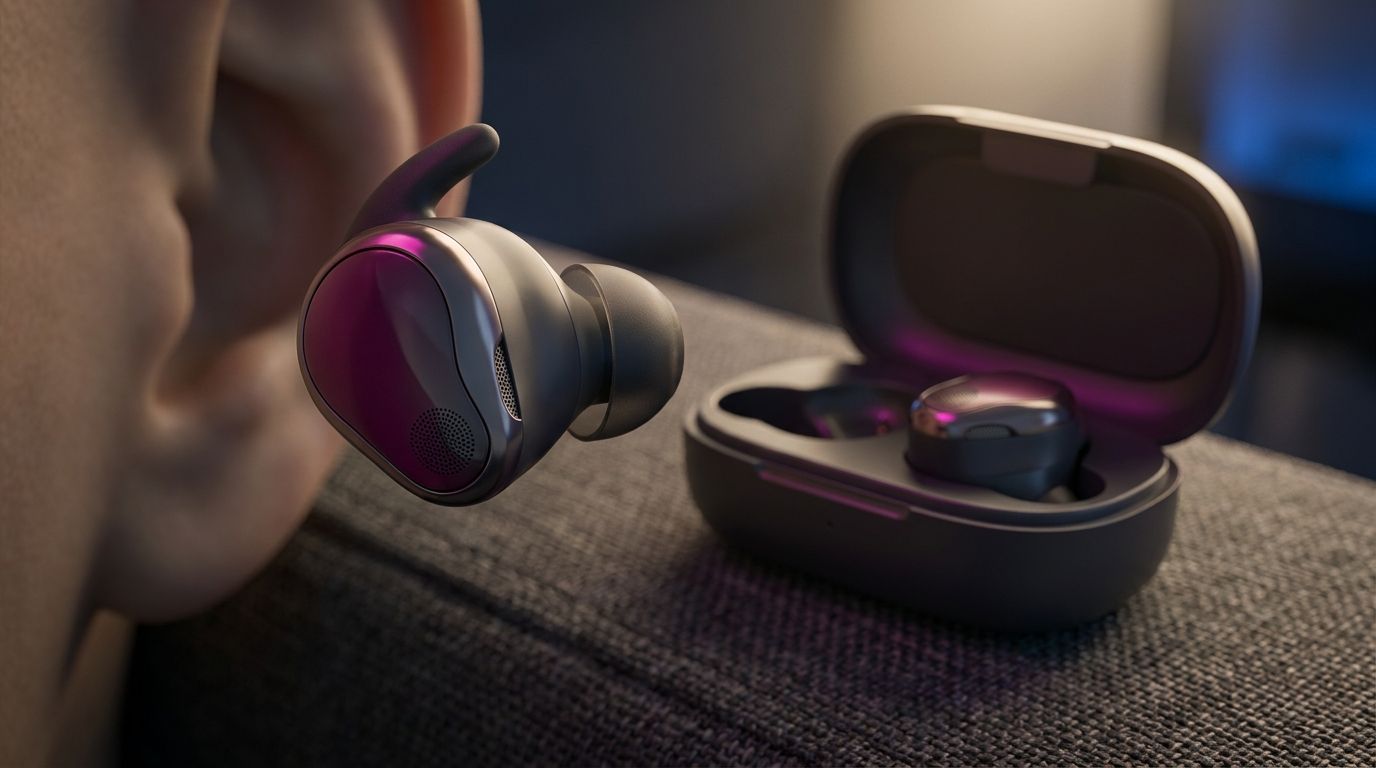
Importing True Wireless Stereo earbuds into Ireland requires CE marking under EU Radio Equipment Directive 2014/53/EU — not UKCA, which is a UK-only post-Brexit scheme with no legal standing in Ireland or the EU. Since August 1, 2025, CE certification must also cover cybersecurity under EN 18031, meaning pre-2025 certificates may no longer suffice for new placements on the Irish market. This guide covers the full compliance path: CE steps, RoHS, WEEE registration, the 0% EU-Korea FTA duty rate, and documents to request from your Korean supplier.
Post-Brexit confusion is one of the most common compliance mistakes buyers make when sourcing electronics for the Irish market. UKCA (UK Conformity Assessed) is a marking scheme introduced by Great Britain after leaving the EU — it applies only to England, Scotland, and Wales. Ireland remained an EU member state and follows EU product regulations in full. UKCA marking carries no legal weight in Ireland, and products bearing only UKCA cannot legally be placed on the Irish market.
For True Wireless Stereo (TWS) earbuds sold in Ireland, CE marking is the mandatory route. According to the European Commission — Single Market Economy, Bluetooth-enabled radio equipment falls under the EU Radio Equipment Directive (RED) 2014/53/EU. Every unit placed on the Irish market must bear the CE mark and be backed by an EU Declaration of Conformity (DoC).
If your Korean supplier provides a UKCA certificate, request their EU Declaration of Conformity separately. Many Korean manufacturers hold both CE and UKCA certificates, but these are distinct documents with different requirements — one does not imply the other is in place.
CE Marking vs UKCA: Ireland vs UK Market at a Glance
| CE Marking (Ireland / EU) | UKCA Marking (Great Britain only) | |
|---|---|---|
| Applies to Ireland? | Yes — legally mandatory | No — no legal standing in Ireland or the EU |
| Governing directive | EU Radio Equipment Directive 2014/53/EU | UK Radio Equipment Regulations 2017 |
| Cybersecurity requirement | EN 18031 mandatory from August 1, 2025 | UK PSTI Act 2022 (separate and distinct) |
| Proof document | EU Declaration of Conformity (DoC) | UK Declaration of Conformity |
| Enforcement authority in Ireland | Revenue Ireland / EPA Ireland | Not applicable |
To obtain CE marking for TWS earbuds, three essential requirements must all be satisfied, per the European Commission — Single Market Economy:
For TWS earbuds operating in the 2.4 GHz band, EN 300 328 is the primary harmonised standard for the spectrum and EMC requirements, per Compliance Testing (ComplianceTesting.com). EN 300 328 sets specific criteria for Bluetooth radio frequency emissions and is a core test in every CE technical file for wireless earbuds. Your supplier should be able to provide the EN 300 328 test report as part of their standard compliance documentation.
The manufacturer — or, where the manufacturer is outside the EU, the importer — is responsible for ensuring conformity with all three requirements before CE marking is affixed.
This is the most important compliance change for buyers placing orders in 2025 and beyond.
From August 1, 2025, all new radio equipment placed on the EU market — including Bluetooth TWS earbuds — must comply with cybersecurity requirements under Commission Delegated Regulation (EU) 2022/30. Products that cannot demonstrate this conformity cannot receive CE marking and cannot legally be sold in the EU, including Ireland, per Eurofins Electrical & Electronics NA (Metlabs).
The standards that define these requirements are the EN 18031 series, per BSG Technology:
In practical terms: if your Korean supplier’s CE certificate was issued before August 2025, it was certified under the original RED requirements only — EN 18031 compliance was not yet mandatory at that time. That certificate is no longer sufficient for new stock placed on the EU market.
Before finalising your order, request an updated EU Declaration of Conformity and verify that it explicitly references Commission Delegated Regulation (EU) 2022/30 and that EN 18031-1 and EN 18031-2 are listed among the applicable harmonised standards. A supplier that cannot provide this updated document within five business days should be treated as a compliance risk.
EN 18031 Mandatory Since August 1, 2025 — Verify Your Supplier’s DoC
EN 18031 Mandatory Since August 1, 2025 — Verify Your Supplier’s DoC
CE certificates issued before August 1, 2025 were certified under the original RED 2014/53/EU requirements and almost certainly do not include EN 18031 cybersecurity coverage. These certificates are no longer sufficient for new product placements on the EU market. Before finalising your order, request an updated EU Declaration of Conformity that explicitly references Commission Delegated Regulation (EU) 2022/30 and lists EN 18031-1 and EN 18031-2 as applicable standards. If your supplier cannot provide this, the product cannot legally be placed on the Irish market as new stock.
Per JJR Laboratory, the CE certification process for TWS earbuds involves nine defined steps. As an importer, you are not responsible for carrying out this process — your Korean supplier is. However, understanding it helps you ask the right verification questions.
Steps 1–3: Build the technical foundation. Identify all applicable directives (RED 2014/53/EU, RoHS 2011/65/EU, and optionally LVD). Run product testing at an accredited laboratory — core tests include EN 300 328, EMC testing, and EN 18031-1 and EN 18031-2. Compile the Technical Documentation (product description, circuit schematics, risk assessment, test reports, user manual).
Steps 4–6: Conform and declare. Select the conformity assessment route — most consumer TWS earbuds qualify for manufacturer self-declaration. Complete the conformity assessment. Sign the EU Declaration of Conformity, which must name the product, the manufacturer, all applicable EU directives, and all applicable harmonised standards including EN 18031.
Steps 7–9: Mark, retain, and maintain. Affix the CE mark to the product, packaging, and documentation. Retain the full technical file for a minimum of 10 years from when the product was first placed on the market, per JJR Laboratory. Update the technical file and DoC whenever the product design changes or new mandatory requirements enter into force — as EN 18031 did in August 2025.
Irish importers should hold a copy of the DoC and be able to produce it if requested by Irish market surveillance authorities.
9-Step CE Certification Path for TWS Earbuds (RED 2014/53/EU + EN 18031)
Identify Applicable Directives
For TWS earbuds: RED 2014/53/EU (primary), RoHS 2011/65/EU, and optionally LVD for battery-powered devices.
Product Testing at Accredited Lab
Core tests: EN 300 328 (Bluetooth 2.4 GHz radio), EMC, EN 18031-1 and EN 18031-2 (mandatory from August 1, 2025).
Prepare Technical Documentation
Technical file includes product description, circuit schematics, risk assessment, test reports, and user manual.
Select Conformity Assessment Route
Most consumer TWS earbuds qualify for self-declaration. A notified body is required only for higher-risk products.
Complete Conformity Assessment
Confirm all test reports satisfy applicable directive requirements. EN 18031 gaps surface at this stage.
Sign EU Declaration of Conformity (DoC)
Document names manufacturer, product model, applicable directives, and harmonised standards — including EN 18031.
Affix CE Mark
CE marking applied to the unit, packaging, and accompanying documentation per RED requirements.
Retain Technical File for 10 Years
EU market surveillance authorities can request the technical file at any point during this period.
Maintain Ongoing Compliance
Update DoC and technical file if product design changes or new mandatory requirements enter into force.
The EU RoHS Directive (2011/65/EU) restricts ten hazardous substances in electrical and electronic equipment. According to the Environmental Protection Agency (EPA) Ireland, TWS earbuds must comply with concentration limits for:
The EPA Ireland is the enforcement authority for RoHS in Ireland. If an importer discovers non-compliant earbuds on the Irish market, they must notify the EPA at rohs@epa.ie and arrange withdrawal or recall, per the EPA Ireland.
In practice, RoHS compliance is documented in the same EU Declaration of Conformity as RED compliance. Verify that Directive 2011/65/EU is explicitly named on your supplier’s DoC. If it is absent, the product is not fully compliant for the Irish market — request an updated document.
Under Irish WEEE Regulations implementing EU Directive 2012/19/EU, any person who imports electrical and electronic equipment (EEE) and places it on the Irish market for the first time is classified as an EEE producer — regardless of whether they manufactured the product themselves.
Per the Environmental Protection Agency (EPA) Ireland, this means:
Missing the January 31 deadline exposes your business to enforcement action from the EPA. This obligation is separate from product compliance — it applies from the moment your first consignment is placed on the Irish market and must be renewed every year regardless of sales volume.
Import duty: TWS earbuds classified under HS 8518.30.00 attract a 0% EU customs duty. According to the European Commission — Access2Markets, the EU-Korea Free Trade Agreement — in force since July 2011 — covers Korean-origin earbuds with a 0% preferential tariff rate.
To claim this rate, two conditions must be satisfied:
For shipments above €6,000, the Korean exporter must additionally be registered as a REX (Registered Exporter), per the European Commission — Taxation and Customs Union. Without REX registration on larger shipments, the preferential rate cannot be claimed and standard EU MFN duty applies instead.
VAT: Ireland applies a 23% VAT rate on imported electronics, calculated on the CIF value (product cost + international freight + insurance), per iCustoms.ai. VAT-registered Irish businesses can use Postponed Import VAT Accounting (PIVA) to defer the VAT payment to their next periodic VAT return, improving cash flow at the point of customs clearance.
Customs declarations: All goods imported into Ireland from outside the EU must be declared through Revenue Ireland’s Automated Import System (AIS), per Revenue Ireland. Irish importers need a valid EORI number in the format IE + VAT registration number. Compliant shipments with complete documentation typically process within hours.
Before placing any bulk order, confirm that your Korean supplier can provide all of the following. An inability to supply these documents within a reasonable timeframe — five to ten business days — is a material compliance risk.
From your Korean supplier:
| Document | What to Check |
|---|---|
| EU Declaration of Conformity (DoC) | References RED 2014/53/EU, EU 2022/30, RoHS 2011/65/EU; lists EN 18031-1 and EN 18031-2 |
| CE test reports | EN 300 328 (radio), EMC report, EN 18031-1 and EN 18031-2 cybersecurity reports |
| Invoice declaration of Korean origin | Present on commercial invoice or similar document; signed by exporter |
| REX registration number | Required for shipments above €6,000 |
From the Irish importer:
| Requirement | Action |
|---|---|
| EORI number (IE + VAT number) | Register with Revenue Ireland if not yet active |
| PRL WEEE producer registration | Register at producerregister.ie before first sale; renew by January 31 |
| WEEE compliance scheme (if B2C) | Join WEEE Ireland or ERP Ireland |
Pre-Shipment Document Checklist: Korea to Ireland
Ireland requires CE marking only. Ireland is an EU member state, and UKCA (UK Conformity Assessed) is a post-Brexit scheme that applies solely to Great Britain — England, Scotland, and Wales. UKCA has no legal value in Ireland or anywhere in the EU. Your Korean supplier must provide an EU Declaration of Conformity and CE marking for any product destined for the Irish market, as confirmed by the European Commission — Single Market Economy.
Yes. From August 1, 2025, all Bluetooth earbuds placed on the EU market must comply with cybersecurity requirements under Commission Delegated Regulation (EU) 2022/30. Per BSG Technology, TWS wearable earbuds must meet EN 18031-1 (secure network behaviour) and EN 18031-2 (protection of personal and location data). EN 18031-3 applies only to payment-enabled devices and is not relevant to standard earbuds. CE certificates issued before August 2025 almost certainly lack EN 18031 coverage and may no longer be sufficient for new product placements.
Request the EU Declaration of Conformity (DoC) and check two things: first, that it references Directive 2014/53/EU (RED) and Commission Delegated Regulation (EU) 2022/30; second, that EN 18031-1 and EN 18031-2 are listed as applicable harmonised standards. Certificates issued before August 2025 were certified under the older RED requirements only and may need to be updated. Also verify that RoHS Directive 2011/65/EU is explicitly listed on the same DoC.
TWS earbuds (HS 8518.30.00) attract 0% EU customs duty for Korean-origin goods under the EU-Korea Free Trade Agreement, per the European Commission — Access2Markets. To claim the preferential rate, your Korean exporter must include an origin declaration on the commercial invoice. For shipments above €6,000, the exporter must also hold REX (Registered Exporter) status, per the European Commission — Taxation and Customs Union. Ireland also applies 23% VAT on the CIF value, though VAT-registered businesses may use Postponed Import VAT Accounting (PIVA) to defer payment.
Yes. Per the Environmental Protection Agency (EPA) Ireland, any importer placing electrical and electronic equipment on the Irish market for the first time is classified as an EEE producer and must register annually with Producer Register Limited (PRL) at producerregister.ie by January 31 each year. If you sell to consumers, you must also join a WEEE compliance scheme — WEEE Ireland or European Recycling Platform (ERP) Ireland. B2B-only sellers must arrange their own WEEE collection and treatment independently.
This article is provided for informational purposes only. CE marking requirements, EN 18031 cybersecurity standards, RoHS and WEEE registration obligations, and import duty rules can change. Always confirm current requirements with a qualified compliance advisor and directly with the relevant authorities — EPA Ireland, Revenue Ireland, and the European Commission — before making import or certification decisions. This information is not legal or regulatory advice.
Comments
Post a Comment