Polymer Cement in Peru: How Seismic Code E.030 and Reconstruction Spending Drive Repair Mortar Demand
Polymer Cement in Peru: How Seismic Code E.030 and Reconstruction Spending Drive Repair Mortar Demand
- Get link
- X
- Other Apps
Tariffs & Landed Cost · Mexico · Rebar & Structural Steel
Mexico's January 2026 non-FTA tariff reform adds a 25% to 35% duty — up to 50% on some lines — to Korean-origin rebar and structural steel, reshaping the landed-cost math behind any pre-reform quote.
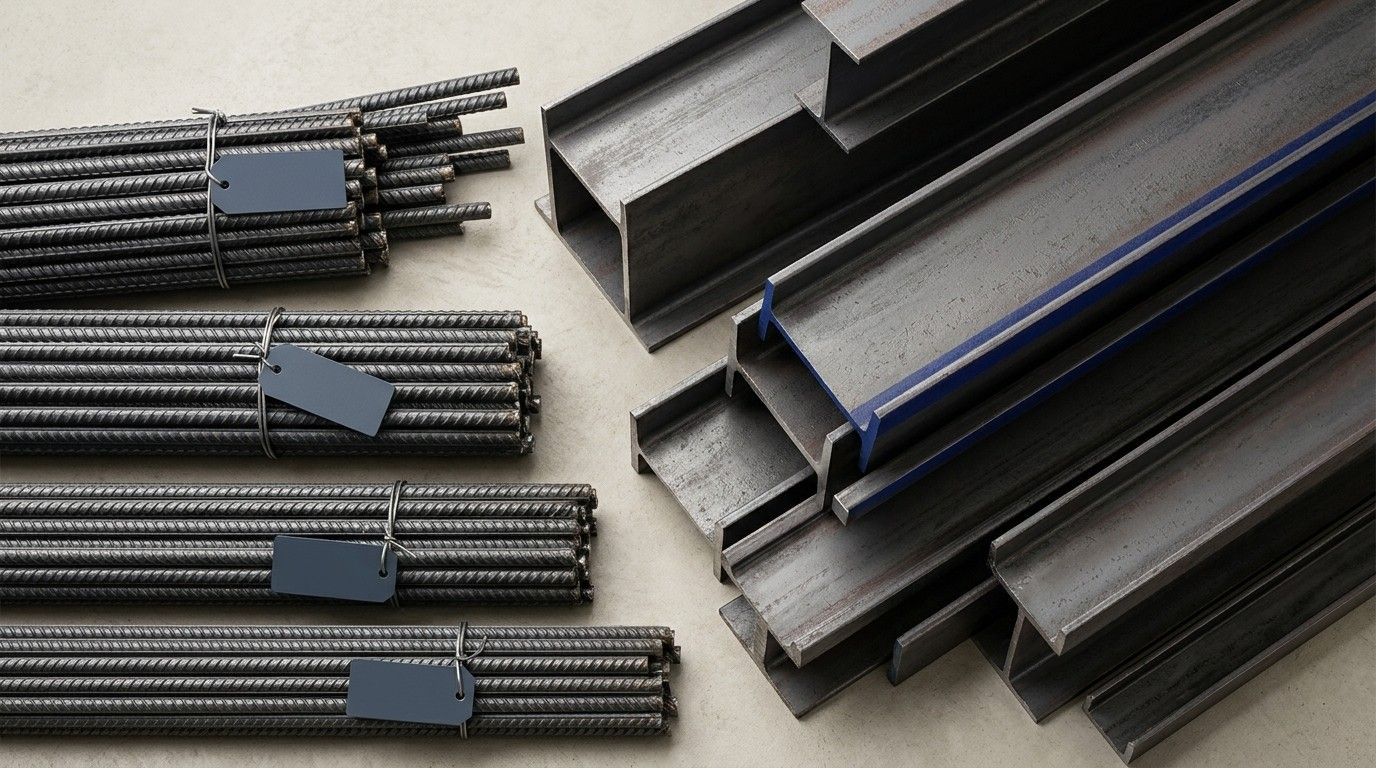
Mexico's non-FTA steel tariff reform, in force since January 1, 2026, adds a new duty of roughly 25% to 35% — and up to 50% on a smaller subset of lines — to Korean-origin rebar and structural steel, because South Korea still has no free trade agreement with Mexico. This guide breaks down how the reform changes your landed cost, how much margin it can erase, and which relief programs actually help versus which ones only sound like they do.
For years, importers of Korean rebar and structural steel into Mexico could quote landed cost without worrying much about the tariff line itself. That changed on December 29, 2025, when Mexico's Secretaria de Economia published a decree in the Diario Oficial de la Federacion (DOF) reforming duty rates on 1,463 eight-digit tariff fractions of the LIGIE, Mexico's General Import and Export Tax Law schedule, effective January 1, 2026. The reform applies only to countries that do not have a free trade agreement in force with Mexico — and South Korea is one of them.
According to Mexico Business News, South Korea and Mexico do not currently have a bilateral free trade agreement. Talks that launched in March 2021 stalled, and the two countries have since pursued a different kind of arrangement instead of a tariff-cutting deal. Steel is one of the sectors the reform explicitly targets: Mexican news outlet El Informador, citing the DOF publication, reports that South Korea is named alongside China, India, Indonesia, and Thailand as an origin country newly affected because it lacks a Mexican FTA.
The reform is broad in scope but specific in how it hits any single product. Trade law analysis firm De Minimis Law reports that steel accounts for roughly 18% of the 1,463 reformed tariff lines — about 268 individual fractions — and that the decree carries a fixed one-year term, running from January 1 through December 31, 2026, rather than an open-ended change.
The stated purpose, per Mexico's Secretaria de Economia, is to protect roughly 350,000 jobs across sensitive domestic industries, including steel, automotive, textiles, apparel, appliances, and several others. For a buyer, the practical effect is simpler than the policy language: whichever tariff line your rebar or structural steel falls under determines whether the new decree touches your shipment at all, and if it does, at what rate.
Before this reform, many buyers built landed cost estimates around FOB or CIF price, freight, insurance, and Mexico's value-added tax, with the import duty line sitting at or near zero for most structural steel categories. That assumption no longer holds for Korean-origin material: the reform sets its rates fraction by fraction, not with a single blanket "steel" rate, so the corresponding non-FTA duty has to be applied at the correct eight-digit LIGIE level before adding VAT on top of the duty-inclusive customs value. Skipping that fraction-level check is the most common way a landed-cost estimate ends up wrong, because two similar-looking steel products can sit on different tariff lines carrying different rates.
Recalculating Landed Cost for Korean Rebar or Structural Steel into Mexico
Confirm the Incoterm and starting price
Identify whether your supplier's quote is FOB, CIF, or another Incoterm before adding anything else
Add freight and insurance to reach CIF value
If the quote is FOB, add ocean freight and marine insurance to establish the CIF customs value
Identify the exact 8-digit LIGIE tariff fraction
The 2026 reform sets duty fraction by fraction across roughly 268 steel lines, not with one blanket steel rate (De Minimis Law)
Apply the non-FTA duty rate for that fraction
Most reformed steel fractions sit at 25%, 30%, or 35%; a smaller subset reaches 50% (Asociacion Mexicana de Contadores Publicos)
Add Mexico's value-added tax on the duty-inclusive value
VAT is calculated on the customs value plus duty, not on the pre-duty price -- confirm the current rate with your customs broker
Compare the result against your quoted sale price
This step reveals whether a pre-reform quote still holds a workable margin
According to a review of the decree by the Asociacion Mexicana de Contadores Publicos (AMCP), most of the reformed iron and steel categories — including ingots, flat-rolled products, bars, and structural profiles — are taxed at 25%, 30%, or 35%, with a smaller subset of steel tariff fractions set as high as 50%. Some buyer-facing sources describe wire rod (alambron) as one of the categories near the top of that range, but the item-level rate specific to wire rod could not be independently confirmed from Mexico's primary decree text at the time of writing — treat any single "50% on wire rod" claim as unverified until you check your own product's fraction directly against the published schedule.
That range matters most for a commodity, price-per-ton product like construction steel, where a duty increase of this size is large enough to erase margin that looked solid under a pre-reform quote.
A 25-to-35-percentage-point duty applied to the full customs value is large relative to typical margins in a commodity product like rebar or structural steel, where price is quoted per ton and margins are already thin. If a landed-cost model built before December 29, 2025 still assumes a near-zero import duty on the tariff fraction your product falls under, that model is now understating cost by roughly a quarter to a third of the customs value — not counting the smaller group of lines that reach 50%.
The practical fix is to rebuild the quote from the tariff-fraction level up, rather than adjusting an old landed-cost number by a rough percentage. A margin that looked healthy under the pre-reform schedule can turn negative once the correct fraction-specific rate is applied, especially on lower-margin, high-volume rebar orders where a few percentage points of duty were already the difference between a profitable container and a break-even one.
Pre-Quote Checklist Before Confirming a Mexico-Bound Order
Buyers who supply Mexican maquiladoras sometimes assume IMMEX status blocks the new tariff entirely. It does not. Trade law firm Foley & Lardner explains that under USMCA's "lesser of the two" rule, duty relief on temporarily imported inputs is capped at whichever is lower — the Mexican duty or the destination-country duty on the finished good — so many maquilas will still owe part of the new tariff on Korean steel inputs.
Two narrower programs can help without eliminating the exposure. Companies that qualify for PROSEC or the Eighth Rule (Regla Octava) program may import specific industrial inputs, including some steel categories, at reduced duty rates, according to Foley & Lardner. Before quoting a Mexican buyer, confirm in writing whether their operation actually holds one of these registrations, and for which specific inputs — a general maquiladora license alone is not enough.
The third variable is time. The reform decree itself runs for a fixed one year, December 29, 2025 through December 31, 2026, per Mexico's Secretaria de Economia, with no extension published alongside it. Any Mexico-bound contract that runs past this year should treat next year's schedule as unconfirmed rather than assume today's rates carry forward automatically.
Duty Exposure: Standard Import vs. IMMEX Maquiladora
| Standard (Non-Maquila) Import | IMMEX Maquiladora Import | |
|---|---|---|
| Does the 2026 non-FTA tariff apply? | Yes, in full on the applicable tariff fraction | Often partially -- USMCA's 'lesser of the two' rule caps relief, so many maquilas still owe part of the new duty (Foley & Lardner) |
| PROSEC / Eighth Rule eligibility | Not applicable | May reduce duty on qualifying steel inputs if registered, but does not eliminate exposure (Foley & Lardner) |
| What to confirm before quoting | The exact tariff fraction and its rate | The buyer's actual program registration and which specific inputs it covers |
No — and this is the misconception worth clearing up before it affects a pricing decision. Mexico Business News reports that South Korea's trade minister has publicly described the non-FTA tariff situation as placing Korean companies at a competitive disadvantage against firms from countries that do hold Mexican FTAs, a gap widened further by Mexico's pending USMCA review. The same report notes that Korea's 2025 exports to Mexico, at $23.07 billion, already dwarf Mexico's $6.6 billion in exports to Korea.
On May 12, 2026, the two countries signed a Joint Ministerial Declaration establishing a Ministerial Strategic Dialogue and working group — a trade-and-investment framework that replaces the FTA negotiations that stalled after launching in March 2021. It is a dialogue mechanism, not a tariff-reducing agreement, so it does not change the rate your shipment pays under the January 2026 reform.
A New Trade Framework Signed in May 2026 Is Not a Tariff Cut
Dialogue framework, not a tariff-reducing deal
On May 12, 2026, Korea and Mexico signed a Joint Ministerial Declaration setting up a trade-and-investment dialogue framework, replacing the FTA talks that stalled after launching in March 2021 (Mexico Business News). It is a dialogue mechanism, not a tariff-reducing agreement -- it does not lower the duty rate your shipment pays under the January 2026 reform.
Last updated: 2026-07. Mexico's tariff schedule, FTA status, and program eligibility rules can change, and the exact rate that applies to a specific tariff fraction should be confirmed directly with a licensed Mexican customs broker or Mexico's Secretaria de Economia before any shipment is booked or priced.
Most reformed iron and steel tariff lines — including bars and structural profiles — are now taxed at 25%, 30%, or 35% under Mexico's January 2026 reform, according to the Asociacion Mexicana de Contadores Publicos, with a smaller subset of steel fractions set as high as 50%. Because South Korea has no free trade agreement with Mexico, that rate applies in full to Korean-origin rebar and structural steel, so the exact addition to your landed cost depends on which eight-digit tariff fraction your product falls under, not a single flat number across all steel.
The decree that created this reform has a fixed one-year term, in force from January 1 through December 31, 2026, according to Mexico's Secretaria de Economia and confirmed by trade law analysis from De Minimis Law. No extension or sunset date beyond 2026 has been published alongside the decree, so buyers pricing contracts that run into 2027 should treat the schedule as unconfirmed past this year rather than assume it lapses automatically.
Yes. The reform sets rates fraction by fraction across roughly 268 individual steel tariff lines, not with one blanket rate for "steel," according to De Minimis Law's analysis of the decree. Two products that both look like generic structural steel to a non-specialist can sit on different eight-digit LIGIE fractions carrying different rates, so confirming your product's exact fraction against the published schedule is the only reliable way to know your rate before quoting a buyer.
IMMEX (maquiladora) status alone does not exempt Korean steel inputs from the new tariff — Foley & Lardner explains that USMCA's "lesser of the two" rule caps relief at whichever duty is lower, so many maquilas still owe part of the new rate. PROSEC and the Eighth Rule (Regla Octava) program can reduce duty on specific qualifying industrial inputs, including some steel categories, but neither eliminates the exposure entirely, so confirm your buyer's actual program registration and the specific inputs it covers before assuming relief applies.
No. The Joint Ministerial Declaration that Korea and Mexico signed on May 12, 2026 establishes a trade-and-investment dialogue framework, according to Mexico Business News — it is a substitute for the stalled FTA negotiations, not a tariff-reducing agreement, and it does not change the rate your shipment pays under the January 2026 reform.
Comments
Post a Comment