Polymer Cement in Peru: How Seismic Code E.030 and Reconstruction Spending Drive Repair Mortar Demand
Polymer Cement in Peru: How Seismic Code E.030 and Reconstruction Spending Drive Repair Mortar Demand
- Get link
- X
- Other Apps
Cost & Margin · New Zealand · OLED Display Panel
OLED panels enter New Zealand duty-free under the WTO Information Technology Agreement, but the 15% GST charged on the full CIF-plus-freight value still catches first-time importers who forget to add freight and insurance into their landed-cost math.
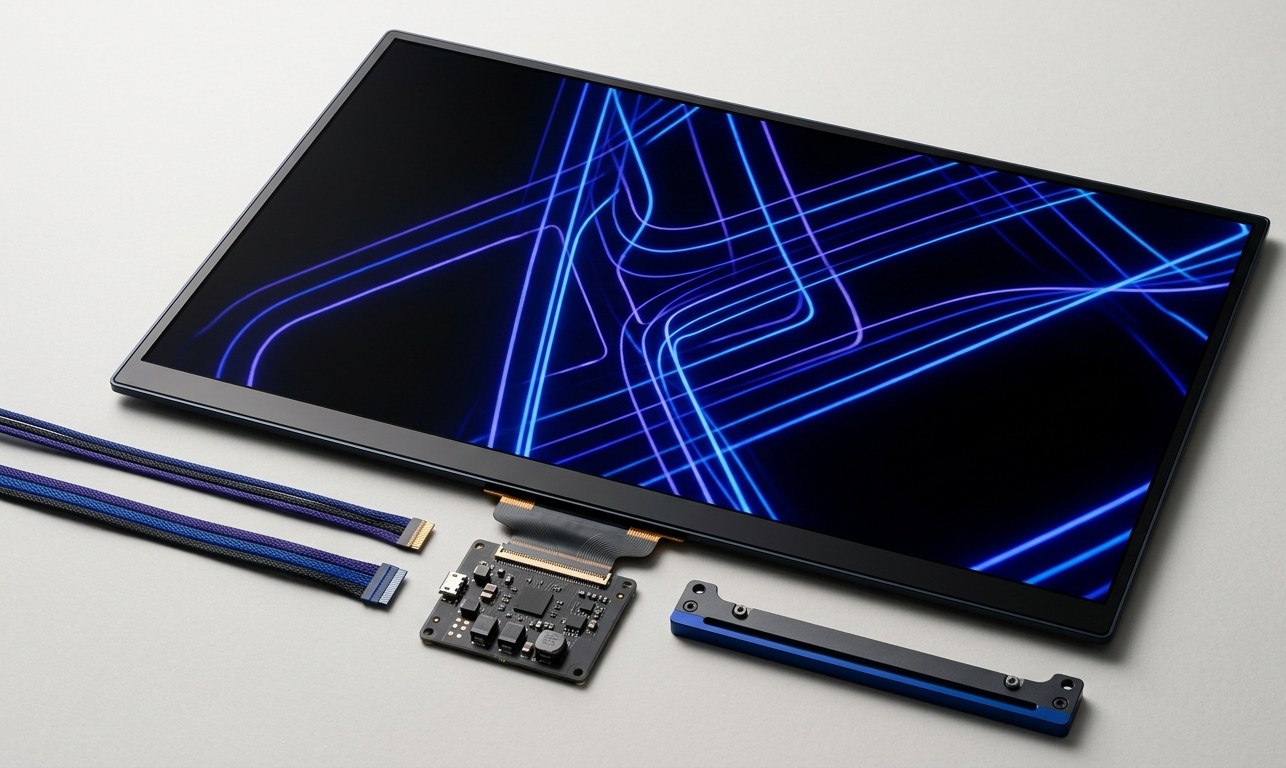
OLED display panels clear New Zealand customs duty-free under the WTO Information Technology Agreement tariff concession, but a 0% duty rate does not mean a 0% landed cost. New Zealand still charges 15% GST on the CIF value of the shipment plus freight, insurance, and any duty owed, and first-time importers who forget to add freight and insurance into that base routinely under-budget the true cost. This guide breaks down how the duty-free rate and the 15% GST formula interact, and what changed with New Zealand's import levy structure from April 2026.
New Zealand eliminates customs duty on nearly all computer hardware, including flat panel display modules such as OLED panels, through its implementation of the WTO Information Technology Agreement (ITA). According to New Zealand Customs Service, this duty-free treatment operates through a Customs tariff concession — Reference No. 60 — that covers ITA-covered goods. A 2017 amendment order moved this treatment from Part II to Part I of New Zealand's Tariff purely for transparency; it did not change any duty rates for covered goods, per Customs' own notice on the change. Separately, the U.S. International Trade Administration confirms that nearly all computer software and hardware entering New Zealand is duty-free, and that New Zealand's general tariffs — mostly 0% to 10% — are concentrated on categories like clothing, footwear, and carpets, not electronics or IT hardware.
One caveat is worth flagging before you quote a landed price: this research could not directly retrieve the exact tariff-line text for HS 8524 (flat panel display modules) from New Zealand's Working Tariff Document itself, because that document is distributed as a downloadable database file rather than a page that can be read directly. The duty-free treatment is well corroborated by two independent official sources, but if a panel's exact HS subheading is unusual or bundled with other components, confirm the specific line through Customs' Tariff Finder tool or a licensed customs broker before locking in a price.
Customs Duty vs. GST on Your OLED Panel Shipment
| Customs Duty | GST | |
|---|---|---|
| Rate for OLED panels | 0%, under the WTO-ITA tariff concession (New Zealand Customs Service) | 15%, New Zealand's standard rate (New Zealand Customs Service) |
| Calculated on | Customs value of the goods | Customs value + duty (if any) + freight + insurance |
| Legal basis | Customs tariff concession Reference No. 60, implementing the WTO Information Technology Agreement | Goods and Services Tax Act, per New Zealand Customs Service |
| Recoverable by a GST-registered importer? | Not applicable -- no duty is charged on correctly classified OLED panels | Generally yes, as an input tax deduction (Inland Revenue Department) |
Duty-free is not the same as tax-free. New Zealand charges GST at a standard rate of 15% on imported goods, according to New Zealand Customs Service. That 15% is not applied to the invoice price alone — it is calculated on the total of the value of the goods, plus any Customs duty owed (zero, for ITA-covered OLED panels), plus freight, postal, courier, and insurance charges.
That formula catches out buyers who assume GST is 15% of what they pay their supplier. If an OLED panel order costs USD 40,000 on a goods-only basis and freight plus insurance add another USD 3,500, New Zealand calculates GST on the full USD 43,500 landed value, not the USD 40,000 goods value alone, since duty adds nothing here. Leaving freight and insurance out of a GST estimate is the single most common way a New Zealand landed-cost calculation comes in low.
It is also worth separating two numbers that general sourcing guides sometimes blur together: a flat "15% import duty on electronics" figure occasionally appears in generic import guides, but it does not match New Zealand's actual tariff treatment of computer hardware. The 15% that does apply to an OLED panel shipment is GST, not customs duty — confusing the two can make an otherwise accurate landed-cost model look wrong when the mislabeled guide is actually the problem.
Don't Confuse the 15% GST Rate With a Duty Rate
Don't Confuse the 15% GST Rate With a Duty Rate
Some general import guides quote a flat 15% 'import duty' for electronics entering New Zealand. That figure is New Zealand's GST rate, not a duty rate -- computer hardware, including OLED display panels, is duty-free under the WTO-ITA tariff concession according to New Zealand Customs Service and the U.S. International Trade Administration. Budgeting for a 15% duty on top of a separate GST charge overstates your landed cost; the accurate model is 0% duty plus 15% GST on the full landed value.
When a Korean supplier quotes an OLED panel shipment on a CIF (cost, insurance, freight) basis, the price already bundles the goods cost with international freight and insurance into one number. New Zealand Customs does not let that bundled figure stand in for the Customs value used to assess GST and duty.
Per New Zealand Customs Service's guidelines for goods purchased on a CIF or similar basis, the actual international freight and insurance costs must be identified and deducted from the CIF price paid, with all reasonable steps taken to obtain that cost breakdown before the import entry is submitted. If a supplier or freight forwarder cannot separate the freight and insurance components from the CIF total, Customs requires an alternative valuation method under Schedule 4 of the Customs and Excise Act 2018 instead.
In practice, this means asking a supplier for an itemized quote — goods value, international freight, and insurance shown as three separate line items — rather than a single CIF number, before a customs broker submits the entry. It costs nothing to ask for the breakdown up front, and it removes the risk of a Schedule 4 valuation dispute or delay at the border.
The Four-Step OLED Panel Landed Cost Build
Start with the goods value
What you pay your Korean supplier, ex-works or FOB, before freight and insurance are added.
Add itemized freight and insurance
Requested as separate line items from your supplier or forwarder, per New Zealand Customs Service's CIF valuation guidance.
Apply the 0% ITA duty rate
Confirmed for correctly classified OLED panels under Customs tariff concession Reference No. 60 -- this step adds nothing for most shipments.
Apply 15% GST to the full base
Goods value plus freight plus insurance plus duty (if any), per New Zealand Customs Service's GST calculation rule.
Put the duty-free rate and the GST formula together, and a landed-cost estimate for an OLED panel shipment builds in four layers: the goods value, the itemized freight and insurance, the (zero) duty, and 15% GST applied to the sum of the first three.
For a shipment with a USD 50,000 goods value and USD 4,000 in combined freight and insurance, GST applies to a USD 54,000 base, producing roughly USD 8,100 in GST — not USD 7,500, which is what a buyer gets by mistakenly applying 15% to the goods value alone. That USD 600 gap looks small on a single shipment; multiplied across a year of recurring orders, it is the difference between a landed-cost model that holds up and one that quietly erodes margin on every container. The reverse mistake is just as costly: stacking a 15% duty on top of 15% GST, as the earlier misconception suggests, overstates landed cost and can price a quote out of the market unnecessarily.
Two more line items belong in a complete New Zealand landed-cost picture, on top of duty and GST.
First, Customs does not collect duty or GST at all if the value of an imported item or shipment is NZD $1,000 or under, according to New Zealand Customs Service — though this exemption does not apply to alcohol or tobacco, and multiple orders from the same supplier arriving on the same day are treated as a single shipment for this threshold. Most B2B OLED panel orders sit well above NZD $1,000, so this mainly matters for sample shipments — and stacking several same-day orders from one supplier to stay under the threshold does not work, because Customs aggregates them.
Second, effective 1 April 2026, New Zealand Customs and the Ministry for Primary Industries replaced their previous per-shipment goods management fees with a new levy regime, shifting from report-based to consignment-based charging: a High-Value Goods Levy applies to shipments with a value for duty over NZD $1,000, and a Low-Value Goods Levy applies at or under that threshold, per Customs' published notice on the 2026 changes. This research could not independently verify the exact dollar amount of either levy from an official source, so confirm the current rate directly with Customs or a broker rather than relying on a figure carried over from before April 2026.
If a business is GST-registered in New Zealand, the GST paid at the border is not necessarily a net cost. Per Inland Revenue Department guidance, GST-registered businesses can generally claim GST paid on imported goods as an input tax deduction, to the extent the goods are used in their taxable activity to make taxable supplies — reselling imported OLED panels to distributors or retailers typically qualifies. IRD guidance also simplifies the paperwork for smaller-value imports: for goods valued at NZD $10,000 or less, excluding GST, apportionment between taxable and non-taxable use is generally not required if the principal purpose is making taxable supplies.
This does not eliminate the GST cash-flow impact — GST is still paid at the border before it can be claimed back through a GST return — but for a GST-registered importer, that 15% is closer to a timing cost than a permanent margin hit.
Before You Quote a Landed Price to a New Zealand Buyer
Last updated: 2026-07. The information in this guide is current as of July 2026 and is provided for informational reference only. This guide is for informational reference only. New Zealand's duty and GST treatment, de minimis threshold, and goods levy rates can change, and the specific classification, duty, and levy status of any shipment should be confirmed directly with New Zealand Customs Service or a licensed customs broker before an order is quoted or booked.
For the great majority of computer hardware, including flat panel display modules, yes — New Zealand implements duty-free treatment for ITA-covered IT goods through Customs tariff concession Reference No. 60, and the U.S. International Trade Administration separately confirms that nearly all computer hardware clears New Zealand customs duty-free. The exact tariff-line text for a specific HS 8524 subheading was not directly retrievable from New Zealand's Working Tariff Document, so confirm the precise classification through Customs' Tariff Finder tool or a licensed broker before quoting a landed price.
It is not 15% of the invoice price alone. New Zealand Customs Service calculates the 15% GST on the total of the goods value, plus any Customs duty owed, plus freight, postal or courier charges, and insurance. Leaving freight and insurance out of that base is the most common reason an estimate comes in under the real GST bill.
New Zealand Customs Service requires that the actual international freight and insurance costs be identified and deducted from the CIF price, with all reasonable steps taken to obtain that breakdown before the import entry is filed. If a supplier or forwarder cannot provide an itemized breakdown, Customs requires an alternative valuation method under Schedule 4 of the Customs and Excise Act 2018 instead.
Yes. GST of 15% still applies on the full landed value, and since 1 April 2026, Customs and the Ministry for Primary Industries charge a consignment-based goods levy — a High-Value Goods Levy over NZD $1,000 value for duty, or a Low-Value Goods Levy at or under that threshold. Confirm the current levy amount directly, since this research could not verify an exact dollar figure from an official source.
Generally, yes. Per Inland Revenue Department guidance, GST-registered businesses can claim GST paid on imports as an input tax deduction to the extent the goods go toward making taxable supplies, and for imports valued at NZD $10,000 or less (excluding GST), apportionment is usually not required if the principal purpose is taxable supplies.
Comments
Post a Comment