Polymer Cement in Peru: How Seismic Code E.030 and Reconstruction Spending Drive Repair Mortar Demand
Polymer Cement in Peru: How Seismic Code E.030 and Reconstruction Spending Drive Repair Mortar Demand
- Get link
- X
- Other Apps
Customs Documentation & Compliance · Canada · Kitchenware Sourcing
Canada's Korea Tariff (KRT) rate on stainless steel kitchenware is 0% instead of the 6.5% MFN duty — but only when a completed Form BSF760 Certificate of Origin is in the importer's hands when the customs declaration is made.
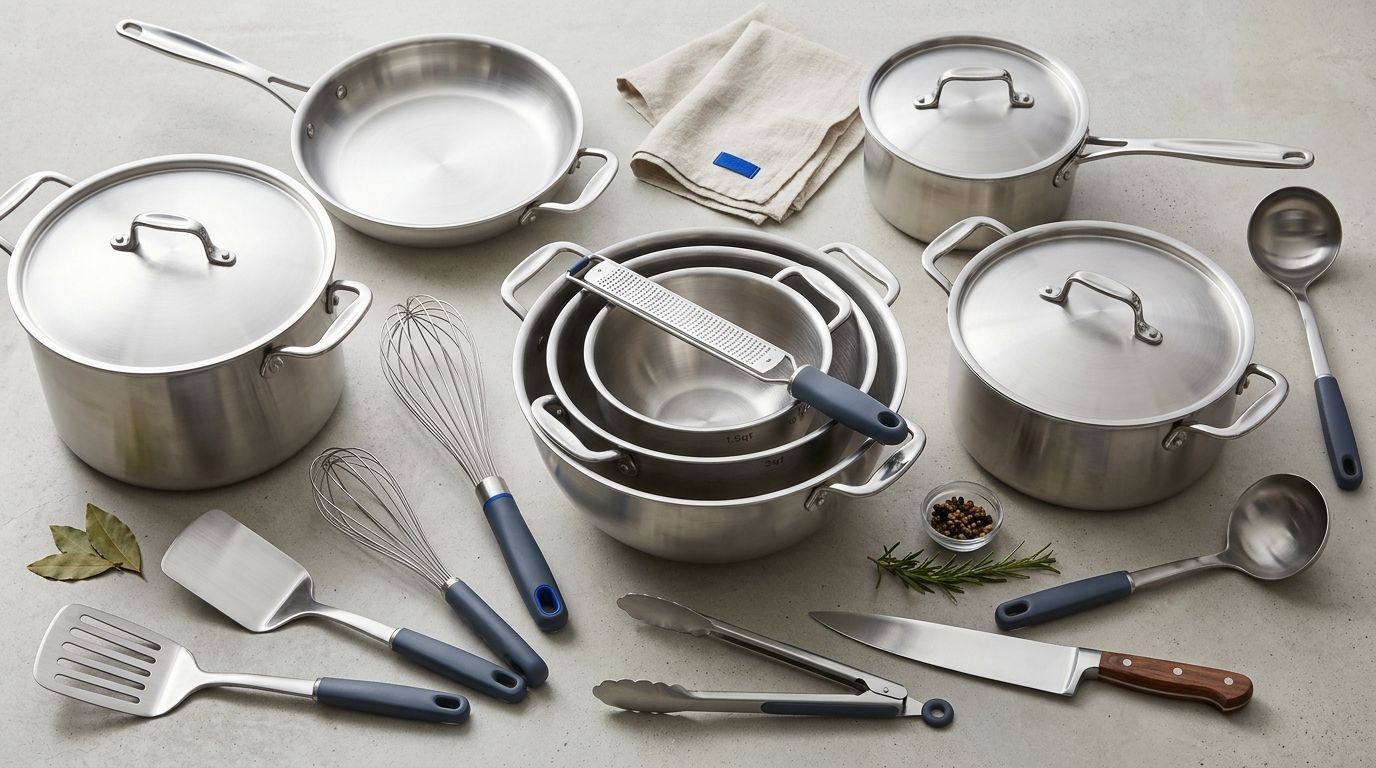
A CKFTA Certificate of Origin — not simply the fact that a shipment was made in Korea — decides whether stainless steel kitchenware (HS 7323.93.90) clears Canadian customs at the Korea Tariff's 0% rate or at Canada's 6.5% MFN duty. Without Form BSF760 in the importer's possession when the customs declaration is made, CBSA applies the full 6.5% rate regardless of where the goods were produced. This guide covers confirming the tariff classification, completing the certificate, and meeting Canada's bilingual labeling rule before the PO is placed.
Stainless steel cookware, mixing bowls, and kitchen tools imported into Canada from Korea are classified under tariff item 7323.93.90 in Chapter 73 of Canada's Customs Tariff Schedule. The general Most-Favoured-Nation (MFN) rate on that tariff item is 6.5%, and it applies automatically to every shipment unless the importer claims a preferential rate instead.
Korea qualifies for a better rate. Under the Canada-Korea Free Trade Agreement (CKFTA), which entered into force on January 1, 2015, tariff item 7323.93.90 is listed with the Korea Tariff (KRT) treatment code rated Free. That means a shipment of Korean-made kitchenware can clear customs duty-free — but only if the importer has the right paperwork in hand at the border. The paperwork is a Certificate of Origin, and getting it wrong is one of the most common reasons buyers end up paying 6.5% they did not need to pay.
Pre-PO CKFTA Verification Sequence
Confirm the exact tariff line
Check whether your product is finished kitchenware (7323.93.90) or manufacturing parts (7323.93.10) -- the two lines are treated differently
Confirm KRT eligibility and origin criterion
Ask your supplier which of the four origin criteria (A-D) the goods meet under CBSA Memorandum D11-4-14
Request Form BSF760 from the exporter
The exporter, or producer for the exporter's use, must complete it with the 6-digit HS classification and origin criterion
Decide single-shipment vs. blanket certificate
A blanket certificate can cover repeat identical shipments from the same exporter for up to 12 months
Confirm bilingual English/French labeling is ready
The product name or function and the net quantity must appear in both languages before the goods clear customs
Set up six-year document retention
Keep the certificate and its supporting records on file for CBSA inspection
Before anything else, confirm which tariff item actually applies to your order. Finished retail cookware, mixing bowls, and kitchen tools fall under statistical suffix 10 of tariff item 7323.93.90, labeled "Cooking utensils and kitchenware." That is the line carrying the 6.5% MFN / KRT-Free rate described above.
That is not the only stainless steel classification in Chapter 73. Steel parts imported specifically for use in manufacturing cookware — not the finished product itself — are classified separately, under tariff item 7323.93.10, and that line already carries a Free MFN rate on its own, with no CKFTA certificate required. Confusing the two lines is an easy mistake if a shipment includes a mix of finished goods and component parts, so it is worth confirming the classification for each product on your packing list before relying on any single rate for the whole order.
A Parts Classification Is Not a Finished-Goods Classification
A Parts Classification Is Not a Finished-Goods Classification
Steel parts imported specifically for manufacturing cookware are classified under 7323.93.10 and already carry a Free MFN rate with no certificate needed. Finished retail cookware, mixing bowls, and kitchen tools fall under a different line, 7323.93.90, at 6.5% MFN unless a valid CKFTA certificate is on file. Applying the parts rate to a finished-goods shipment is a classification error CBSA can catch and reassess (CBSA Customs Tariff Schedule, Chapter 73, T2026).
The document that lets you claim the KRT rate is Form BSF760, "Certificate of Origin: Canada-Korea Free Trade Agreement." It must be completed legibly and in full by the exporter in Korea — or voluntarily by the producer, for the exporter's use — and it must be in the Canadian importer's possession at the time the customs declaration is made. Waiting until after the shipment has cleared is too late.
The form itself is not complicated, but it has to be complete. It requires the HS tariff classification stated to six digits, and it requires the exporter to state which origin criterion the goods meet. Missing either of these two fields is one of the more common reasons a customs broker rejects a certificate at the border and falls back to charging the 6.5% MFN rate instead.
HS 7323.93.90: Duty Without vs. With a Valid CKFTA Certificate
| Without a valid Certificate of Origin | With a valid Form BSF760 on file | |
|---|---|---|
| Applicable duty rate | 6.5% MFN, the general rate (CBSA Chapter 73, T2026) | 0% -- Korea Tariff (KRT), Free (CBSA Customs Notice 14-030) |
| Legal basis | Customs Tariff Schedule, Chapter 73, T2026 edition | Canada-Korea Free Trade Agreement, in force since Jan 1, 2015 |
| What CBSA needs in hand at declaration | Standard commercial entry documents only | Form BSF760 completed by the exporter, with 6-digit HS code and origin criterion |
Every CKFTA Certificate of Origin has to state one of four origin criteria, labeled A through D in CBSA's Memorandum D11-4-14. Criterion A covers goods wholly obtained or produced entirely in Korea or Canada. Criterion B covers goods produced entirely from originating materials. Criterion C covers goods that meet the product-specific rule of origin in the agreement's Annex 3-A, which can involve a required tariff classification change, a value test, or both. Criterion D covers goods that do not meet that tariff-classification-change rule for certain non-originating materials but still satisfy the CKFTA's separate value test.
Which criterion applies to a specific order depends on where the raw steel and other inputs came from, and that is a determination the exporter or producer has to make and state on the form — not something an importer should assume from the finished product alone. If any raw material, such as steel coil, was sourced from outside Korea, ask your supplier directly which criterion they are claiming and why, rather than treating the certificate as a formality to be signed without review.
If you place repeat orders with the same Korean factory, you do not need a new certificate for every container. CBSA allows a single Certificate of Origin to serve as a blanket certificate covering multiple, identical shipments of the same goods from the same exporter for up to 12 months. That can save meaningful paperwork on a recurring purchase order, but the certificate still needs to be renewed once the 12-month window closes, and it only covers shipments that are genuinely identical to what the original certificate describes.
Claiming the KRT rate creates a recordkeeping obligation, not just a one-time form. Exporters, producers, and importers are all required to retain the Certificate of Origin and its supporting records for six years, and to produce them for inspection if a customs officer asks. If your business is ever audited and the certificate or its backup documentation cannot be produced, CBSA can reassess the shipment at the 6.5% MFN rate retroactively, along with any applicable penalties. Build the six-year retention period into your own document management process rather than assuming your supplier is keeping records on your behalf.
Tariff treatment is not the only compliance requirement tied to this product category. Canada's Consumer Packaging and Labelling Act treats stainless steel kitchenware sold in ordinary retail packaging as a "prepackaged product," and it prohibits selling, importing, or advertising that product in Canada unless the label shows the net quantity in the prescribed form, displayed clearly on the principal display panel.
According to the Competition Bureau's guide to the Act, two specific pieces of label information must appear in both English and French: the product's common or generic name (or its function) and the net quantity declaration, including any spelled-out metric unit words. The dealer's name and address are the exception — that information can appear in either language alone. Getting this bilingual requirement into your supplier's packaging artwork before production, rather than after the goods have already shipped, avoids a relabeling problem at the worst possible time. Penalties for non-compliance run up to $5,000 on summary conviction or $10,000 on indictment, and the law extends personal liability to company officers, directors, or agents who were involved.
Before confirming a purchase order, work through the questions below with your Korean supplier so the paperwork is ready before the goods ship, not after they arrive at the Canadian border.
Questions to Ask Your Korean Supplier Before You Place the PO
Last updated: 2026-07. This guide is for informational reference only. HS classification, origin criteria, and CBSA's tariff schedule can be interpreted differently depending on a shipment's specific composition and sourcing history. Confirm your product's classification, origin criterion, and certificate requirements directly with a licensed Canadian customs broker or CBSA before relying on any single rate to price or clear a shipment.
You have to claim it. Tariff item 7323.93.90 carries a 6.5% MFN duty by default, and CBSA only applies the Korea Tariff's 0% rate when the importer has a valid Certificate of Origin, Form BSF760, in hand at the time the customs declaration is made. Without that certificate on file, the shipment is charged the 6.5% rate even though it was made in Korea.
The exporter in Korea completes and signs the certificate, or the producer can complete it voluntarily for the exporter's use, according to CBSA's Form BSF760 instructions. As the Canadian importer, your responsibility is to have that completed certificate in your possession before the customs declaration is filed, not to complete the form yourself.
Yes. CBSA allows a blanket Certificate of Origin to cover multiple identical shipments of the same goods from the same exporter for up to 12 months, per Memorandum D11-4-14. After 12 months, the certificate needs to be renewed, and it only covers shipments that match what the original certificate describes.
The Consumer Packaging and Labelling Act's prohibition covers importing the product into Canada, not just selling it at retail, so the bilingual requirement applies before the goods clear customs. The product's common or generic name (or function) and its net quantity declaration must appear in both English and French; the dealer's name and address can be in either language alone, according to the Competition Bureau's guide to the Act.
Finished mixing bowls and kitchen tools fall under the same tariff item as cookware, 7323.93.90, under the statistical suffix for "Cooking utensils and kitchenware." That is different from steel parts imported specifically for manufacturing cookware, which are classified separately under tariff item 7323.93.10 and already carry a Free MFN rate on its own.
Comments
Post a Comment