Polymer Cement in Peru: How Seismic Code E.030 and Reconstruction Spending Drive Repair Mortar Demand
Polymer Cement in Peru: How Seismic Code E.030 and Reconstruction Spending Drive Repair Mortar Demand
- Get link
- X
- Other Apps
Regulatory Compliance & Certification · UAE · Energy Storage Systems (ESS)
Jebel Ali customs treats lithium-ion ESS shipments as Class 9 dangerous goods — verify the UN38.3 test summary, the IEC 62619 report, and the correct shipping mark before you sign the purchase order.
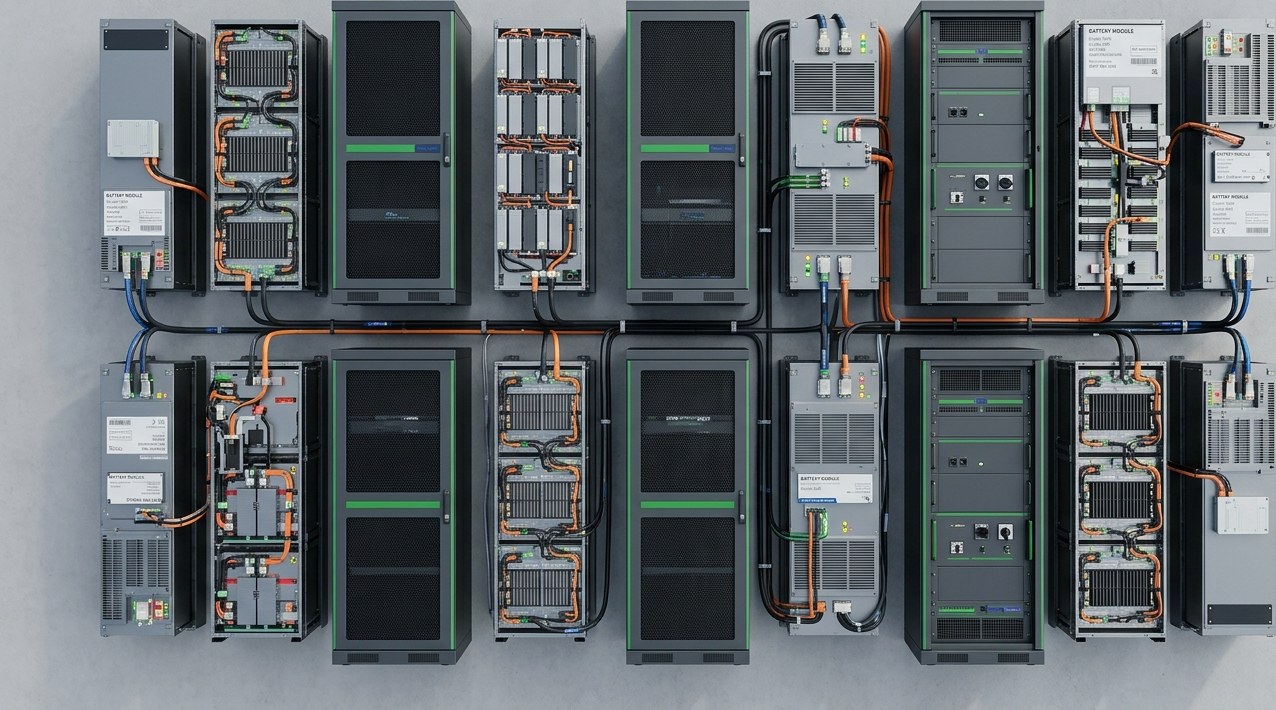
Before signing a purchase order for a lithium-ion energy storage system bound for the UAE, buyers need three documents confirmed in advance: a signed UN38.3 test summary, an IEC 62619 report covering the assembled battery rack, and the correct Class 9 dangerous goods shipping mark. Jebel Ali customs treats these ESS units as Class 9 hazardous cargo, and a cell-level-only report is a common reason containers get held at the port. This checklist covers what to verify and what to ask your supplier first.
A lithium-ion energy storage system is not treated like an ordinary industrial machine at customs. Under the IMDG Code, lithium-ion cells and batteries are Class 9 dangerous goods, shipped under Packing Group II, according to DG Inspector's shipping compliance guide. Standalone cells or batteries are assigned UN3480; batteries packed with or inside equipment are assigned UN3481. Either way, a fully regulated shipment needs a bilingual Shipper's Declaration for Dangerous Goods listing the UN number, proper shipping name, packing group, package counts, and a 24-hour emergency contact.
Some importers assume a small or exemption-sized order will avoid this paperwork. It will not, for an ESS — IMDG Special Provision 188 only relieves very small cells and batteries, and an industrial ESS module is well above every threshold in it. The UAE Government's own services portal adds a second layer: restricted or hazardous goods categories require prior approval from the competent authority before import, with importers directed to the Federal Customs Authority and emirate-level customs commodity guides. Together, these two layers — international transport law and UAE import control — are why an uncertified or under-documented lithium ESS container can sit at Jebel Ali instead of moving to your warehouse.
The checklist below groups into three practical categories: transport-safety proof, the correct shipping mark, and (if relevant) a free-zone storage permit. None of these six items is optional for an industrial ESS shipment, and none can be produced quickly once a container is already booked — test reports and permits take time, so the right point to ask is before the PO, not after the deposit is paid.
Suppliers most often deliver the first two items in an incomplete form: a safety data sheet that only references UN38.3 instead of the actual test summary, or an IEC 62619 report written for a single cell instead of the assembled unit you are buying. The other four items are largely paperwork-matching problems, but they still cause holds when the details on one document do not match another.
Pre-PO Document Checklist for a UAE-Bound Lithium ESS Shipment
UN38.3 refers to Part III, subsection 38.3 of the UN Manual of Tests and Criteria. It requires lithium cells and batteries to pass eight sequential tests — altitude simulation, thermal cycling, vibration, shock, external short circuit, impact, overcharge, and forced discharge — before transport by air, sea, road, or rail, according to Intertek. A signed test summary must be available from the shipper on request throughout the supply chain. One summary is tied to a specific battery design and covers every shipment of that design — it does not need to be regenerated per container, but it must name the model you are actually buying.
IEC 62619 answers a different question. Now in its second edition, published 24 May 2022, it sets safety requirements for secondary lithium cells and batteries in industrial applications, and it explicitly lists energy storage systems among the stationary applications it covers, according to the International Electrotechnical Commission. Testing includes an external short-circuit test at 30 milliohms held for six hours, a thermal abuse test ramped to 85 degrees Celsius for three hours, an overcharge test past the rated voltage, and a forced discharge test — all judged on one criterion: no fire, no explosion, according to Envi Chambers' technical reference.
The detail buyers most often miss is scope. A certificate labeled IEC 62619 does not by itself prove the exact SKU you are quoted was the unit tested — a cell can pass, and the assembled rack built from that cell can still fail. Ask for the report number, testing lab, and test date, and confirm in writing that the report covers the assembled rack or cabinet, not only the cell inside it.
The two Class 9 entries for lithium-ion batteries look similar but describe different physical situations. UN3480 covers standalone cells or batteries, not packed with other equipment. UN3481 covers batteries packed with, or already installed inside, the equipment they power, according to DG Inspector. Both sit in Class 9, Packing Group II.
For a containerized ESS cabinet, the batteries are almost always pre-installed inside the enclosure before it ships, which points to UN3481 rather than UN3480. This is not a minor labeling detail: the UN number on your Shipper's Declaration has to match how the cargo is actually packed, and a mismatch is exactly the kind of discrepancy a customs inspection is designed to catch.
UN3480 vs. UN3481: Which Applies to Your ESS Cabinet
| UN3480 | UN3481 | |
|---|---|---|
| What it covers | Standalone lithium-ion cells or batteries, not packed with equipment | Lithium-ion batteries packed with or contained in equipment |
| Class and Packing Group | Class 9, Packing Group II | Class 9, Packing Group II |
| Typical containerized ESS cabinet | Rare -- most ESS units ship with cells already installed | Usual mark when batteries are pre-installed inside the cabinet or rack |
IMDG Special Provision 188 exists to spare very small consumer batteries from full Class 9 treatment. The relief only applies to lithium-metal cells at or below 1 gram of lithium, lithium-metal batteries at or below 2 grams aggregate lithium, lithium-ion cells at or below 20 watt-hours, and lithium-ion batteries at or below 100 watt-hours, according to a widely cited IMDG Code technical reference. An industrial ESS battery, assembled into a module or rack, sits far above every one of those numbers.
This matters because the exemption is based on the energy rating of the individual cell or battery, not order size. A one-unit pilot purchase of a full-size ESS module gets exactly the same Class 9 treatment as a container of forty units. If a supplier says a small trial order can skip UN38.3 or the Shipper's Declaration, ask them to name the specific threshold their product falls under — for an industrial ESS, there usually is not one.
The Small-Battery Exemption Does Not Cover ESS Modules
The Small-Battery Exemption Does Not Cover ESS Modules
IMDG Special Provision 188 only relieves lithium-metal cells at or below 1 g of lithium, lithium-metal batteries at or below 2 g aggregate lithium, lithium-ion cells at or below 20 Wh, and lithium-ion batteries at or below 100 Wh from full Class 9 marking, labeling, and documentation. An industrial ESS battery assembled into a module or rack is far above every one of these thresholds. Ordering a smaller pilot batch does not change this -- SP188 is based on the energy rating of the individual cell or battery, not the size of the order (Shashi Kallada).
If your ESS shipment will be staged or warehoused inside Jebel Ali Port or JAFZA before final delivery, a separate question comes up: which authority issues the dangerous goods storage approval. HSE matters at Jebel Ali Port and JAFZA are regulated by TRAKHEES, the HSE arm of the Ports, Customs & Free Zone Corporation (PCFC) — not Dubai Municipality, according to a Trakhees/PCFC compliance reference. Organizations handling dangerous goods at JAFZA need an environmental permit and must file a chemical storage declaration with PCFC, a requirement corroborated by a separate freight and logistics guide. This only applies if your cargo actually sits in a Jebel Ali or JAFZA facility — if the container moves straight through to your own warehouse, the TRAKHEES permit is not the relevant document, but the Shipper's Declaration, UN38.3 summary, and standard Federal Customs Authority import approval still apply, per the UAE Government's own services portal.
One more document is worth flagging honestly rather than guessing at: MoIAT issues UAE Certificates of Conformity under the Emirates Conformity Assessment Scheme (ECAS) for regulated product categories, and applicants must submit an accredited-lab test report, according to MoIAT's own service page. Whether batteries or ESS units specifically sit on MoIAT's regulated-category list could not be confirmed from an official source in this research pass — treat it as a question for MoIAT or your supplier, not a confirmed requirement either way.
Does Your Shipment Need a TRAKHEES Storage Permit?
Will your ESS containers be staged or warehoused inside Jebel Ali Port or the Jebel Ali Free Zone (JAFZA) before final delivery?
The checklist above translates into six direct questions worth asking before the PO, not after: the exact battery model on the UN38.3 summary, whether the IEC 62619 report covers the assembled rack or only the cell, which UN number (3480 or 3481) the Shipper's Declaration will carry, whether that model number matches your commercial invoice and packing list, who arranges the TRAKHEES permit if you stage at Jebel Ali or JAFZA, and whether a current MoIAT/ECAS certificate exists for the SKU. A supplier who answers all six with documents, not assurances, is the one whose container is least likely to sit at Jebel Ali waiting on paperwork.
Questions to Ask Your Supplier Before the PO
Last updated: 2026-07. The compliance information in this checklist is current as of July 2026 and is provided for informational purposes only. UAE customs practice at Jebel Ali, and free zone storage requirements, can vary by shipment and change over time. Confirm current requirements with your freight forwarder, a licensed UAE customs broker, or TRAKHEES/PCFC directly before finalizing a purchase order.
One signed UN38.3 test summary is tied to a specific battery design and covers every shipment of that design — it does not need to be regenerated for each container, according to Intertek's testing guidance. What must match every time is the model named on the summary against the model on your commercial invoice and packing list.
A cell-level report alone does not demonstrate the assembled rack or cabinet meets IEC 62619, since the standard's short-circuit, thermal abuse, overcharge, and forced-discharge tests are evaluated at the level tested, not extended upward automatically. Ask for a report explicitly scoped to the assembled unit, plus the report number, lab, and test date.
No. SP188 relief is based on the energy rating of the individual cell or battery — 20 watt-hours for cells, 100 watt-hours for batteries — not on order size. An industrial ESS module sits far above those thresholds whether you order one unit or forty.
TRAKHEES, the HSE arm of the Ports, Customs & Free Zone Corporation (PCFC), issues environmental permits and requires a chemical storage declaration for dangerous goods held at Jebel Ali Port or JAFZA — not Dubai Municipality. This only applies if your shipment is actually staged or warehoused within Jebel Ali or JAFZA.
A mismatched model number is a documented, common reason for a customs hold, since the inspecting authority cannot confirm the tested design is the one inside the container. Confirm the model numbers match exactly before the shipment leaves the supplier's facility, not after it arrives at Jebel Ali.
Comments
Post a Comment