Polymer Cement in Peru: How Seismic Code E.030 and Reconstruction Spending Drive Repair Mortar Demand
Polymer Cement in Peru: How Seismic Code E.030 and Reconstruction Spending Drive Repair Mortar Demand
- Get link
- X
- Other Apps
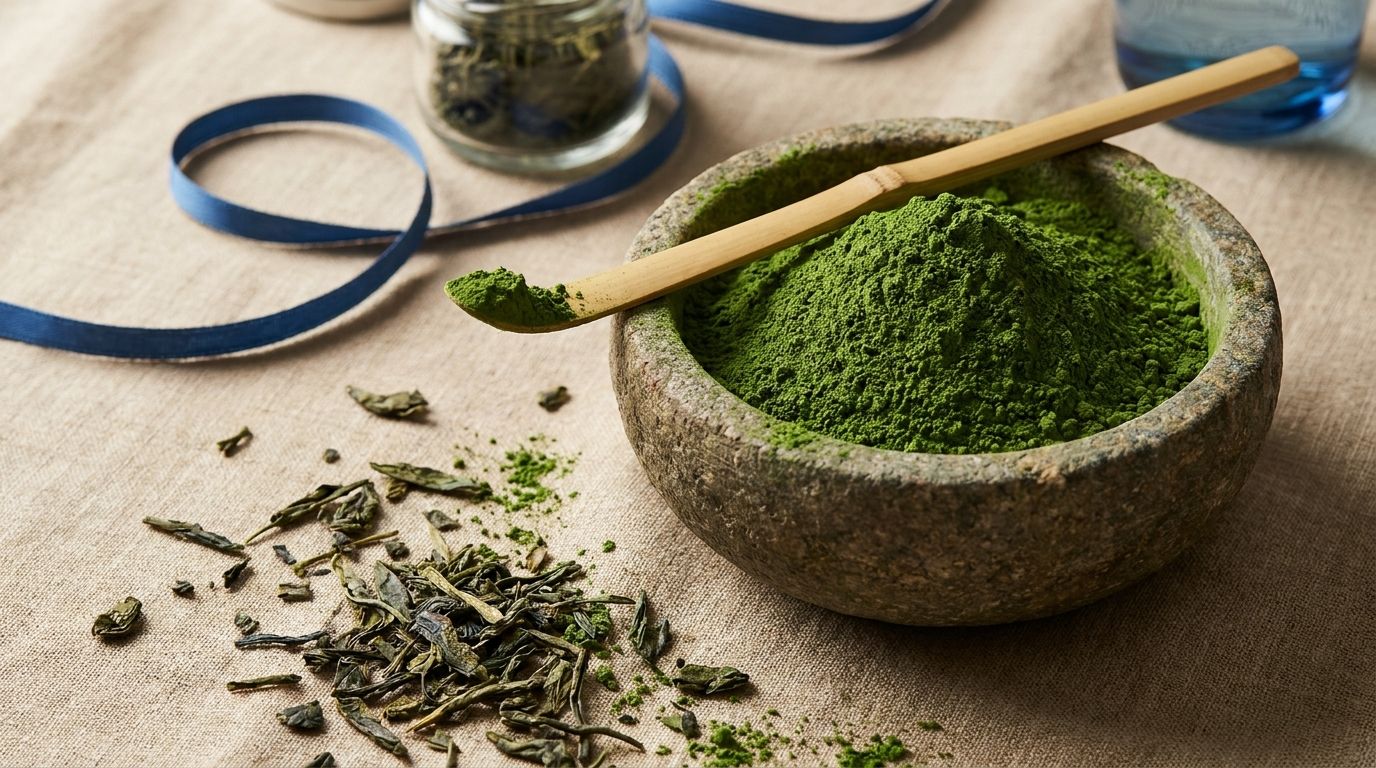
Mexican regulators can fine a food importer up to USD $198,000 for a single non-compliant label — and that is just one of seven compliance errors that can detain Korean organic green tea powder at the Mexican border or strip away its organic price premium. Korea and Mexico have no Free Trade Agreement, and a 10–50% tariff hike on Korean goods took effect January 1, 2026. Each mistake below maps to the exact COFEPRIS or SENASICA rule behind it, along with the fix your team can act on before the next shipment.
Mexico's Federal Commission for Protection against Sanitary Risks (COFEPRIS) runs a permitting system entirely separate from the FDA, EFSA, or any bilateral food-safety agreement South Korea has signed. Documentation and certifications that clear US or EU customs do not automatically transfer. The seven mistakes below are the most common compliance failures reported by Mexican licensed customs brokers and COFEPRIS regulatory consultants when Korean food products attempt to enter the Mexican market.
What goes wrong. A Mexican importer schedules the first container from Korea without first registering with COFEPRIS. Because the Aviso de Funcionamiento costs nothing and is filed only once, it is treated as optional.
Consequence. Per Camtom, a Mexican licensed customs brokerage, failure to hold a valid Aviso de Funcionamiento results in cargo detention at customs.
Fix. File the Aviso de Funcionamiento electronically through Mexico's VUCEM portal before any commercial shipment. It is a one-time filing at no cost. Confirm your Mexican importer has completed this step before the shipment leaves Korea.
What goes wrong. An exporter and importer plan a first shipment three months out, then begin the COFEPRIS sanitary registration process at the same time.
Consequence. Per Camtom, obtaining all required COFEPRIS permits for a first-time product import typically takes 3–6 months. Distributing food commercially in Mexico without a valid Registro Sanitario exposes the importer to fines under Mexico's Ley General de Salud (LGS), Article 421, of 6,000 to 12,000 times the daily minimum wage per violation.
Fix. Begin the Registro Sanitario at least six months before the target first-sale date. Per Camtom, the registration carries five-year validity and costs approximately MXN $15,000–$20,000. One additional required document — the Certificado de Libre Venta from Korean MFDS (see Mistake 5) — adds a further preparation step, so document assembly should start even earlier.
Mexico LPO Organic Label Trap
Korean Organic Certificates Are Not Valid in Mexico
Since January 1, 2022, Mexico's Ley de Productos Orgánicos (LPO) requires all organic claims to be certified by a SENASICA-approved certifier. Mexico has not recognized USDA NOP or Korean NAQS/MAFRA certification as equivalent. Products without LPO certification must be sold as conventional goods and cannot use 'orgánico,' 'ecológico,' 'bio,' or 'eco' — eliminating the organic price premium entirely.
What goes wrong. A Korean supplier holds a NAQS-issued organic certificate and prints "orgánico" or "bio" on Mexican retail packaging, assuming the certification is internationally valid.
Consequence. Per the USDA Agricultural Marketing Service (AMS), Mexico's Ley de Productos Orgánicos (LPO) has required all organic claims to be certified by a SENASICA-approved certifier since January 1, 2022. Mexico has not granted equivalency to the USDA NOP standard, and Korean NAQS/MAFRA certification is likewise not recognized by SENASICA. Per the USDA Foreign Agricultural Service (FAS), products without LPO certification cannot use the terms "orgánico," "ecológico," "biológico," "bio," or "eco" in Mexico and must be sold as conventional goods — eliminating the organic price premium.
Fix. Either obtain LPO certification from a SENASICA-approved certifier before importing, or remove all organic-claim language from Mexican market packaging. There is no shortcut conversion from Korean NAQS to LPO — the certifier must evaluate the product against Mexican LPO standards directly.
What goes wrong. An importer ships Korean green tea powder in English-language packaging and plans to apply a Spanish sticker at a Mexican warehouse, without first obtaining Inspection Unit (UI) evaluation.
Consequence. Per EAS Consulting Group, a COFEPRIS regulatory consulting firm, Mexico's NOM-051-SCFI/SSA1-2010 requires all prepackaged food labels to be evaluated by an EMA-accredited, COFEPRIS-authorized Inspection Unit before customs clearance. Two pathways exist: Constancia de Cumplimiento (labeled before arrival) and Dictamen de Cumplimiento (labeled at a registered bonded warehouse after arrival). Skipping UI evaluation means the shipment cannot clear customs. Per Camtom, penalties for non-compliance range from USD $4,900 to $198,000, and non-compliant goods can be returned at the importer's expense.
Fix. Engage a COFEPRIS-authorized Inspection Unit before the first shipment. If labeling happens in a bonded warehouse, secure a Dictamen de Cumplimiento through the UI before customs release. Per Camtom, a compliant Spanish label must carry at minimum: product name, ingredient list, net content, importer name with Mexican address, country of origin, lot number, expiration date, and storage conditions. NOM-051 Phase 3 requirements entered full force on October 1, 2025 per USDA FAS, so label templates from before that date may no longer comply.
What goes wrong. A Mexican importer submits a COFEPRIS Registro Sanitario application without a Certificado de Libre Venta (Certificate of Free Sale) from Korea, treating it as an optional supporting document.
Consequence. Per Artixio, a COFEPRIS regulatory consulting firm, COFEPRIS requires a Certificado de Libre Venta from the country of origin for processed imported food products seeking a Registro Sanitario or import permit. Applications submitted without this document are rejected.
Fix. For Korean food products, the Certificado de Libre Venta is issued by the Korea Ministry of Food and Drug Safety (MFDS, 식품의약품안전처). Apply for this certificate from MFDS before submitting the COFEPRIS application, and factor its processing timeline into the six-month preparation window.
What goes wrong. A Korean exporter provides one Certificate of Analysis per year covering all shipments of the same product, and the importer files it once for multiple import permit applications.
Consequence. Per Artixio, COFEPRIS requires a per-lot Certificate of Analysis (COA) covering physicochemical and microbiological analysis for each shipment consignment that requires an import permit. One annual COA for multiple shipments does not satisfy this per-lot requirement. Artixio also notes that specialized testing — including heavy metals such as lead — may be required depending on COFEPRIS product classification.
Fix. Issue a new COA for each shipment lot from a qualified laboratory, covering the exact parameters approved in the Registro Sanitario. Coordinate with the HACCP-certified production facility to issue the COA at the time of production, not after packing.
What goes wrong. A Korean exporter calculates Mexican landed cost using preferential FTA duty rates, unaware that no bilateral agreement exists and that a new tariff hike took effect in 2026.
Consequence. Per Mexico Business News, Korea and Mexico formally abandoned FTA negotiations on May 12, 2026. Per Clark Hill, an international trade law firm, Mexico's Senate approved amendments to its General Import-Export Duty Law (TIGIE) in December 2025, introducing tariff increases of 10%–50% on 1,463 tariff lines effective January 1, 2026, for goods from non-FTA countries. South Korea is explicitly listed among the affected non-FTA partners.
Fix. Calculate Mexican landed cost using current MFN (Most Favored Nation) tariff rates. Work with a licensed Mexican customs broker to confirm the exact HS subheading under the updated TIGIE for your specific product, and determine whether any sector-specific tariff exemptions apply before finalizing pricing or contract terms.
Mexico Import Pre-Shipment Document Checklist
Before any commercial shipment leaves Korea, assemble the following:
Last updated: 2026-06. This guide is for general information only. COFEPRIS requirements, NOM-051 rules, LPO organic standards, and tariff schedules can change. Confirm current requirements with COFEPRIS, SENASICA, a licensed Mexican customs broker, and qualified regulatory counsel before your first shipment. Korea Industry Insights does not provide legal or regulatory advice.
No. Per the USDA Agricultural Marketing Service (AMS), Mexico has not granted equivalency to USDA NOP, and Korean NAQS/MAFRA certification is not recognized by SENASICA under Mexico's Ley de Productos Orgánicos (LPO), which became mandatory January 1, 2022. Per USDA FAS, products without LPO certification must be sold as conventional goods and cannot carry organic-claim language of any kind.
At minimum, two. Per Camtom, all food importers must hold a valid Aviso de Funcionamiento filed through VUCEM, and commercially distributed products require a Registro Sanitario. The Registro Sanitario carries a five-year validity, costs approximately MXN $15,000–$20,000, and typically takes 3–6 months to obtain. A Certificado de Libre Venta from Korean MFDS is also required as part of the application.
Only through a specific COFEPRIS-approved process. Per EAS Consulting Group, if labeling occurs at a Mexican bonded warehouse, the importer must obtain a Dictamen de Cumplimiento from an EMA-accredited, COFEPRIS-authorized Inspection Unit before customs release. Skipping the Inspection Unit step means the shipment cannot clear customs regardless of whether a Spanish label is present.
No. Per Artixio, COFEPRIS requires a per-lot Certificate of Analysis covering physicochemical and microbiological parameters for each shipment consignment. One annual COA does not satisfy this requirement. A new COA from a qualified laboratory must accompany each shipment lot.
There is no Korea-Mexico FTA. Per Mexico Business News, FTA negotiations were formally abandoned May 12, 2026. Per Clark Hill, Mexico enacted TIGIE tariff increases of 10%–50% on 1,463 tariff lines from non-FTA countries, including South Korea, effective January 1, 2026. Consult a licensed Mexican customs broker to confirm the applicable HS subheading and current duty rate for your specific product before finalizing pricing.
Ironwood Global's 100% Korean organic green tea powder — Jeju origin, HACCP-certified, EGCG ≥45%, 18-month shelf life — is produced at a facility that maintains export-grade records, including lot-by-lot COA, Korean MFDS documentation, and HACCP compliance files that feed directly into the COFEPRIS Registro Sanitario application.
Comments
Post a Comment