Polymer Cement in Peru: How Seismic Code E.030 and Reconstruction Spending Drive Repair Mortar Demand
Polymer Cement in Peru: How Seismic Code E.030 and Reconstruction Spending Drive Repair Mortar Demand
- Get link
- X
- Other Apps
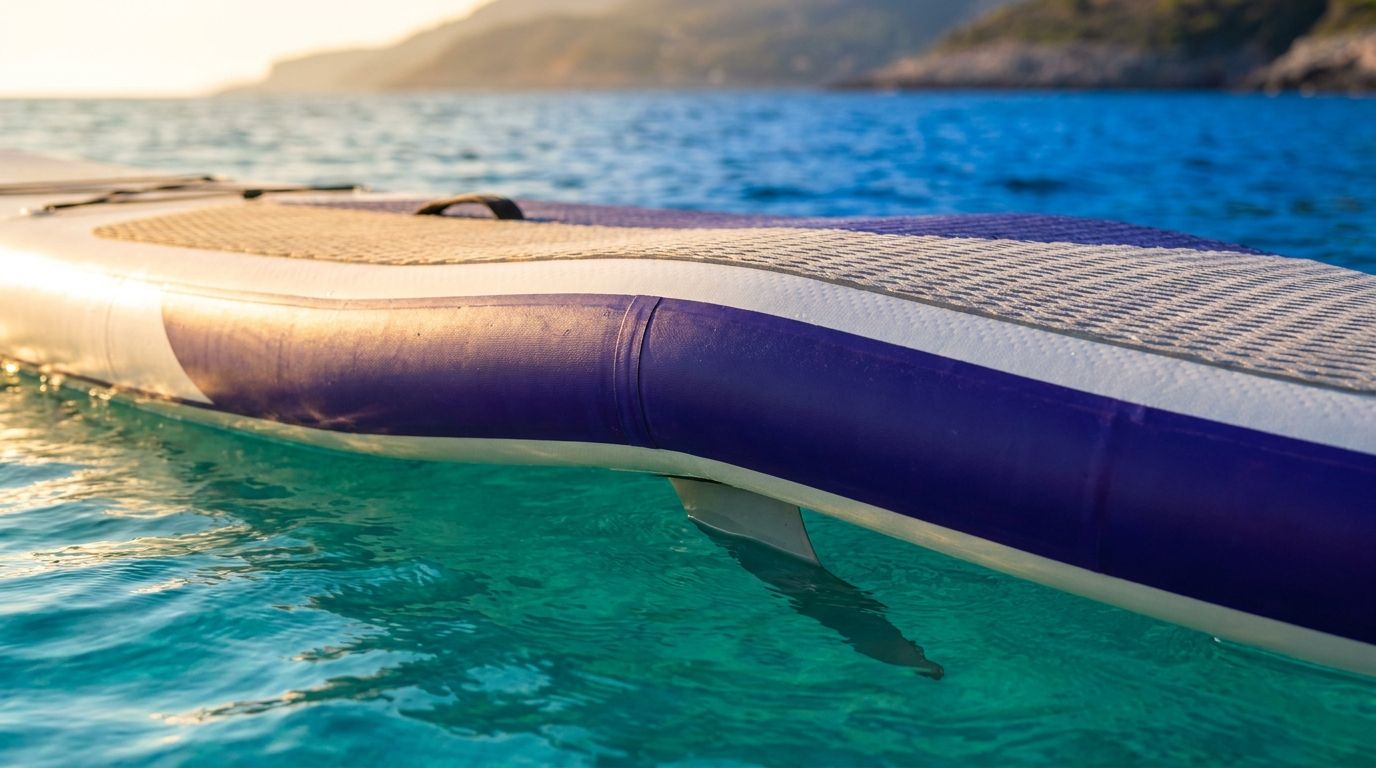
Australia holds 34% of Asia-Pacific’s inflatable SUP market demand — making it the region’s single largest market — and 2.5 million licensed boat operators paddle year-round, removing the seasonal stock-timing constraints that affect Northern Hemisphere distribution. Korean iSUP suppliers benefit from KAFTA preferential tariffs and no mandatory adult-product safety standard in Australia; CE marking, ISO 9001, and REACH test reports serve as the practical quality gatekeepers that wholesale buyers and distributors apply when evaluating a new Korean OEM source.
The global paddle board market was valued at USD 2.10 billion in 2026 and is projected to reach USD 4.22 billion by 2033, at a 10.2% compound annual growth rate, according to Exactitude Consultancy. The inflatable SUP segment leads that growth: inflatables account for approximately 67.9% of total market share in 2026, driven by portability, compact storage, and a price-to-value ratio that rigid epoxy boards cannot match at the volume segments that matter most to wholesalers.
Within Asia-Pacific, Australia stands out as the dominant single market. Per Data Bridge Market Research, Australia accounts for 34% of Asia-Pacific SUP demand — more than any other country in the region. That position is structural. Over 80% of Australians live within 50 kilometres of the coast (Deckee). The country has approximately 905,000 registered boats and 2.5 million licensed boat operators across a population of 25.7 million — roughly one in ten Australians holds a boat licence. The recreational boating industry generated AUD 9.64 billion in annual turnover in fiscal year 2022–23 (Deckee / Ken Research).
Australia and New Zealand are consistently grouped by regional market research as the mature, commercially established core of Oceania watersports demand. Many Australian distributors service both markets simultaneously — which makes an AU entry point a practical gateway for suppliers wanting coverage across the broader ANZ region, including the inflatable paddle board New Zealand and wider watersports market New Zealand segments.
One of the most commercially useful facts about Australia as an iSUP market is that demand does not compress into a single seasonal window. Australia has over 25,000 kilometres of coastline and many regions record more than 250 sunny days per year (Ride Wave SUP). Rental operators, fitness clubs, wellness studios, and adventure tour operators run SUP programmes throughout the calendar year.
This has direct implications for stock planning. Northern Hemisphere importers typically concentrate orders in a Q1–Q2 window to build inventory before summer. Australian wholesale buyers spread purchase orders more evenly across the year. An importer in Queensland or New South Wales may place orders in any month without the pressure of a hard sell-in deadline.
The top-performing regions by licensed boat operator count are Queensland (979,000 operators, 274,000 registered vessels), New South Wales (542,000 operators, 241,000 vessels), Victoria (438,000 operators, 194,000 vessels), and Western Australia (Deckee). The eastern seaboard accounts for the primary concentration of retail demand and specialty watersports distribution.
Key demand drivers for 2025 include eco-tourism investment, post-pandemic outdoor activity preferences, wellness and fitness integration — specifically SUP yoga and SUP fitness classes — and government support for outdoor recreation, per Ride Wave SUP. These trends indicate that Australian iSUP buyers are spread across several distinct user segments: recreational paddlers, wellness participants, rental operators, and adventure tourism companies. That breadth supports multiple route-to-market strategies for a wholesale supplier.
Australian iSUP Distribution Channels at a Glance
| Specialty Watersports | Online / E-commerce | |
|---|---|---|
| Global share | 35.4% | 31.6% |
| AU example | Bay Sports wholesale programme | BCF online, Anaconda, eBay |
| Price tier | AUD 550–1,100 (mid–premium) | AUD 250–900 (entry–mid) |
| Documentation required | CE, REACH, ISO 9001, BSCI | CE, REACH (retailer dependent) |
| Recommended for new suppliers | Yes — quality-first evaluation | Competitive — price-sensitive |
Three distribution channels move inflatable SUP boards in Australia, each with different volume and margin characteristics.
Specialty watersports retailers hold the largest share globally at 35.4% of SUP distribution (DataBridge Market Research). In Australia, this category is anchored by distributors such as Bay Sports — established in 2012 on Sydney’s Northern Beaches and operating as the country’s largest dedicated kayak and iSUP distributor. Bay Sports runs a formal wholesale programme for registered businesses, including resellers, agents, and retailers, and maintains direct manufacturer relationships to reduce price layers (Bay Sports Australia). This channel carries mid-range and premium product lines, requires full documentation packages including CE marking and REACH test reports, and tends to build longer-term supplier relationships once quality is established.
Online and e-commerce retail accounts for 31.6% of global SUP distribution. In Australia, major outdoor chains BCF and Anaconda carry iSUP boards online and in physical stores. eBay and retailer-direct e-commerce are active channels at the entry and mid-market price tiers. This channel is where price transparency is highest and where a Korean supplier without an established brand faces the most direct competition from Chinese-origin boards at similar price points.
Mass-market retail accounts for 18.2% of global distribution (DataBridge Market Research). In Australia, BCF promotional pricing positions entry-level boards at approximately AUD 250, and 4WD Supacentre targets budget-conscious buyers (OzBargain Australian consumer data). Entry into this channel at scale typically requires a volume commitment and marketing support investment that is not realistic for a supplier placing its first export order.
For a Korean iSUP manufacturer evaluating its first entry into Australia, specialty watersports distribution — with its emphasis on quality documentation, mid-range pricing, and established buyer relationships — is the most practical route to test the market before pursuing broader channel coverage.
Australian Importer Documentation Checklist
Consumer forums and distributor discussions reveal four quality expectations that purchasing managers consistently relay to overseas suppliers when evaluating inflatable paddle board Australia wholesale candidates.
Weight capacity above 130 kg — Australian buyers are explicit about this threshold. A board rated at 130 kg excludes a portion of the adult market, and boards rated at 150 kg or above are considered more commercially versatile by retailers carrying multiple SKUs.
Multi-layer drop-stitch PVC construction — for mid-range retail and any commercial fleet application, buyers expect double-layer drop-stitch construction. Single-layer boards are associated with the entry-level price band (AUD 250–450) and evaluated accordingly. Double-layer construction delivers greater board stiffness and a higher maximum inflation pressure, which experienced buyers assess through product specifications and test reports before placing a wholesale order.
Complete kit bundles — Australian buyers strongly prefer a board sold as a complete set: paddle board, aluminium paddle, manual pump, ankle leash, and a carry bag. A 27-litre backpack form factor is specifically valued for road trips and domestic air travel, where customers often carry gear on flights between states.
Price positioning by tier — the AUD price bands are clearly stratified. Entry-level iSUPs sell at AUD 250–450 through BCF, Anaconda, and eBay. Mid-range boards sit at AUD 550–900 and are the focus of specialty store floor space. Premium boards command AUD 900–1,100 and are linked to established international brands (OzBargain Australian consumer community data). A Korean supplier targeting the mid-range band competes primarily on build quality, documentation credibility, and reliable supply — not on brand recognition.
KAFTA: The Korean Supplier Cost Advantage
KAFTA Preferential Tariff — Verify Before First Shipment
Korean-origin paddle boards (HS 9506) entering Australia under KAFTA qualify for preferential tariff rates not available to Chinese-origin boards on the standard MFN schedule. To claim the rate: confirm the exact current rate for your HS sub-heading with the Australian Border Force (ABF) before shipment, and ensure a Certificate of Korean Origin accompanies the import documentation. Rate schedules are updated periodically — verify directly with ABF, not from third-party trade guides.
Two structural trade advantages apply to Korean-origin inflatable paddle boards entering Australia.
KAFTA preferential tariff treatment: The Australia-Korea Free Trade Agreement (KAFTA), in force since December 2014, provides preferential tariff rates for Korean-origin sporting goods under Chapter 95, including HS 9506 paddle boards, administered by the Australian Border Force. To claim preferential treatment, the importer must supply a Certificate of Korean Origin. Buyers should verify the specific current rate for their HS sub-heading directly with the Australian Border Force before shipment, as rates depend on the phase-in schedule and exact sub-heading classification. Chinese-origin boards entering Australia without a comparable free trade agreement face the standard MFN rate — KAFTA eliminates that landed-cost gap for Korean suppliers.
No mandatory adult iSUP safety standard: The ACCC administers mandatory safety standards for aquatic products, but the Consumer Goods (Aquatic Toys) Safety Standard 2020 (AS/NZS ISO 8124.1:2019) applies specifically to children’s products in shallow water. Adult inflatable SUP boards for open-water use fall outside the mandatory standard scope, per Product Safety Australia.
In practice, importers and retailers use international certifications as quality proxies. CE marking — specifically the EK2/AK2.4 committee test programme for inflatable SUPs that became effective July 2022 — is the most widely accepted structural safety signal for the AU market. REACH compliance covers chemical safety for PVC materials, and importers request SGS or TüV SVHC test reports dated within 24 months (Huale Inflatable). ISO 9001 quality management certification confirms production process consistency. Social compliance audits (BSCI or SMETA) are required by major retail chain buyers. Note: ISO 25649 (floating leisure articles) explicitly excludes stand-up paddle boards from its scope — it does not apply to iSUPs despite sometimes appearing on non-specialist certification checklists.
For a Korean manufacturer with a 1,000-unit minimum order quantity and 50,000-unit monthly capacity, entering Australia through a single specialty distributor partner is the lowest-risk first step. Distributors with wholesale programmes can absorb a container-scale import while providing local distribution infrastructure, documentation experience, and existing retail relationships.
The eastern seaboard concentration makes logistics cost predictable: a container to a Sydney or Brisbane warehouse puts stock within domestic freight range of the three highest-density watersports markets — Queensland, New South Wales, and Victoria.
For suppliers evaluating New Zealand alongside Australia, see our detailed analysis of the New Zealand inflatable paddle board market — iSUP import distribution NZ and paddle board wholesale buyer NZ sourcing managers often source both markets through the same ANZ distribution arrangement. The shared certification requirements — CE marking, REACH, ISO 9001 — mean a single documentation package covers both markets. The absence of a sharp seasonal window in Australia means a supplier can manage both geographies on a single replenishment cycle rather than stacking two distinct seasonal peaks.
How large is the inflatable paddle board market in Australia, and does demand follow a seasonal pattern?
Australia accounts for 34% of Asia-Pacific SUP demand, making it the region’s largest single market (Data Bridge Market Research). Unlike Northern Hemisphere markets, Australian demand is not sharply seasonal — more than 250 sunny days per year in many regions and year-round coastal access mean rental operators, fitness programmes, and retail buyers purchase in every month. This allows importers to spread stock orders more evenly than a typical European or North American season-driven calendar requires.
Which distribution channels offer the most practical entry point for a Korean iSUP brand in Australia?
Specialty watersports retailers hold 35.4% of global SUP distribution and represent the most practical first channel for a Korean supplier. In Australia, wholesale distributors such as Bay Sports run formal B2B programmes for registered resellers and retailers. This channel prioritises CE marking, REACH test reports, and ISO 9001 documentation over brand recognition — giving a credentialled new supplier a realistic path to shelf space. Mass-market retail (BCF, Anaconda) is a high-volume channel but requires established brand presence and large-scale volume commitments before most chains list a new supplier.
What certifications do Australian importers require, and is there a mandatory safety standard for adult iSUP boards?
No ACCC mandatory safety standard exists specifically for adult inflatable SUP boards — the applicable standard covers children’s aquatic toys only. In practice, Australian importers use international certifications as quality evidence: CE marking (EK2/AK2.4 iSUP test programme, effective July 2022) for structural integrity, REACH compliance for PVC chemical safety with SGS or TüV test reports dated within 24 months, and ISO 9001 for production quality management. Major retail chains also request BSCI or SMETA social compliance audits. ISO 25649 does not apply to iSUPs — it explicitly excludes stand-up paddle boards from its scope.
How does KAFTA affect the tariff cost of importing Korean-made paddle boards into Australia?
The Australia-Korea Free Trade Agreement (KAFTA), in force since December 2014, provides preferential tariff treatment for Korean-origin sporting goods under HS Chapter 95 including paddle boards. To claim the preferential rate, the importer must supply a Certificate of Korean Origin at customs clearance. The exact current rate for a specific HS sub-heading should be verified with the Australian Border Force before the first shipment. Korean-origin boards with KAFTA treatment face a lower landed-cost structure than comparable Chinese-origin boards entering on the standard MFN rate.
What price band and specifications should a Korean iSUP manufacturer target for Australian wholesale?
The Australian mid-range market — AUD 550–900 retail — is where specialty watersports retailers concentrate their floor space. At this tier, buyers expect double-layer drop-stitch PVC construction, a weight capacity of 150 kg or above, a complete kit bundle (board, aluminium paddle, manual pump, ankle leash, and a 27-litre backpack), and a maximum inflation pressure of 15 PSI or higher. A Korean supplier with CE, REACH, and ISO 9001 documentation can compete in this band; the landed-cost advantage from KAFTA relative to Chinese-origin boards at similar MOQ levels supports competitive wholesale pricing depending on the AUD/KRW rate and per-unit freight cost at the time of shipment.
Comments
Post a Comment