Polymer Cement in Peru: How Seismic Code E.030 and Reconstruction Spending Drive Repair Mortar Demand
Polymer Cement in Peru: How Seismic Code E.030 and Reconstruction Spending Drive Repair Mortar Demand
- Get link
- X
- Other Apps
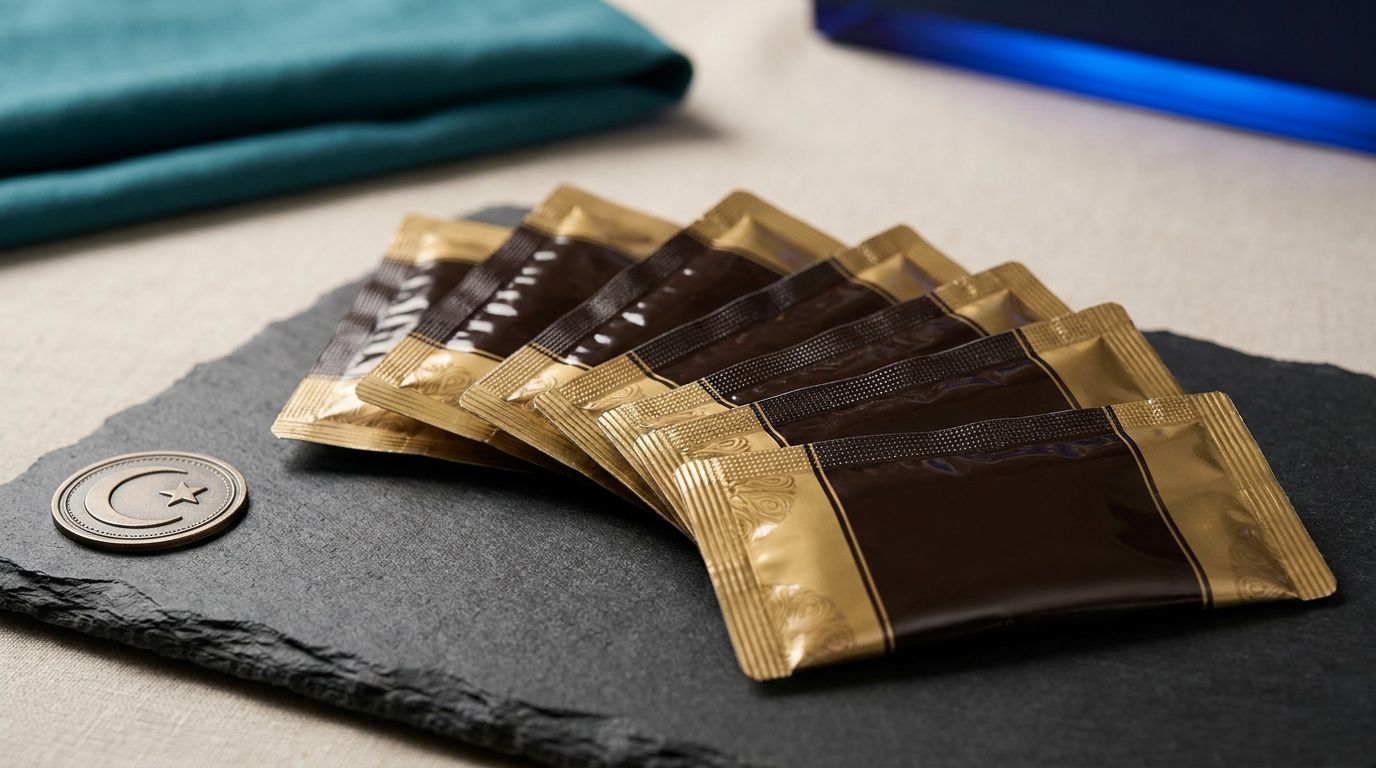
To export fermented black garlic extract to Saudi Arabia, Korean manufacturers must complete six regulatory steps — SFDA FIRS food supplement registration, a Halal certificate from an SFDA Saudi Halal Center-recognized body, and GSO 9:2022 Arabic bilingual labeling — before any shipment can clear the border. Miss one step, and SFDA inspectors at any of its 18 Border Inspection Posts can hold or return the container. This guide covers each step for Korean factories that already hold HACCP and ISO 22000.
Saudi Arabia Certification Pathway for Black Garlic Extract
Classify the Product
Submit a pre-classification query using SFDA Products Classification Guidance V7. Confirm the product qualifies as a food supplement under SFDA.FD 55:2023 and not a pharmaceutical or novel food under SFDA.FD 5013.
Verify Halal Body Approval
Check your Halal certifier on halal.gov.sa/accredited-cb. If your current body is not listed, engage an SFDA-recognized certifier immediately — obtaining new Halal certification takes months.
Appoint Saudi Authorized Representative
Foreign manufacturers cannot submit SFDA registrations directly. A Saudi Authorized Representative (SAR) handles FIRS portal submission and all SFDA communications on your behalf.
Build SFDA FIRS Technical Dossier
Compile 12 required documents including COA, Free Sale Certificate, HACCP and ISO 22000 certificates, full formula, shelf-life study, Arabic label artwork, nutrition panel, and health claim evidence.
Achieve GSO 9:2022 Label Compliance
Arabic is mandatory on all consumer packs — English may appear alongside but cannot replace it. For 24-month shelf life, use Month-Year date format. Dates must be permanently printed, not on removable stickers.
Legalize Certificate of Origin
The COO must be legalized by the Korean Chamber of Commerce. Allow 3 to 5 business days minimum. Origin marking on the product itself must be permanent — printing, engraving, or embossing.
SFDA Product Classification for Fermented Black Garlic Extract
Is S-allylcysteine concentration within SFDA.FD 55 daily ingredient limits?
Before any registration work begins, you need to know which regulatory category applies. Getting this wrong wastes months of dossier preparation and can force a full product reclassification after expensive lab testing.
Under SFDA.FD 55:2023 (Technical Regulation for Food Supplements), botanical and herbal extracts — including fermented black garlic — qualify as food supplements if two conditions are both met. First, the concentration of each active ingredient must stay within SFDA's defined daily limits. Second, the product cannot make any disease treatment, prevention, or cure claims. Per DDReg Pharma Regulatory Consulting (citing SFDA.FD 55:2023), if either condition fails, the product is reclassified as a Herbal Product under pharmaceutical regulation — a separate and significantly longer pathway.
Fermented black garlic extract has a concentrated level of S-allylcysteine, the compound produced during the 60-to-90-day fermentation process. Per DDReg Pharma Regulatory Consulting (citing SFDA.FD 5013 — Technical Regulation for Novel Foods), if S-allylcysteine concentrations are not already established as part of the regular Saudi food supply, an additional safety dossier may be required before standard supplement registration can proceed. This dossier would need to include Acceptable Daily Intake (ADI) data and a Free Sale Certificate from a Codex-compliant country.
Before spending time and money on a full FIRS dossier, submit a pre-classification query to SFDA using Products Classification Guidance Version 7 (February 2024, available at sfda.gov.sa). This step costs a few days but protects against a costly reclassification later.
Halal Certificate Body Verification
Your Current Halal Certificate May Not Be SFDA-Recognized
SFDA Circular No. 4/1445/11 requires Halal certificates from bodies on the Saudi Halal Center approved list at halal.gov.sa/accredited-cb. This list is updated periodically. JAKIM (Malaysia) status must be verified directly before each shipment — not assumed from past clearances. A certificate from an unrecognized body will result in a border hold or return.
This is the step that causes the most delays for Korean exporters — and the most costly shipment holds. Having any Halal certificate is not enough.
SFDA Circular No. 4/1445/11 mandates Halal certification for all composite food products containing any percentage of animal-derived ingredients or animal-based enzymes. Per Cotecna Inspection (citing this circular), the circular explicitly extends this requirement to dietary supplements. Critically, Halal certificates must come only from bodies recognized by the SFDA Saudi Halal Center, whose approved list is published at halal.gov.sa/accredited-cb and updated periodically.
The GSO 2055-1:2015 standard (Gulf Standardization Organization) defines what auditors must assess for GCC Halal compliance. Per the American Halal Foundation (citing GSO 2055-1:2015), Saudi Arabia enforces this standard alongside its own Saudi Halal Center requirements, which are stricter than those of some other GCC member states.
For Korean exporters: the JAKIM (Malaysia) Halal certification held by some Korean manufacturers may or may not appear on the SFDA Saudi Halal Center approved list. This cannot be assumed — it must be verified directly at halal.gov.sa/accredited-cb before each shipment. If your current certifier is not on the list, engaging an SFDA-recognized body takes months. Start this verification before any other registration activity.
Korean manufacturers cannot submit SFDA food supplement registrations directly. Per SaudiFoodRegistration.com (citing SFDA FIRS requirements), all foreign manufacturers must appoint a Saudi Authorized Representative (SAR) or work with an SFDA-approved local consulting firm.
The SAR handles all document submissions through the SFDA FIRS portal and serves as the legal point of contact for all SFDA communications about your registration. Choose carefully — the SAR's SFDA approval status should be confirmed in writing before any agreement is signed, and their track record with botanical supplement registrations is worth asking about.
There is no fast-track notification route for food supplements in Saudi Arabia. Per SaudiFoodRegistration.com (citing SFDA FIRS registration policy), full registration through FIRS is required for every imported food supplement. Registration from Korea's Ministry of Food and Drug Safety (MFDS) does not grant any automatic clearance with SFDA.
SFDA FIRS Food Supplement Dossier — Document Checklist
With product classification confirmed and your SAR appointed, dossier preparation can begin in earnest. Per SaudiFoodRegistration.com (citing SFDA FIRS dossier requirements), the complete SFDA food supplement technical dossier includes all of the following:
Korean manufacturers with existing HACCP and ISO 22000 certifications already satisfy two important dossier components. Per SFDA (sfda.gov.sa/en/imported-food), these quality certificates must accompany each shipment at border inspection. Having current, valid certificates in place shortens the preparation phase.
On health claims: per SFDA.FD 2333 (Regulation of Health and Nutrition Claims on Foods), disease treatment, prevention, or cure claims are prohibited on food supplement packaging. Substantiated nutrient-function claims — such as antioxidant support or immune system maintenance — are permitted when backed by scientific evidence included in the dossier. S-allylcysteine content may be listed on the label, but no claim may frame it as a treatment or preventive measure for any disease.
Every pack that reaches a Saudi consumer must carry Arabic text. Per the U.S. Department of Commerce International Trade Administration (citing GSO 9:2022 — Labelling of Prepackaged Foods), Arabic is mandatory on all prepackaged food sold in Saudi Arabia. English may appear alongside Arabic but cannot substitute for it.
Required label elements under GSO 9:2022 include:
For date format, per Artemis BC Trade Consulting (citing GSO 09/2013 and GSO 1502/2013): products with shelf life longer than three months use Month-Year format. At 24 months, this product uses Month-Year. Production and expiry dates must be permanently printed on the packaging — removable stickers that are not tamper-evident are not accepted at Saudi customs.
For the 80 mL × 30-sachet pouch format, confirm with your SAR which packaging levels — outer carton and individual sachets — each require full Arabic label compliance under current Saudi customs guidance.
A Certificate of Origin (COO) is required for Saudi customs clearance. Per Artemis BC Trade Consulting (citing Saudi import regulations), the COO must be legalized by the Chamber of Commerce in Korea. Korean exporters typically process this through the Korea Chamber of Commerce and Industry (KCCI) or a regional chamber.
Origin marking on the product packaging must be permanent — printed, engraved, or embossed. Removable stickers are not accepted. Under normal conditions, COO legalization takes 3 to 5 business days. Allow more time during peak export periods or when multiple shipments are going through simultaneously.
All imported food shipments enter Saudi Arabia through one of 18 SFDA Border Inspection Posts (BIPs). Per SFDA (sfda.gov.sa/en/imported-food), major BIPs include Jeddah Islamic Port, King Khalid International Airport in Riyadh, and King Abdulaziz Port in Dammam. Every food consignment must clear through one of these posts.
At the BIP, SFDA inspectors verify quality certificates, product registration status, and label compliance. A shipment that arrives before SFDA FIRS registration is confirmed will be held or returned. Do not ship until your SAR has confirmed approved registration status.
Per SFDA (sfda.gov.sa/en/imported-food), novel foods entering Saudi Arabia must be accompanied by scientific safety evidence — including ADI data and a Free Sale Certificate from a Codex-compliant country — if the product's novel food classification was triggered. Confirm this requirement during your pre-classification query at Step 1.
SFDA is recognized by the World Health Organization as a National Regulatory Authority at Maturity Level 4 — the highest level — per PharmaKnowl Consulting (citing WHO NRA maturity assessment). This means SFDA approval carries significant credibility in other international markets, making Saudi Arabia registration a valuable regulatory anchor for GCC expansion.
Is JAKIM halal certification from Malaysia accepted by SFDA for dietary supplements in Saudi Arabia?
SFDA Circular No. 4/1445/11 requires Halal certificates only from bodies on the Saudi Halal Center approved list at halal.gov.sa/accredited-cb. Whether JAKIM appears on that list must be verified directly at the source before each shipment — the list is updated periodically and approval status cannot be assumed. If JAKIM is not listed, a separate certificate from an SFDA-recognized body is required before any import.
Can I apply a bilingual Arabic sticker over existing Korean packaging, or must Arabic be printed on the original pack?
Under GSO 9:2022 and Saudi date-marking rules (GSO 09/2013), production and expiry dates must be permanently marked — printing, engraving, or embossing. Removable stickers that are not tamper-evident are not accepted at Saudi customs. An overprinted, tamper-evident label may be acceptable in some cases, but confirm this approach with your Saudi Authorized Representative before any production run.
What health claims are permitted for fermented black garlic extract on Saudi Arabia packaging under SFDA.FD 2333?
SFDA.FD 2333 allows substantiated nutrient-function claims — for example, antioxidant support or immune system maintenance when backed by scientific evidence included in the dossier. Disease treatment, prevention, or cure claims are prohibited. Referencing S-allylcysteine content on the label is acceptable, but framing it as a treatment for any medical condition would trigger pharmaceutical reclassification under a longer regulatory pathway.
Does the fermentation process create a novel food classification risk under SFDA.FD 5013?
This is a real risk that is worth checking before dossier preparation begins. Per DDReg Pharma Regulatory Consulting (citing SFDA.FD 5013), if S-allylcysteine concentrations — which rise significantly during fermentation — are not established in the Saudi food supply, an additional safety dossier may be required. Submit a pre-classification query to SFDA using Products Classification Guidance Version 7 (sfda.gov.sa) before committing to the standard food supplement pathway.
Which documents should a Korean HACCP- and ISO 22000-certified manufacturer prioritize for the SFDA FIRS dossier?
HACCP and ISO 22000 certificates satisfy two key dossier components directly. The next-priority documents are: a Certificate of Analysis from an accredited laboratory covering S-allylcysteine and all active ingredient concentrations; a Certificate of Free Sale from a Korean authority, legalized through the Chamber of Commerce; the complete Arabic bilingual label artwork under GSO 9:2022; and shelf-life study documentation for the full 24-month period. Appoint your Saudi Authorized Representative first — they will sequence the remaining submissions through the FIRS portal.
Comments
Post a Comment