Polymer Cement in Peru: How Seismic Code E.030 and Reconstruction Spending Drive Repair Mortar Demand
Polymer Cement in Peru: How Seismic Code E.030 and Reconstruction Spending Drive Repair Mortar Demand
- Get link
- X
- Other Apps
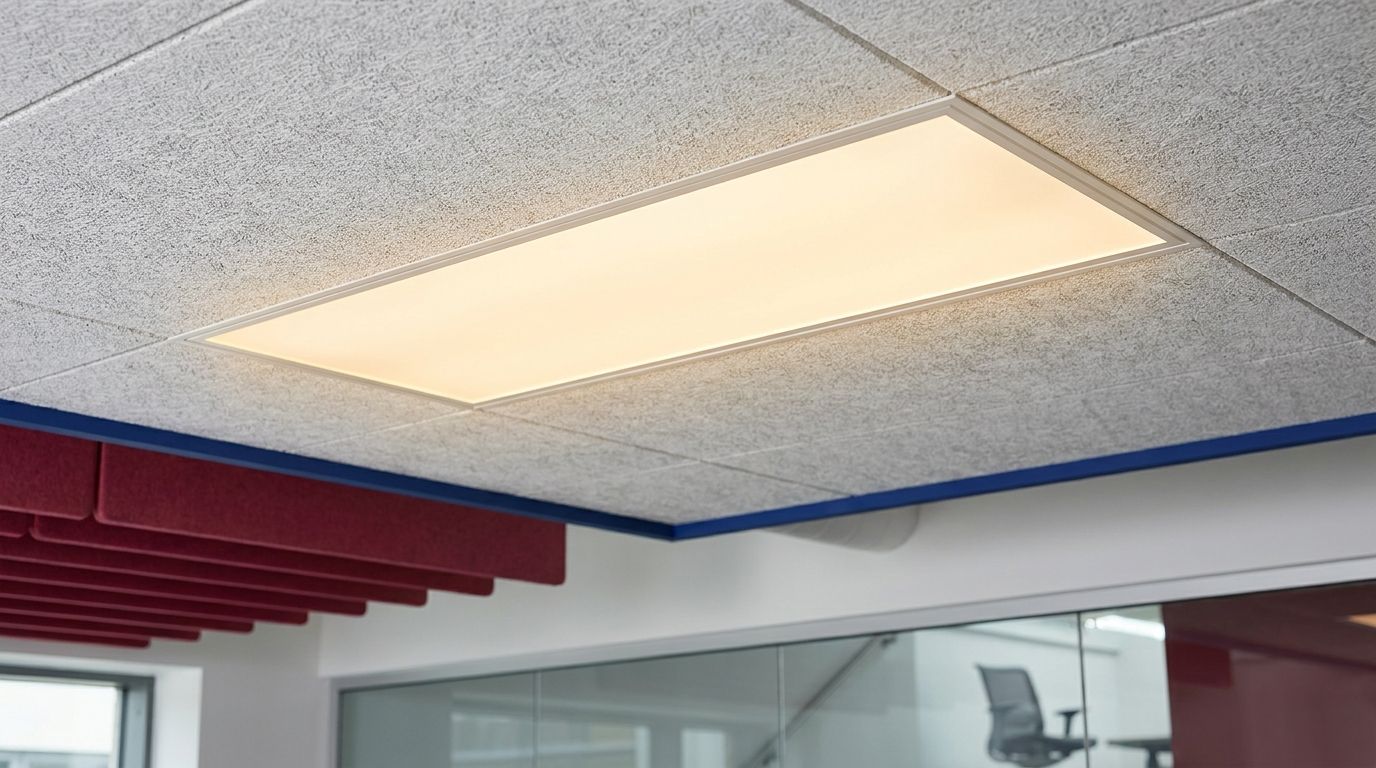
Importing smart LED panel lights into New Zealand requires RCM (Regulatory Compliance Mark) certification, and CE or RoHS certificates from other markets do not substitute for it. New Zealand classifies LED lighting as Level 3 (High Risk) under the Electrical Equipment Safety System (EESS), requiring third-party testing at an IANZ-accredited laboratory plus EESS registration before a single unit can legally be sold. For smart panels with Wi-Fi, Bluetooth, or Zigbee control, the new AS/NZS CISPR 15:2025 EMC standard adds mandatory wireless-band testing — a requirement that has been in force since January 1, 2026, and that invalidates any certificate issued against the older CISPR 15:2011 standard.
Korean LED panel light exporters often assume that existing CE and RoHS certifications cover New Zealand compliance. They do not.
New Zealand uses the RCM (Regulatory Compliance Mark) system, operated jointly with Australia under the Electrical Equipment Safety System (EESS). CE is a European mark with no formal mutual recognition under the Australian/New Zealand EESS framework (TÜV Rheinland). RoHS certification confirms the absence of restricted hazardous substances — it does not assess electrical safety, EMC performance, or wireless RF compliance under NZ and Australian standards.
Your existing CE and RoHS documentation may provide useful supporting data during lab testing and could reduce some testing scope at the laboratory's discretion. It cannot replace RCM certification or EESS system registration.
The EESS divides electrical products into three risk levels. LED lighting — including LED panel lights — is classified as Level 3, the highest-risk tier (Blue Asia Labs, accredited testing and certification laboratory). This classification requires:
This process is more demanding than what many Korean exporters face for EU CE marking, where manufacturer self-declaration is accepted for most lighting product categories. Budget and timeline planning must account for the Level 3 requirements from the start.
5 Steps to RCM Certification for LED Panel Lights in New Zealand
Designate a Local Responsible Party (LRP)
Appoint a Local Responsible Party registered in New Zealand or Australia. The LRP holds legal responsibility for RCM compliance in the market. Without a registered LRP, you cannot proceed with EESS registration. A Korean exporter cannot serve as their own LRP — your NZ importer, distributor, or a compliance agent with a registered NZ entity must take this role.
Risk Classification and Standard Alignment
Confirm your LED panel light is classified as Level 3 (High Risk) under EESS. Identify all applicable standards: AS/NZS 60598.1 (luminaires), AS/NZS CISPR 15:2025 (EMC, mandatory Jan 2026), AS/NZS 4268 (wireless RF if applicable), and AS/NZS 61347 Part 2.1:2026 (LED drivers, new Feb 2026 edition).
Third-Party Testing at an IANZ/NATA-Accredited Laboratory
Submit product samples to a laboratory accredited by IANZ (New Zealand) or NATA (Australia) for the required standards. Testing covers electrical safety, EMC, and photobiological safety. Smart LED panel lights with Wi-Fi, Bluetooth, or Zigbee require additional wireless-band testing under AS/NZS CISPR 15:2025 and RF testing under AS/NZS 4268.
EESS System Registration
Submit test reports and technical documentation to the EESS system for registration. A successful registration issues an 'N' code (NZ) or 'A' code (Australia, accepted in NZ). This step typically takes 1–2 weeks after all test reports are received.
RCM Marking on Product
Apply the RCM mark directly to the product — not packaging alone. Per AS/NZS 4417, the mark must be at least 3 mm tall and laser-engraved or permanently printed on the product itself (TÜV Rheinland).
RCM certification follows a defined sequence. Skipping any step blocks EESS registration and prevents legal sale (Blue Asia Labs). The full process is outlined in the step guide above.
One step worth highlighting separately: the Local Responsible Party (LRP). The LRP must be a legal entity registered in New Zealand or Australia. They hold formal responsibility for the product's compliance in the market. Korean manufacturers cannot serve as their own LRP. Identify your New Zealand importer, distributor, or a compliance agent willing to act as LRP before engaging the testing laboratory — their registration details are required to complete the EESS application at Step 4.
A second 2026-specific issue: the LED driver standard. A new edition of AS/NZS 61347 Part 2.1 — covering requirements for LED control gear, including drivers — was published on February 20, 2026, superseding the 2019 version (UL, Australia and New Zealand). Confirm that your panel light's driver has been evaluated against the current 2026 edition before submitting samples to the testing laboratory. A driver tested against the 2019 standard may need retesting under the new edition.
AS/NZS CISPR 15:2025 Is Mandatory — Certificates Based on the 2011 Version No Longer Qualify
AS/NZS CISPR 15:2025 Is Mandatory — Certificates Based on the 2011 Version No Longer Qualify
If your supplier holds an RCM certificate based on the previous AS/NZS CISPR 15:2011 standard, that certificate does not cover new product applications after January 1, 2026. Smart LED panel lights with Wi-Fi, Bluetooth, or Zigbee connectivity now require EMC compliance testing in Bluetooth and Wi-Fi frequency bands, plus electric field radiation testing from 30 MHz to 1 GHz in a semi-anechoic chamber (Jiayu Testing). Before placing a purchase order, confirm in writing that your supplier's current RCM certificate was issued against CISPR 15:2025 — not the 2011 version.
Standard LED panel lights and smart LED panel lights follow different compliance paths from Step 2 onward.
Smart LED panel lights — those with Wi-Fi, Bluetooth, or Zigbee wireless control — require two additional layers of compliance beyond the base RCM certification.
AS/NZS 4268 (Radio Communications Equipment): Products with wireless modules must pass RF testing under AS/NZS 4268 (Standards Australia / Standards New Zealand). This standard verifies that the wireless module operates within approved frequency bands and does not cause harmful radio interference.
AS/NZS CISPR 15:2025 (EMC for Lighting Equipment): This new EMC standard for lighting equipment became mandatory on January 1, 2026 (Jiayu Testing, electronics and safety testing laboratory). It requires compliance testing in Bluetooth and Wi-Fi frequency bands, plus electric field radiation testing from 30 MHz to 1 GHz in a semi-anechoic chamber. The previous CISPR 15:2011 version had a transition period that is now closed.
See the warning box above for the specific question to ask your supplier before placing an order.
Documents Required for RCM Certification and EESS Registration
Under normal conditions, allow 5–6 weeks for the full RCM certification process: approximately 3–4 weeks for laboratory testing plus 1–2 weeks for EESS system registration (Blue Asia Labs). Peak season — typically September through November — extends laboratory timelines by approximately 50%, adding 2–3 weeks to the estimate.
Photobiological safety data is commonly requested by IANZ/NATA-accredited labs for LED luminaires. Confirm whether this test must be conducted as a separate step during your initial laboratory inquiry. Building this into the scope at the start avoids delays later in the process.
The full document checklist is in the compliance guide above.
For importers targeting New Zealand's commercial building sector, Building Code Clause H1 (Energy Efficiency) governs which LED panel lights can be installed in commercial projects.
Buildings with occupied space over 300 m² must comply with NZS 4243.2:2007 (Energy Efficiency – Large Buildings Part 2: Lighting), which sets Lighting Power Density Limits (LPDL) in W/m² by space type — offices, retail, warehouses, and other uses (Building Performance, MBIE). An LED panel light must meet the LPDL for the intended application space to count toward the building's energy compliance pathway.
New Zealand commercial buyers in this segment typically require additional product specifications:
Providing this data proactively in your product specification sheet shortens the evaluation cycle for commercial buyers.
New Zealand Customs Service requires an electronic import declaration via the Trade Single Window for all commercial shipments valued above NZD 1,000 (New Zealand Customs Service).
GST of 15% applies to all commercial imports and is calculated on the combined total of customs value plus freight, insurance, and customs duty (New Zealand Customs Service). The customs duty rate for HS code 9405.1x (LED panel lights) from Korea should be confirmed using the NZ Customs Tariff Finder or through a licensed NZ customs broker before you quote a landed cost. Some manufactured goods imported into New Zealand attract 0% MFN duty, but verify the specific rate for your HS classification and shipment origin before finalizing pricing.
Plan for the GST cost in your initial pricing model. It is paid by the NZ importer at customs clearance and is reclaimable as input tax, but it requires upfront cash flow from your buyer.
Getting smart LED panel lights into the New Zealand market follows a clear path: RCM certification through the 5-step EESS process, wireless compliance under AS/NZS CISPR 15:2025 and AS/NZS 4268, a registered Local Responsible Party in New Zealand, and product specifications that meet commercial building standards under NZS 4243.2. The process is well-defined, the timelines are predictable, and the compliance requirements are specific enough to plan against.
If you are evaluating smart LED panel lights for New Zealand distribution and need guidance on the RCM certification path, LRP arrangements, or confirming your supplier's compliance status against the 2026 standards, our team works with importers at every stage of the process.
Comments
Post a Comment