Polymer Cement in Peru: How Seismic Code E.030 and Reconstruction Spending Drive Repair Mortar Demand
Polymer Cement in Peru: How Seismic Code E.030 and Reconstruction Spending Drive Repair Mortar Demand
- Get link
- X
- Other Apps
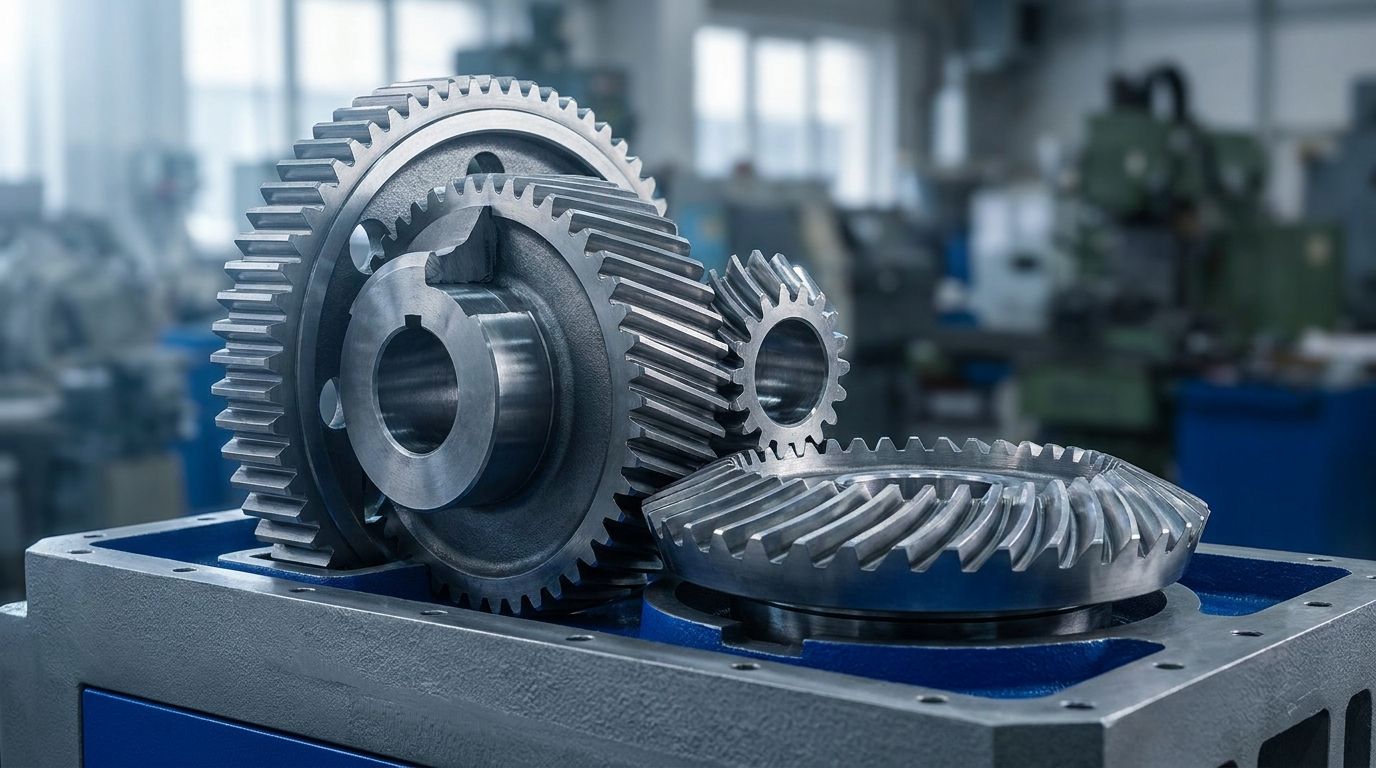
Korean precision gear sets exported to France can qualify for significantly reduced import duties under the EU–Korea Free Trade Agreement — provided your origin documentation is correctly attached to the commercial invoice before the vessel departs. Most Korean gear set manufacturers also ship their products as “partly completed machinery” under EU Machinery Directive 2006/42/EC, which means a Declaration of Incorporation is required rather than full CE marking — a distinction that catches many exporters off-guard and stalls both customs clearance and OEM contract approval. This guide covers the certification stack, preferential tariff path, and every document your French buyer needs before the shipment arrives at port.
Gear Set Compliance Path: DoI or Full CE Marking?
Is the gear set supplied as a standalone component that a French machinery builder integrates into their final machine — or sold as a complete, ready-to-use machine (motor + gearing + controls as one unit)?
The first question every French machinery builder or sourcing manager will ask is: does this gear set come with CE marking, or a Declaration of Incorporation?
EU Machinery Directive 2006/42/EC makes the answer clear. According to EUR-Lex, gear sets supplied as standalone components to machinery builders typically qualify as “partly completed machinery” under the Directive. That means the correct compliance document is a Declaration of Incorporation (DoI), not a CE mark.
The DoI — issued under Machinery Directive Annex VI — states that the gear set must not be put into service until it has been incorporated into a final machine, and that the final machine builder is responsible for declaring the complete machine’s conformity with the Directive. The CE mark then goes on the finished machine, not on the gear component itself.
Per CE Marking Institute, the DoI must be supported by:
Full CE marking — with an EU Declaration of Conformity — applies only when the gear set is sold as part of a complete, ready-to-use machine (motor, gearing, and controls sold together as one unit). In that scenario, the EU-based importer bears legal responsibility for ensuring the conformity assessment was completed before CE marking, per CE Marking Institute.
For most Korean precision gear set exporters selling to French OEM machinery builders and automation integrators, the DoI path is the correct route.
French industrial and automotive buyers evaluate Korean gear suppliers through a three-layer qualification lens. Meeting only one layer leaves purchase orders at risk.
ISO 9001 is the minimum quality management standard expected by most French industrial buyers. It demonstrates that documented quality processes, production controls, and non-conformance procedures are in place and third-party verified. For general industrial automation applications, ISO 9001 certification is often sufficient as a supplier qualification signal.
If your French buyer is an automotive OEM or Tier 1 supplier — Renault, Stellantis, Valeo, Faurecia — ISO 9001 alone is not enough. According to TÜV SÜD, IATF 16949:2016 is the global automotive quality management standard, building on ISO 9001:2015 with additional requirements specific to automotive production. It is site-specific: the certificate must cover the Korean facility where gear production, heat treatment, and machining take place.
Per IATF Global Oversight, IATF 16949 certification obtained at a Korean factory is fully recognized by European OEM groups — including Renault, Stellantis, and Volkswagen Group — as a contract prerequisite for supplying production gears and powertrain components.
Per Industrial Monitor Direct, EN 10204 defines inspection document types for metallic products. French engineering procurement teams typically require EN 10204 3.1 material test certificates for SCM440 (equivalent to 42CrMo4 under European standards) alloy steel gear blanks. For critical or high-integrity applications, EN 10204 3.2 is required — it provides double verification, validated by both the manufacturer’s authorized inspector and an independent inspector or one designated by official regulations.
When a French buyer’s procurement team asks for “mill certs” or “material certificates,” they mean EN 10204 3.1 or 3.2. Request these from your steel supplier at the time of raw material purchase, not after production.
Korean Factory to French Customs: 7-Step Documentation Path
Quality Certification Baseline
Confirm ISO 9001:2015 and IATF 16949:2016 certificates are current and site-specific for the Korean manufacturing location. Automotive OEM buyers (Renault, Stellantis) treat IATF 16949 as a contract prerequisite, per TÜV SÜD.
Material Traceability: EN 10204 Certificate
Request EN 10204 3.1 mill test certificates for SCM440/42CrMo4 alloy steel gear blanks — or 3.2 for critical applications. Type 3.2 requires validation by both the manufacturer's inspector and an independent inspector, per Industrial Monitor Direct.
Technical File (Annex VII Part B)
Compile technical documentation: risk assessment results, design drawings, manufacturing records, and evidence that essential health and safety requirements of Machinery Directive 2006/42/EC are met. Retain for at least 10 years after last manufacturing date.
Declaration of Incorporation (DoI)
Issue DoI per Machinery Directive Annex VI, stating the partly completed machinery must not be put into service until incorporated into a machine declared compliant with the Directive. Include assembly instructions. Provide to the French machinery builder.
Approved Exporter Status for FTA Origin
If consignment value exceeds €6,000, apply for Approved Exporter status with Korean customs to issue a Statement on Origin on the commercial invoice. For shipments at or below €6,000, any exporter may self-declare, per European Commission.
Commercial Documentation Package
Prepare commercial invoice (full shipper/consignee addresses, 10-digit CN code under HS 8483, country of origin 'Republic of Korea', declared customs value), packing list (exact gross/net weights, dimensions), and Statement on Origin for FTA tariff claim, per Carra Globe.
French Customs Clearance: ICS2 + Delta IE
French importer or customs broker files ICS2 Entry Summary Declaration before vessel departure. Customs declaration submitted via Delta IE paperless system. EORI number required for all declarations. DoI, EN 10204 certificates, and Statement on Origin must be ready before arrival, per Carra Globe.
Pre-Arrival Documentation Checklist for French Customs
Per Carra Globe’s 2026 customs compliance checklist, all documents must be ready before the shipment arrives at the French port of entry. Sector-specific certificates — such as the Declaration of Incorporation and EN 10204 material certificates — cannot be obtained or amended after customs clearance. A missing document at port means delayed clearance, storage costs, and potentially returned shipment.
For new supply relationships, allow 4–6 weeks to collect and prepare the full documentation set. The longest lead times are at Steps 1 and 2: obtaining current certification copies from the registrar and requesting mill certificates from the steel supplier. Commercial documentation (Steps 5 and 6) takes 3–5 business days but requires the correct 10-digit CN subheading confirmed in advance.
Verify your gear set’s CN subheading in the EU TARIC database (available via the European Commission’s Access2Markets portal) before your first French shipment. Per Carra Globe, incorrect HS classification at the 10-digit CN level can trigger duty reassessment, fines, or customs clearance delays — and CN codes can be updated annually.
According to the European Commission’s Access2Markets portal, the EU–South Korea Free Trade Agreement has been in force since July 2011 and eliminates 98.7% of tariffs on EU-Korea trade in goods. The machinery and appliances sector alone saves approximately €450 million annually in duties under the agreement. Korean-origin industrial gear components classified under HS 8483 benefit from preferential treatment.
France applies 20% VAT on all imports. Under EU Combined Nomenclature rates, customs duties on HS 8483 industrial mechanical parts range from 0% to 14%, with the average for industrial products at approximately 4.2%, per Carra Globe. The Korea-EU FTA preferential rate can reduce applicable duty significantly — but only when proof of Korean origin is correctly provided.
Per the European Commission, there are no EUR.1 Movement Certificates under the Korea-EU FTA. Proof of preferential origin is a “Statement on Origin” — also called an invoice declaration — made out by the exporter directly on the commercial invoice or another commercial document.
Korean gear exporters shipping to France should apply for Approved Exporter status before their first shipment over €6,000. Without it, you cannot claim FTA preferential rates on that shipment, and the standard EU duty rate applies in full.
France operates a fully digital customs clearance system. Three requirements apply to every Korean gear shipment entering through a French port.
ICS2 — Entry Summary Declaration Before Departure
Per the European Commission’s DG TAXUD, France requires an ICS2 Entry Summary Declaration (ENS) to be filed before vessel departure for sea freight. The French importer or their customs broker files the ENS through the Delta IE system. Failure to file on time can result in shipment detention at the port of entry.
EORI — Importer Registration
A non-EU importer must hold an EORI (Economic Operator Registration and Identification) number to file customs declarations in France, per Carra Globe. Korean exporters without EU-resident importer status must engage a licensed French customs broker or Importer of Record (IOR) who holds an EORI number and can file on their behalf.
Delta IE — France’s Paperless Customs Platform
Per Carra Globe, France’s Delta IE system enables 100% paperless customs declaration processing. All document information — commercial invoice details, packing list data, DoI reference, and Statement on Origin — must be consistent across the declaration. Discrepancies between the commercial invoice and the customs declaration trigger additional inspection.
EU Machinery Regulation Takes Effect January 20, 2027
Multi-Year Supply Contracts Must Account for Regulation (EU) 2023/1230
Per EUR-Lex, Regulation (EU) 2023/1230 repeals and replaces Directive 2006/42/EC from 20 January 2027. Core requirements — CE marking, Declaration of Conformity, Declaration of Incorporation for partly completed machinery — are carried forward. New obligations cover cybersecurity, AI integration, and lifecycle risk management. Korean gear exporters signing multi-year contracts in 2026 should add a regulatory transition clause and confirm updated documentation requirements with their French buyer before the cutover date.
Korean gear exporters signing multi-year supply contracts with French buyers in 2026 need to plan for a regulatory change: per EUR-Lex, EU Machinery Regulation (EU) 2023/1230 repeals and replaces Directive 2006/42/EC with effect from January 20, 2027.
The core documentation requirements — Declaration of Incorporation for partly completed machinery, CE marking for finished machinery, technical file obligations — are carried forward into the new Regulation. However, Regulation (EU) 2023/1230 introduces new obligations covering cybersecurity risk, AI system integration, and lifecycle risk management.
During the parallel transition period (2026–2027), both the Directive and the Regulation apply. Exporters whose shipments will span the January 2027 cutover should confirm with their French buyer which framework the documentation should reference — and include a regulatory update clause in supply contracts signed now.
Not necessarily. Per EUR-Lex and CE Marking Institute, gear sets supplied as standalone components to French machinery builders qualify as “partly completed machinery” under EU Machinery Directive 2006/42/EC. The Korean exporter must issue a Declaration of Incorporation (DoI), not a CE mark. The French machinery builder who integrates the gear set into their finished machine is responsible for affixing the CE mark on the complete machine. CE marking is only required when the Korean exporter sells a complete, ready-to-use machine.
Per CE Marking Institute, a Declaration of Conformity is issued for finished, ready-to-use machinery and confirms the product meets all applicable EU Directive requirements — it enables CE marking. A Declaration of Incorporation is issued for partly completed machinery (a standalone gear set component). It states the component cannot be put into service until integrated into a final machine that is itself declared compliant. French OEM machinery builders require the DoI from their Korean gear component supplier.
No EUR.1 certificate is used under the Korea-EU FTA. Per the European Commission, proof of preferential origin is a “Statement on Origin” (invoice declaration) written by the exporter on the commercial invoice. For shipments over €6,000 — standard for industrial gear orders — the Korean exporter must hold Approved Exporter status granted by Korean customs. For shipments at or below €6,000, any Korean exporter may self-declare. The EU Access2Markets portal has the current rules of origin guidance for the Korea-EU FTA.
For general industrial automation and machinery buyers in France, ISO 9001:2015 is often sufficient as a minimum quality signal. For automotive OEM buyers and Tier 1 suppliers — including Renault, Stellantis, and their supply chains — IATF 16949:2016 is a contract prerequisite, per TÜV SÜD. The IATF 16949 certificate must be site-specific for the Korean manufacturing location where gear production and heat treatment take place. Both buyer segments will also typically require EN 10204 3.1 or 3.2 material test certificates for SCM440/42CrMo4 alloy steel.
Per Industrial Monitor Direct, request EN 10204 3.1 at minimum — this covers inspection results verified by the manufacturer’s own authorized inspector. For high-integrity or critical-application gear sets, French engineering procurement teams typically require EN 10204 3.2, which provides double verification from both the manufacturer and an independent inspector. Confirm the certificate grade your French buyer requires at the RFQ stage, before placing a steel purchase order, as obtaining the correct grade after production is expensive and time-consuming.
The regulatory information in this guide is provided for general reference only. EU and French regulatory requirements for machinery components, FTA rules of origin, and customs procedures are subject to change. This information is not legal advice. Confirm current certification requirements, CN subheadings, and FTA preferential rates with a licensed French customs broker, qualified EU regulatory counsel, or the relevant EU and French authorities before shipment.
Comments
Post a Comment