Polymer Cement in Peru: How Seismic Code E.030 and Reconstruction Spending Drive Repair Mortar Demand
Polymer Cement in Peru: How Seismic Code E.030 and Reconstruction Spending Drive Repair Mortar Demand
- Get link
- X
- Other Apps
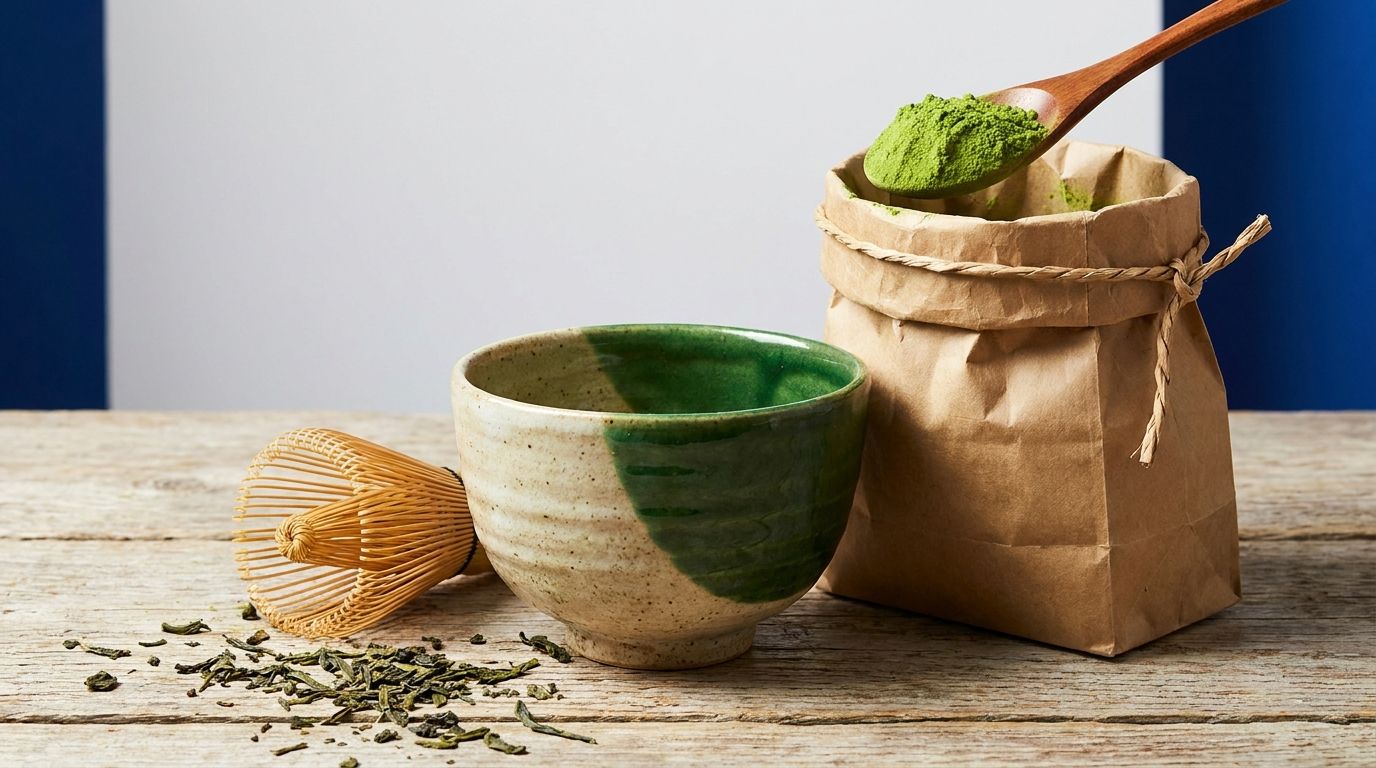
Canadian health food importers can bring in Korean organic green tea powder at 0% import duty — confirmed by the CBSA 2026 customs tariff for HS 0902.10.90 — but three gatekeepers control whether your shipment clears or gets held at the border: a valid SFC Licence declared in the Integrated Import Declaration (IID) system, a written Preventive Control Plan, and a NAQS-accredited organic certificate uploaded digitally before the vessel docks. Since November 1, 2023, the Canada–South Korea Organic Equivalency Arrangement means your Korean NAQS-certified supplier already meets Canada's organic standard — no separate Canada Organic Regime re-certification needed. This guide walks you through every required document, in the right order, so your shipment moves from Korean warehouse to Canadian store shelf without a costly border detention.
Green tea powder sits in a regulatory intersection: it is a food product, an organic claim product, and — if any health language appears on the label — potentially a Natural Health Product. Each of those three classifications carries a different set of requirements, and Canada enforces all three at the border.
The good news for importers sourcing from Korean manufacturers: South Korea and Canada have a formal organic equivalency arrangement, Korea's HACCP standards align with the Codex HACCP principles Canada references in its regulations, and green tea powder carries a 0% duty rate. The regulatory path is well-defined once you know where to look. The problem is that most importers discover the gaps after the first shipment is already detained.
This guide covers the requirements in the sequence they need to be addressed — starting before the product ships, not after it arrives.
5-Step Import Certification Path: Korean Organic Green Tea Powder to Canada
Get Your SFC Licence
Apply to CFIA for a Safe Food for Canadians Licence. Valid 2 years; 8-digit alphanumeric. Must be declared in IID for every shipment.
Build Your PCP
Draft a Preventive Control Plan documenting foreign supplier verification. Confirm your Korean supplier's HACCP certificate aligns with Codex HACCP principles.
Confirm NAQS Organic Certificate
Request a valid NAQS-accredited organic certificate from your Korean supplier. Under CSKOEA (eff. Nov 1, 2023), this replaces separate COR certification.
Submit IID Before Arrival
Upload the NAQS organic certificate and file the electronic Integrated Import Declaration up to 90 days before the shipment arrives.
Clear Border, Deliver to Shelf
CBSA will not release food until CFIA confirms entry eligibility. Once cleared, distribute bilingual-labelled product to retail.
The SFC Licence is the mandatory first step. Per the Canadian Food Inspection Agency (CFIA), Canadian food importers must hold a valid SFC Licence before importing food into Canada. The licence is issued by the CFIA through the My CFIA online portal. It takes the form of an 8-digit alphanumeric number that must be declared in the Integrated Import Declaration (IID) system for every single shipment. A shipment arriving at a Canadian port without a valid licence declaration in the IID is rejected.
SFC Licences are valid for 2 years after issuance and must be renewed before expiry. The Korean exporter does not need to hold a Canadian SFC Licence — only the Canadian importer is responsible for obtaining and maintaining it.
If you are setting up a new import business, allow several weeks for processing before your first planned shipment date. Do not wait until a purchase order is placed.
Under the Safe Food for Canadians Regulations (SFCR), Canadian food importers must prepare and maintain a written Preventive Control Plan, per the CFIA. The PCP documents how imported food is verified safe. For a Korean green tea powder import, your PCP must:
PCP records must be retained for at least 2 years, per CFIA. Businesses with gross food sales under CAD $100,000 may qualify for PCP exemptions.
A Korean manufacturer holding active HACCP certification from an accredited certification body aligns directly with the Codex HACCP principles that the SFCR references. This gives you solid documented evidence for the supplier verification section of your PCP. You still need to draft the full PCP document — the supplier's HACCP certificate is supporting evidence, not a substitute for the plan itself.
The CSKOEA Shortcut Every Korean Supplier Should Know
The CSKOEA Shortcut Every Korean Supplier Should Know
Since November 1, 2023, a valid NAQS-accredited Korean organic certificate is accepted in Canada as equivalent to Canada Organic Regime (COR) certification under the Canada–South Korea Organic Equivalency Arrangement. Your supplier does not need to engage a separate Canadian organic certification body. The only requirements: a valid NAQS-certified certificate and a digital upload in the IID system at import. Source: Canadian Food Inspection Agency.
The Canada–South Korea Organic Equivalency Arrangement (CSKOEA) entered effect on November 1, 2023, per the CFIA. Under this arrangement, Korean organic products certified by a NAQS (National Agricultural Products Quality Management Service)-accredited certification body can be sold as organic in Canada without requiring separate Canada Organic Regime (COR) certification.
What this means in practice: your Korean supplier provides a valid NAQS-accredited organic certificate. You upload a digital copy of that certificate in the IID system at import. No separate Canadian organic certification is needed, and no fees to a Canadian certification body.
Organic labelling rules still apply once the product reaches Canadian retail. Per Part 13 of the SFCR, products with 95% or higher certified organic content may use the word "organic" and optionally display the Canada Organic logo. The name of the certifying body must be disclosed. Products with 70–95% organic content must declare the percentage and cannot use the Canada Organic logo. All organic label claims require bilingual (English and French) presentation, per the CFIA.
Canada's Integrated Import Declaration (IID) is the single electronic portal for all federal food import requirements — Canada's functional equivalent to the US FDA Prior Notice system, per the CFIA. Importers can submit electronic import declarations up to 90 days before a shipment arrives. The CBSA will not release imported food until the CFIA confirms the shipment is eligible to enter Canada.
For Korean organic green tea powder, your IID submission must include the SFC Licence number and a digital copy of the valid NAQS-accredited Korean organic certificate. Under the CSKOEA, uploading the digital certificate is a mandatory admissibility condition — not optional documentation. The certificate must be valid at the time of import.
File the IID before the vessel departs Korea, not after it arrives at the Canadian port. A missing or expired organic certificate at the IID filing stage means the shipment is held until the issue is resolved.
IID Document Checklist for Korean Organic Green Tea Powder
Before shipping, use the CFIA's Automated Import Reference System (AIRS) to verify current import requirements for green tea powder. Requirements can be updated, and AIRS reflects the most current commodity-specific rules, per the CFIA.
All prepackaged food products imported into Canada require a bilingual (English and French) label under Canada's Food and Drug Regulations and the SFCR, per the CFIA. Mandatory bilingual elements include: common name, net quantity, ingredient list, manufacturer or importer name and address, and allergen warnings.
The Nutrition Facts table (NFt) must also be in both languages. One formatting rule specific to powdered tea products: the NFt must express the serving size "as consumed" — based on the prepared brewed tea quantity, not the dry powder weight, per the CFIA. This is a common source of label errors on tea powder imports and can trigger a label review at the border.
Organic label claims, including any use of the Canada Organic logo, must also appear in both languages. For private-label sourcing managers, Korean-language packaging cannot be used at Canadian retail. A full bilingual label print run or a compliant bilingual overlay is required. Plan for this before the purchase order is placed, not after the product lands at your warehouse.
Food or NHP? How Health Canada Classifies Your Korean Green Tea Powder
Does the product label make any therapeutic claim — treating, preventing, or mitigating a disease or condition?
Green tea powder marketed as a food or beverage product in Canada is classified as a food — not a Natural Health Product (NHP), per Health Canada's classification guidance. No NHP Product Licence (NPN or DIN-HM) from Health Canada is required for a food-classified product.
The trigger for NHP classification is product representation, not ingredient concentration. Health Canada states clearly that classification is based on the claims made on the label, the packaging format, and the intended use. The EGCG percentage in the green tea powder does not by itself determine classification. If the label includes any language that treats, prevents, or mitigates a specific disease or condition — or if the product is packaged with features such as measuring devices or security closures that signal a therapeutic intent — Health Canada classifies the product as an NHP. NHP classification requires a mandatory NPN licence before the product can be sold in Canada, and that licensing process takes significant time.
For buyers sourcing green tea powder for food or beverage applications — smoothie ingredient, culinary powder, flavouring blend — standard food classification applies. Keep packaging language to general wellness descriptions and avoid any disease-specific therapeutic claims.
A valid Safe Food for Canadians (SFC) Licence issued by the CFIA. The licence must be declared as an 8-digit alphanumeric number in the Integrated Import Declaration (IID) system for every shipment. Shipments without a valid licence declaration are rejected at the border. SFC Licences are valid for 2 years and must be renewed before expiry, per the Canadian Food Inspection Agency.
Korean HACCP certification supports your PCP but does not replace it. As the Canadian importer, you must maintain a written Preventive Control Plan confirming your Korean supplier implements preventive controls equivalent to Canadian standards based on Codex Alimentarius HACCP principles, per CFIA SFCR requirements. A Korean HACCP-certified facility aligns with those Codex HACCP principles and provides solid documented evidence for the supplier verification component of your PCP.
Yes — under the Canada–South Korea Organic Equivalency Arrangement (CSKOEA), effective November 1, 2023. Korean products certified by a NAQS-accredited certification body can be sold as organic in Canada without separate Canada Organic Regime certification, per the CFIA. The product must carry a valid NAQS-accredited certificate, and a digital copy must be uploaded in the IID system at import.
At minimum: your SFC Licence number (8-digit alphanumeric) and a digital copy of the valid NAQS-accredited Korean organic certificate. The Integrated Import Declaration is Canada’s single electronic portal for all federal food import requirements. CBSA will not release a shipment until CFIA confirms entry eligibility, per CFIA guidance.
It is classified as a food — as long as no therapeutic claims appear on the label or packaging. Health Canada’s classification guidance states the determining factor is how the product is represented: its claims, format, and intended use — not EGCG concentration. Any claim that explicitly treats, prevents, or mitigates a disease triggers NHP classification, which requires an NPN licence from Health Canada before the product can be sold in Canada.
The regulatory information in this guide is provided for general reference only. Import requirements, tariff classifications, and organic equivalency arrangements are subject to change. For final compliance decisions, consult a licensed Canadian customs broker or a regulatory specialist experienced with CFIA food import requirements. Always confirm current rules directly with the CFIA and Health Canada before shipping. This information is not legal advice.
Comments
Post a Comment