Polymer Cement in Peru: How Seismic Code E.030 and Reconstruction Spending Drive Repair Mortar Demand
Polymer Cement in Peru: How Seismic Code E.030 and Reconstruction Spending Drive Repair Mortar Demand
- Get link
- X
- Other Apps
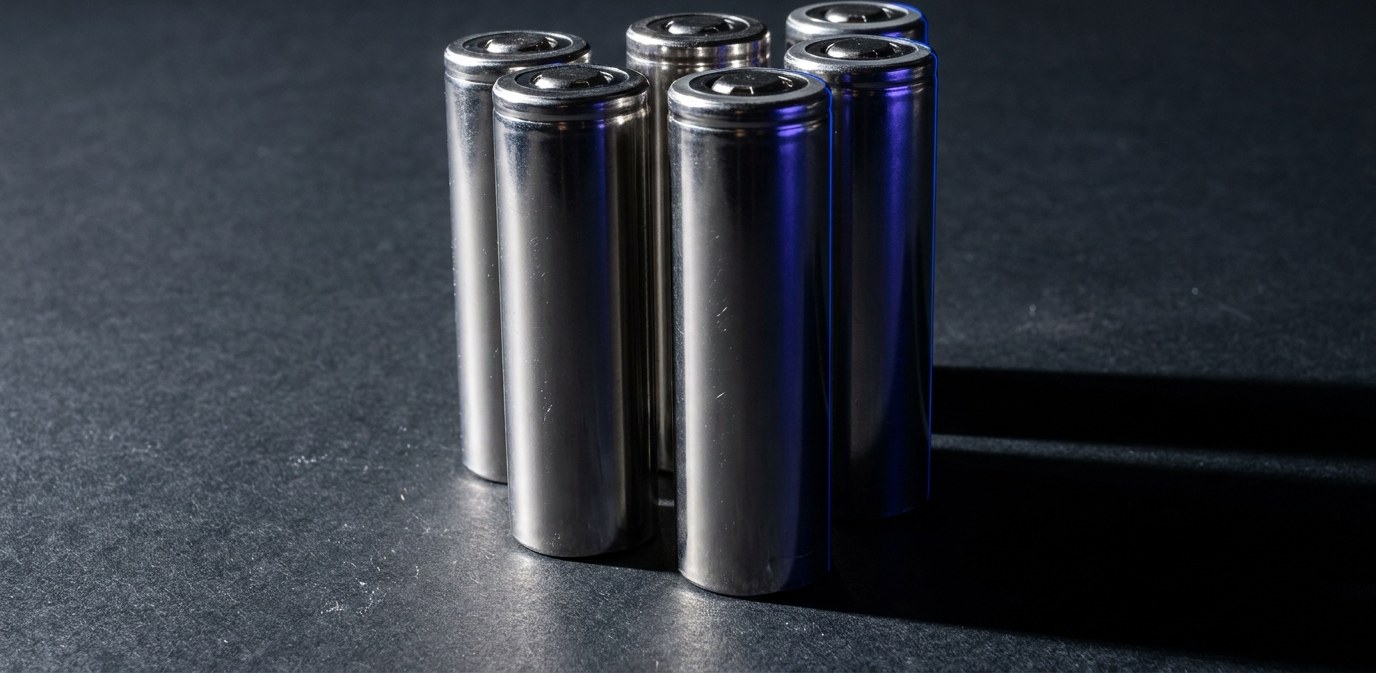
Importing Korean lithium-ion battery cells to the UK triggers a compliance split most guides miss: Great Britain requires no CE or UKCA marking for batteries, but Northern Ireland — via the Windsor Framework — demands full EU Batteries Regulation 2023/1542 conformity, including CE marking, a verified carbon footprint declaration from February 2026, and a digital battery passport QR code from February 2027. UN 38.3 transport safety documentation and IEC 62619 industrial safety testing are mandatory for every shipment regardless of destination. This guide maps the exact documentation path from a Korean 21700 NMC cell factory to UK market entry.
Which Compliance Track? Your Destination Determines Your Requirements
Where are the Korean battery cells placed on the market?
Most compliance guides treat the United Kingdom as a single regulatory zone. For battery importers sourcing Korean 21700 cells, this is a practical error that can delay shipments and disrupt supply chains.
In Great Britain — England, Scotland, and Wales — the applicable law is the Batteries and Accumulators (Placing on the Market) Regulations 2008 (SI 2008/2164). Per UK Government (GOV.UK), this legislation sets substance limits: mercury must not exceed 0.0005% by weight, cadmium must not exceed 0.002%, and lead must not exceed 0.004%. Batteries must carry the crossed-out wheeled bin symbol. There is no mandatory conformity marking requirement for batteries in Great Britain — no CE mark, and no UKCA mark.
UK battery importers — defined as any business that first places batteries on the UK market — must register with the Environment Agency and join an approved producer compliance scheme, per EPR Compliance. DEFRA is expected to launch a formal consultation on updated UK battery regulations during 2026, which may bring Great Britain closer to the EU framework.
In Northern Ireland, the situation is fundamentally different. Under the Windsor Framework, EU Regulation 2023/1542 applies directly. Per UK Government (GOV.UK), this means CE marking and all compliance obligations under the EU Batteries Regulation — including carbon footprint declarations, the digital battery passport, and labelling requirements — are mandatory for batteries placed on the Northern Ireland market.
UN 38.3 compliance is required for all lithium-ion cell shipments regardless of destination. Per Intertek, UN 38.3 (Revision 8, 2023) defines eight mandatory transport safety tests for all lithium-ion cells and batteries before international shipment:
All eight must be passed. Per Intertek, a UN 38.3 Test Summary documenting all results has been a mandatory shipping document since 2020 and must be made available to shippers and carriers on request.
Per IATA, IMDG Amendment 42-24 entered force on January 1, 2026, tightening state-of-charge proof requirements for lithium-ion battery shipments and updating UN shipping classification documentation. Confirm your Korean supplier's Test Summary references Revision 8, 2023 and addresses the updated IMDG requirements.
Korean 21700 NMC cells shipped as standalone cells are classified under UN3480 (Class 9, lithium-ion cells). Cells shipped with equipment or installed in equipment use UN3481. Packaging must comply with the applicable packing instructions — PI 965 for standalone cells (UN3480) or PI 967 for cells with equipment (UN3481) — under IMDG and IATA Dangerous Goods Regulations.
There are two core IEC safety standards for secondary lithium cells, and selecting the wrong one is a common sourcing error.
Per Battery University Europe, IEC 62619:2022 applies to secondary lithium cells and batteries used in industrial applications, including power tools, light electric vehicles, and energy storage systems. It covers safety at both cell and pack level, and includes tests for overcharge, short circuit, thermal abuse, mechanical stress, vibration, and battery management system safety requirements.
IEC 62133-2 covers portable sealed secondary lithium batteries for consumer use — smaller consumer electronics batteries such as those in smartphones and handheld devices.
Per Battery University Europe, a 21700 NMC cell used in power tool battery packs, light electric vehicle systems, or energy storage systems falls within IEC 62619 scope, not IEC 62133-2. Purchasing IEC 62133-2 test reports when your application requires IEC 62619 creates a compliance gap. Informed UK pack assemblers sourcing for industrial applications will specify IEC 62619 and may reject suppliers who provide IEC 62133-2 documentation only.
Carbon Footprint Declaration: February 18, 2026 Is a Hard Deadline
Self-Declaration Is Not Permitted — Third-Party Notified Body Verification Required
Under Article 7 of EU Regulation 2023/1542, the carbon footprint declaration for industrial batteries above 2 kWh capacity must be verified by a notified body under Module D1. Self-declaration is explicitly not permitted. The declaration covers the assembled battery pack, not individual cells — but the Korean cell maker must provide site-specific primary manufacturing data to enable the UK pack assembler's compliance. If your Korean supplier has not yet prepared this data, initiate the request immediately. Life cycle assessment work at the manufacturing plant level takes months to complete.
EU Regulation 2023/1542 entered into force on August 17, 2023. Per TÜV Rheinland, CE marking became mandatory for all batteries placed on the EU — and Northern Ireland — market from August 18, 2024.
Four key obligations with phased-in deadlines affect Korean 21700 cell imports for Northern Ireland or EU distribution:
Carbon footprint declaration (Article 7) — mandatory from February 18, 2026. Per TÜV Rheinland, a verified carbon footprint declaration is mandatory for rechargeable industrial batteries with a capacity greater than 2 kWh. The declaration covers the assembled battery pack, not individual 21700 cells. However, per PSQR, the pack assembler requires cell-level, site-specific primary manufacturing data from the Korean cell factory — industry-average data is not permissible for the cell production stage. Third-party verification by a notified body under Module D1 is mandatory. Self-declaration is not permitted.
Digital battery passport (Article 77) — mandatory from February 18, 2027. Per Circularise, a digital battery passport accessible via a permanently affixed QR code becomes mandatory for all rechargeable industrial batteries above 2 kWh, EV batteries, and light means of transport batteries. The passport must contain carbon footprint data, performance class, recycled content data, electrochemical metrics, and traceability information.
Supply chain due diligence (Article 48) — mandatory from August 18, 2027. Per the Council of the European Union, the original deadline of August 2025 was postponed to August 2027 by amending Regulation (EU) 2025/1561, adopted on July 18, 2025. This obligation covers sourcing of cobalt, lithium, natural graphite, and nickel. Korean cell makers should begin preparing supply chain documentation for these materials now, but enforcement does not begin until August 2027.
Recycled content requirements (Article 8) — phased in from August 2031. Per EUR-Lex (European Union), Phase 1 recycled content targets apply from August 2031: cobalt 16%, lithium 6%, and nickel 6%. Phase 2 targets increase those percentages from 2036.
Korean Cell Factory to UK Pack Assembly: 5 Documentation Steps
Obtain UN 38.3 Test Summary from the Korean Cell Maker
The Test Summary documenting all eight T1–T8 transport safety test results must be made available to your logistics provider and carrier. It has been a mandatory shipping document since 2020. Verify it references UN Manual of Tests and Criteria, Revision 8, 2023, and that it addresses IMDG Amendment 42-24 state-of-charge proof requirements (in force January 1, 2026).
Confirm IEC 62619:2022 Safety Certification at Cell Level
Request IEC 62619:2022 test reports — not IEC 62133-2, which applies to portable consumer batteries. IEC 62619 covers industrial applications including power tools, light electric vehicles, and ESS. Verify BMS safety requirements and mechanical stress and vibration test results are included in the report.
Request Site-Specific Carbon Footprint Manufacturing Data
If your assembled pack exceeds 2 kWh and you sell into Northern Ireland or the EU, the pack-level carbon footprint declaration mandatory from February 18, 2026 requires site-specific primary data from the Korean cell manufacturing plant — industry-average data is not permitted. Life cycle assessment work at factory level takes months. Initiate this request early.
Verify Substance Compliance and UK Labelling for Great Britain
Confirm mercury does not exceed 0.0005% by weight, cadmium does not exceed 0.002%, and lead does not exceed 0.004% per the UK Batteries Regulations 2008. Ensure the crossed-out wheeled bin symbol is on the cell label or packaging. Register your business with an Environment Agency-approved producer compliance scheme.
Compile the Shipment Documentation Set
Commercial invoice (HS code 8507.60), packing list, UN 38.3 Test Summary, Safety Data Sheet for lithium-ion cells, IEC 62619:2022 test reports, ISO 9001 and IATF 16949 quality certificates, Certificate of Origin for UK-Korea FTA preferential tariff, and UN 38.3 compliant packaging markings (UN3480 for cells standalone; UN3481 for cells with equipment).
UK pack assemblers sourcing Korean 21700 NMC cells need a specific documentation set from their supplier before placing a production order.
Request the following documents as a minimum:
The item with the longest lead time is site-specific carbon footprint data. Suppliers that have not yet performed a site-level life cycle assessment may need several months to generate this data. If the February 2026 deadline is relevant to your Northern Ireland or EU supply chain, request this documentation immediately.
Per UK Government (GOV.UK), the United Kingdom and South Korea finalised an enhanced Free Trade Agreement announced on December 15, 2025, securing permanent tariff-free access across 98% of tariff lines — matching the terms of the pre-existing EU-Korea FTA. The deal includes updated rules of origin.
Lithium-ion battery cells (HS 8507.60) are expected to benefit from tariff-free treatment under the agreement. However, the specific preferential tariff rate and rules of origin requirements for HS 8507.60 were not confirmed in the published schedule at the time of writing. Buyers should verify the current rate and origin requirements on the official UK Trade Tariff service (trade-tariff.service.gov.uk) after formal ratification before claiming preferential treatment.
Starfield Commerce manufactures 21700 NMC lithium-ion cells with nominal capacity 5,000 mAh and nominal voltage 3.6V. The cells are produced under IATF 16949 and ISO 9001 quality management systems, with UN 38.3 transport testing completed and packaged in UN 38.3 compliant tray-and-carton format. Applications include power tools, light electric vehicles, and energy storage systems. MOQ is 10,000 cells.
For UK pack assemblers preparing for the February 2026 carbon footprint declaration deadline, we can discuss provision of site-specific manufacturing data to support your pack-level life cycle assessment. Contact us to request the complete documentation package and cell specification sheet for UK and EU compliance review.
Comments
Post a Comment