Polymer Cement in Peru: How Seismic Code E.030 and Reconstruction Spending Drive Repair Mortar Demand
Polymer Cement in Peru: How Seismic Code E.030 and Reconstruction Spending Drive Repair Mortar Demand
- Get link
- X
- Other Apps
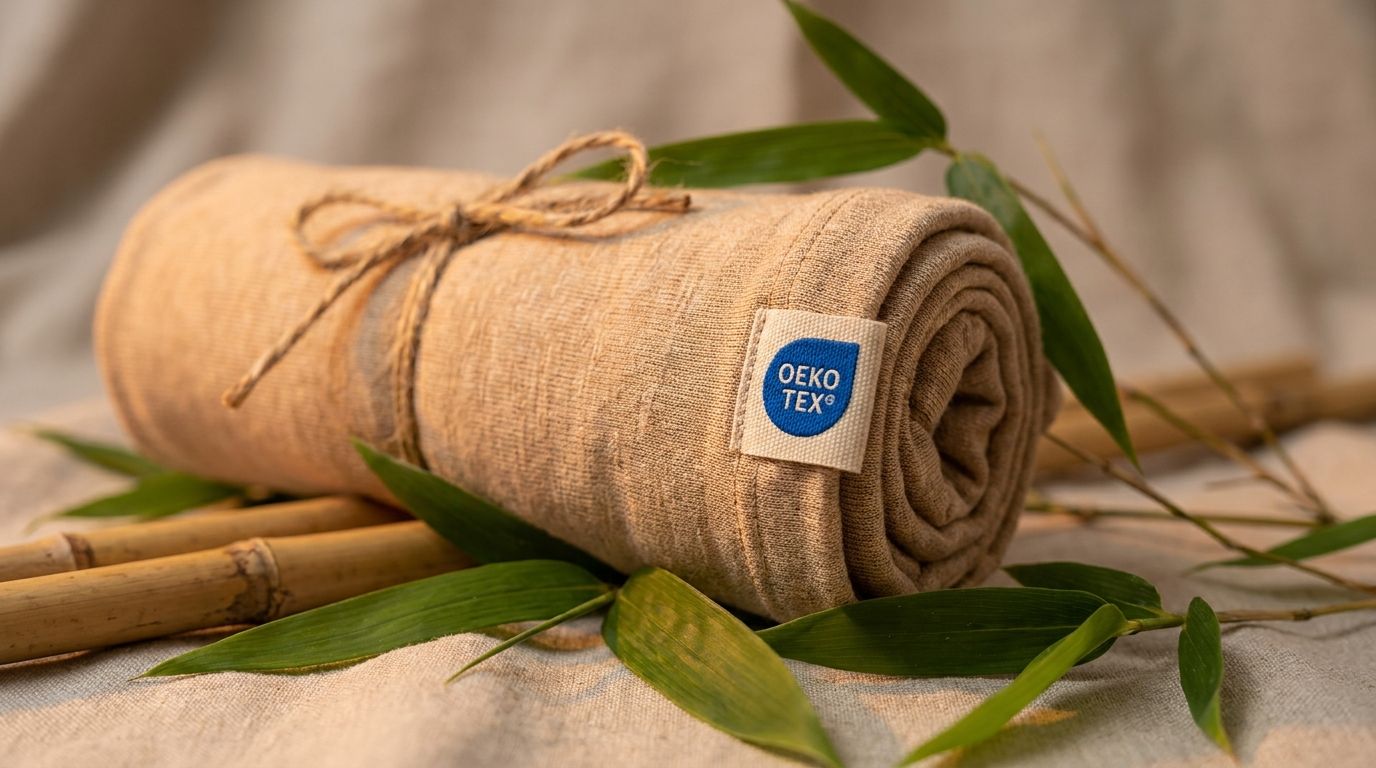
The US sustainable apparel market is projected to cross $10.5 billion in 2026, and bamboo T-shirts already hold a 38.6% share of total bamboo apparel revenue — the largest single product segment in the category. For category managers evaluating Korean bamboo T-shirt suppliers, the market fundamentals are strong, but two FTC compliance gates on fiber-content labeling and antimicrobial claims are the first filters any US buyer must clear before a launch. This guide gives sourcing teams the market size, channel, certification, and competitive landscape picture they need to build an internal case for adding a Korean bamboo-fiber T-shirt supplier.
The demand numbers justify attention. According to Global Market Insights, the US dominated North America's sustainable clothing market in 2025, generating approximately $2.3 billion in revenue and holding a 64.5% regional share. The market is projected to cross $10.5 billion in 2026. Looking further out, Market Research Future forecasts the global sustainable apparel industry will grow from $11.85 billion in 2025 to $40.63 billion by 2035, a CAGR of 13.11%.
Within bamboo specifically, the global bamboo apparel market is estimated at $2.5 billion in 2026 and forecast to reach $4.1 billion by 2033, per Apparel Views (citing Persistence Market Research). North America holds the largest regional share at 35%, driven by high consumer sustainability awareness, a mature direct-to-consumer e-commerce infrastructure, and the strength of athleisure and wellness lifestyle segments.
These are not niche figures. Sustainably marketed products represented 24.8% of all US consumer retail spending in 2025, per Capital One Shopping Research. The share of US consumers willing to pay extra for eco-friendly goods grew 7.64% in a single year. According to Fibre2Fashion survey data, 69% of US consumers expressed willingness to pay more for sustainable products, with an average premium tolerance of 9.7% above conventional product prices.
Not all product types within bamboo apparel carry the same market weight. Future Market Insights estimates that T-shirts represented 38.6% of total bamboo apparel category revenue in 2025 — the single largest segment globally.
Entering the T-shirt segment means entering the most developed, most buyer-accepted part of the bamboo apparel market. Consumer familiarity with bamboo T-shirts is already established at US retail. Royal Apparel, one of the few remaining US domestic bamboo apparel manufacturers, uses a 70% viscose bamboo / 30% organic cotton blend at 180 GSM — the same formulation as the Korean supplier — confirming this ratio as the established market standard for premium bamboo basics in the US, per Royal Apparel's own wholesale specifications.
This parity matters for internal business cases: category managers can benchmark a Korean OEM offer directly against a domestic US manufacturer without needing to educate internal stakeholders on what the blend is or why it performs.
Understanding who is purchasing bamboo T-shirts — and what each channel requires — helps a sourcing manager prioritize where to enter.
Eco and outdoor specialty retail. This is the most documentation-intensive channel. Patagonia, a recognized US sustainable outdoor brand, requires suppliers to use organically grown or recycled materials and has targeted net-zero emissions by 2040, per its published supply chain footprint program. Specialty eco-retailers typically require evidence of supplier certifications at onboarding, not just hangtags.
Private-label DTC and e-commerce. For Korean bamboo T-shirt suppliers without an established US presence, this is often the most accessible path in. DTC brands building private labels can move quickly when a supplier holds verifiable OEKO-TEX Standard 100 certification and compliant fiber-content labeling. Minimum order quantities of 500–1,000 pieces and monthly capacity of 50,000 pieces fit the range these buyers need for initial trial programs.
Uniform and promotional wear. According to BrandSpeed, bamboo T-shirts are increasingly used for corporate and promotional programs in the US. Sustainable materials have shifted from a niche sourcing preference to a mainstream purchasing criterion at many US organizations. This channel operates at higher volumes with longer replenishment cycles — well-suited for suppliers who can handle repeatable OEM programs.
FTC Enforcement Alert: Two Claims That Require Documentation
FTC Enforcement Alert: Two Claims That Require Documentation
1. LABELING: Under the US Textile Fiber Products Identification Act, bamboo viscose T-shirts must be labeled 'rayon from bamboo,' 'rayon (made from bamboo),' or 'viscose from bamboo.' Labeling as 'bamboo' or '100% bamboo' is a violation. 2. ANTIMICROBIAL CLAIMS: The FTC has formally determined that bamboo's natural antimicrobial properties do not survive viscose processing. Any antibacterial or odor-control claim requires third-party test data specific to the treated fabric. The FTC's 2022 enforcement actions resulted in USD 5.5 million in combined civil penalties against Kohl's (USD 2.5 million) and Walmart (USD 3 million) — the largest in this enforcement area, per Bergeson & Campbell P.C.
This is where many bamboo T-shirt import programs encounter problems, and where early compliance work pays the highest return.
Gate 1: Fiber-content labeling. Under the US Textile Fiber Products Identification Act and the FTC's Textile Fiber Rule, bamboo viscose products must be labeled as "rayon from bamboo," "rayon (made from bamboo)," or "viscose from bamboo," per the US Federal Trade Commission. Labeling a product simply as "bamboo" or "100% bamboo" is a violation. This applies to all hangtags, care labels, and marketing copy.
Gate 2: Antimicrobial and odor-control claims. The FTC has formally determined that the natural antimicrobial properties of the bamboo plant do not survive the viscose manufacturing process. Any antimicrobial or odor-control claim on rayon-from-bamboo fabric requires independent, third-party scientific substantiation for the specific treated fabric. Without that documentation, such claims are an active FTC enforcement target.
The enforcement record is concrete: in 2022, the FTC's bamboo textile enforcement actions resulted in USD 5.5 million in combined civil penalties — Kohl's was ordered to pay USD 2.5 million and Walmart USD 3 million. Both companies had received FTC warning letters in 2010 yet continued the mislabeling, per Bergeson & Campbell P.C.
What this means for sourcing managers: Before any US launch, confirm the supplier's hangtags, care labels, and all marketing copy use the compliant "viscose from bamboo" or "rayon from bamboo" descriptor. If an antibacterial or odor-control performance claim will be used in US marketing — even where the fabric carries a chemical finish — require the supplier to provide third-party test data specific to that finish, not to bamboo fiber in general.
Two certifications dominate sourcing checklists for bamboo basics entering the US market.
OEKO-TEX Standard 100. This certifies that a textile product has been tested against over 1,000 harmful substances, covering every thread, button, and accessory, per the OEKO-TEX Association. The certification is recognized by a global network of over 35,000 certified companies worldwide, making it a key ESG compliance credential for US apparel buyers sourcing internationally. For B2B buyers, a label on the product alone is not sufficient proof. Buyers must require the supplier to provide a valid OEKO-TEX certificate, and the test number and institution on the label must match those on the certificate.
GOTS (Global Organic Textile Standard) or OCS (Organic Content Standard). When a product is marketed with an "organic cotton" content claim, US specialty retailers and their auditors typically require GOTS or OCS certification for the organic fiber component, per SZone International Fabrics' industry sourcing guide. A supplier holding OEKO-TEX Standard 100 on the overall fabric satisfies the primary screen for most US eco-brand buyers. Adding OCS for the organic cotton component opens access to specialty natural retail channels that require chain-of-custody verification of organic content claims.
70/30 Bamboo-Cotton vs. Organic Cotton vs. Recycled Polyester
| 70/30 Bamboo-Cotton (180gsm) | 100% Organic Cotton | |
|---|---|---|
| Softness / hand feel | High — viscose bamboo is silky and smooth next-to-skin | Good — varies by weave and finish |
| Moisture management | Good breathability and moisture-wicking | Moderate; absorbs moisture but slower to dry |
| Eco narrative | Dual-fiber story: low-input bamboo crop + organic cotton | Strong organic-farming and soil-health story |
| Primary certification | OEKO-TEX Standard 100 + OCS for organic content | GOTS for full organic chain-of-custody |
| Price vs. conventional cotton | 15–30% premium over standard cotton basics | Premium organic positioning, varies by GOTS tier |
| US market familiarity | Established — same blend used by US domestic manufacturers | Well-established, broad retail acceptance |
Category managers commonly evaluate bamboo-cotton blends against two primary alternatives: 100% organic cotton basics and recycled-polyester T-shirts. The 70% bamboo viscose / 30% organic cotton formulation occupies a distinct position in this competitive set.
The bamboo viscose component delivers softness and moisture-management characteristics that consumers consistently associate with bamboo apparel. The organic cotton component adds structure, durability, and a secondary eco-credential. Together, the blend addresses consumer expectations in certified sustainable basics better than either fiber alone.
On price positioning: bamboo viscose basics carry approximately a 15–30% premium over standard cotton alternatives, per SZone International Fabrics. This positions the product for eco-brand private labels that are already building a retail price justification on sustainable sourcing. It is not competitive against commodity T-shirts by price; it is competitive against other certified sustainable basics by performance and certification coverage.
Recycled-polyester alternatives carry a circular-economy narrative but score lower on consumer comfort perception for next-to-skin wear. The bamboo-cotton blend's differentiation is strongest in athleisure, wellness, and sensitive-skin basics — which are among the fastest-growing US sustainable T-shirt segments.
US Market Onboarding Checklist for Bamboo T-Shirt Sourcing Managers
Not all Korean bamboo T-shirt suppliers hold the same documentation. For a US import program, the sourcing conversation should confirm each item on this checklist before placing a purchase order.
Buyers screening for the US market need to see the OEKO-TEX Standard 100 certificate itself — the test number and certifying institution — not just a hangtag claim. The compliant fiber-content labeling must already be in place on garment samples, not promised as a future revision. If the product will be marketed with an organic-content claim, OCS or GOTS documentation for the organic cotton component is a mandatory request, not an optional ask.
Where antibacterial or odor-control claims will be used in US retail or e-commerce marketing, third-party test data for the specific fabric finish should be in the documentation package before a final purchase order is placed. Confirming MOQ, monthly capacity, and size range availability at this stage avoids schedule disruptions after the contract is signed.
Korean bamboo T-shirt suppliers who have already supplied eco-focused apparel brands in Europe and the US typically maintain this documentation stack in export-ready form. Requesting it at the RFQ stage is standard practice, not an unusual ask.
Per the US Federal Trade Commission, the natural antimicrobial properties of the bamboo plant do not survive the viscose manufacturing process. Any antibacterial or odor-control claim on a rayon-from-bamboo product requires independent, third-party scientific substantiation specific to the treated fabric — not bamboo fiber in general. The FTC's 2022 enforcement actions resulted in USD 5.5 million in combined civil penalties against Kohl's (USD 2.5 million) and Walmart (USD 3 million) for mislabeling and deceptive environmental claims, per Bergeson & Campbell P.C. If the T-shirt carries a chemical antimicrobial finish applied after production, request third-party test data from the supplier before using such claims in US marketing.
The fiber-content label must identify the bamboo component by its generic viscose name: "rayon from bamboo," "rayon (made from bamboo)," or "viscose from bamboo," per the FTC's Textile Fiber Rule. The full label must list both components by percentage — for example, "70% viscose from bamboo / 30% organic cotton." The label must also include country of origin, care instructions, and the manufacturer or importer name or registered identification (RN) number. Labeling the product simply as "70% bamboo / 30% organic cotton" is not compliant under the Textile Fiber Products Identification Act.
OEKO-TEX Standard 100 satisfies the primary certification screen for most US eco-brand buyers, covering testing against over 1,000 harmful substances across every thread, button, and accessory, per the OEKO-TEX Association. GOTS — or OCS for the organic cotton component — becomes necessary when the product will be marketed with a specific organic content claim, or when the buyer is a specialty natural retail channel that requires full chain-of-custody organic certification. For initial entry through DTC or private-label channels, OEKO-TEX Standard 100 is generally sufficient. Expanding into specialty natural retail typically requires adding OCS or GOTS for the organic cotton component.
Private-label DTC and e-commerce brands are typically the most accessible entry point, followed by the uniform and promotional-wear segment. Both channels can evaluate on product quality and certification documentation and move on initial OEM orders in the 500–1,000 piece range. Specialty eco-retailers require more documentation and supplier vetting at onboarding — they are a better fit after one or two US retail seasons of documented sales and compliance history.
Specific FOB pricing requires a direct request for quotation, as factory pricing varies by order volume, OEM specification complexity, and currency factors. As a general market reference, bamboo viscose basics typically carry a 15–30% price premium over standard cotton alternatives, per SZone International Fabrics. This positions a 180 GSM OEKO-TEX-certified blend in the premium-basics tier — appropriate for eco-brand private labels building a retail price justification on sustainable sourcing, not for commodity fashion programs.
Regulatory information in this article is based on publicly available guidance from the US Federal Trade Commission, OEKO-TEX Association, and industry sourcing references. For final compliance decisions on FTC labeling, fiber testing, or US customs classification, consult a qualified US trade compliance specialist. This information is provided for reference only.
Comments
Post a Comment