Polymer Cement in Peru: How Seismic Code E.030 and Reconstruction Spending Drive Repair Mortar Demand
Polymer Cement in Peru: How Seismic Code E.030 and Reconstruction Spending Drive Repair Mortar Demand
- Get link
- X
- Other Apps
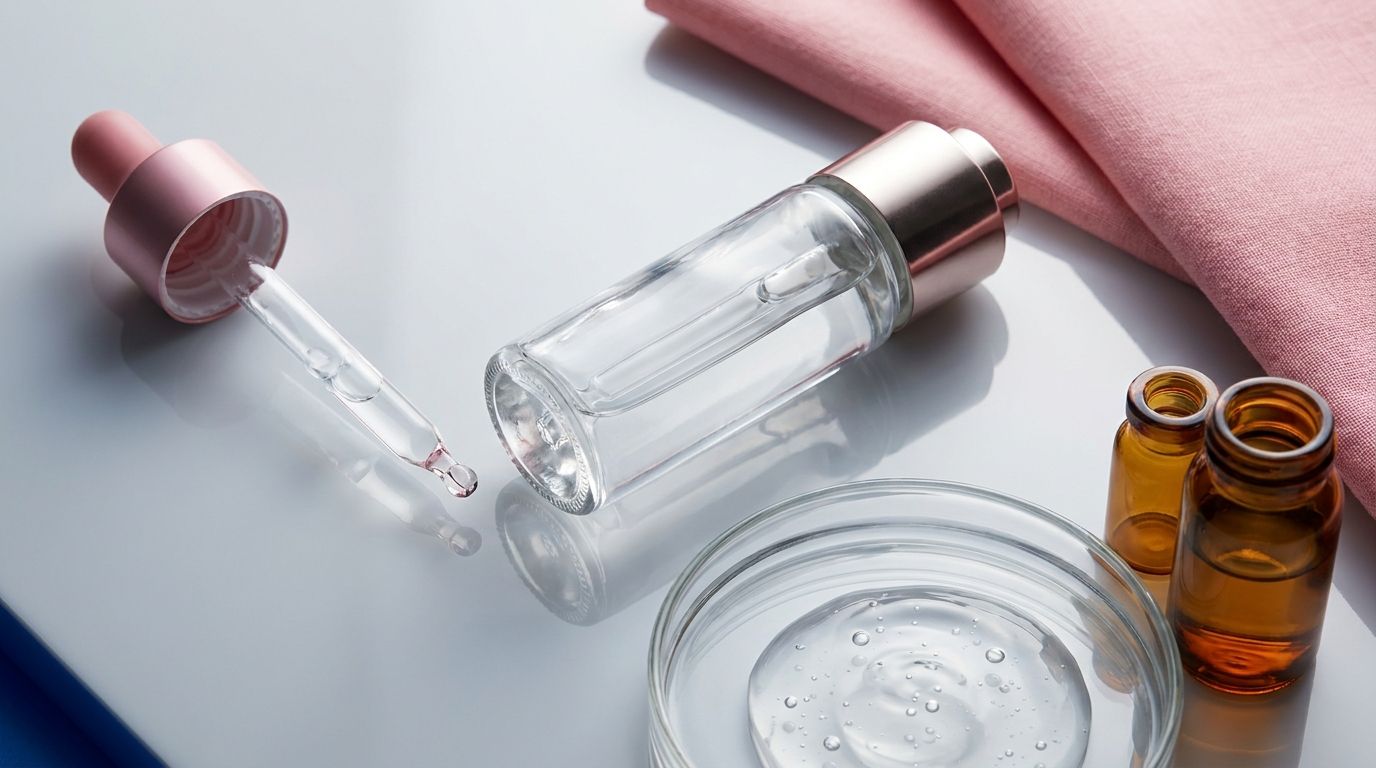
Releasing PO funds for a Korean hyaluronic ampoule serum without supplier verification is one of the fastest ways to lose money importing cosmetics into Canada. Health Canada can deny entry to a non-compliant shipment at the border — and under Canada's Cosmetic Regulations (CRC, c. 869), the importer carries full legal responsibility for everything that crosses into Canada under their name. Nine documents stand between you and a costly border hold. A cooperative supplier provides all of them in five to seven business days. If they can't — or won't — you have your first red flag.
Canada's cosmetics framework has some unique requirements that catch importers off guard. There is no pre-market approval for cosmetics, but post-market enforcement is real. As the importer, you are legally accountable under section 16 of the Food and Drugs Act (RSC 1985, c. F-27) for ensuring the product does not cause injury under normal use conditions. Health Canada inspectors can visit import warehouses, examine shipments at ports of entry, and remove products from sale if they find violations, according to Registrar Corp.
The bilingual labelling rule alone has stopped more than a few Korean serum shipments destined for Canada. Add Quebec's Bill 96 (effective June 1, 2025), which requires French to be at least as prominent as English on product labels, and a label designed for any other market is almost certainly not ready for Canada without modification.
This checklist is built for sourcing managers and private-label brand buyers who want a document-by-document protocol to run before committing funds to a Korean hyaluronic ampoule serum.
Pre-Order Verification Checklist — Korean Hyaluronic Serum for Canada
What to ask for: A copy of the manufacturer's ISO 22716:2007 Good Manufacturing Practices certificate, issued by a third-party accredited certification body such as SGS, Bureau Veritas, or TÜV Rheinland. If no third-party certificate exists, request the most recent internal audit report and approved supplier qualification records.
What "good" looks like: A certificate that is currently valid and not expired, with the specific manufacturing site address matching the facility that will produce your order. Per Health Canada — which endorses ISO 22716 alongside the US, EU, and Japan through the International Cooperation on Cosmetic Regulation (ICCR) — the standard covers production, control, storage, and shipment of cosmetic products, including documented batch traceability and internal audits.
Red flag: Certificate is expired, self-issued without a recognized third-party auditor, or issued for a different facility address. Health Canada notes that GMP compliance is voluntary for cosmetics in Canada, but a Korean supplier unable to provide any GMP documentation represents a supply chain risk that sits entirely with you as the importer.
What to ask for: A CoA specific to the production batch being shipped — not a reference batch from a prior run or a "type batch" for the formula in general.
What "good" looks like: According to the Contract Laboratory Network, a valid cosmetic CoA must include: product name and batch/lot number, manufacturing and expiry dates, microbial limits (total aerobic count, yeast and mould counts), heavy metals (lead, arsenic, cadmium, mercury), pH and viscosity measurements, specification limits with pass/fail determinations, and an authorized signature from the manufacturer's quality unit.
Red flag: The supplier offers only a generic or historical CoA not linked to your specific batch, or cannot produce signed test results. The Canada Border Services Agency (CBSA) may independently examine any cosmetics shipment at the border — a batch-specific CoA is your first line of evidence that the product matches the label.
What to ask for: Stability test data for the exact formula in the actual packaging (the 50-ml PET bottle), plus a preservative efficacy challenge test report for the specific formula.
What "good" looks like: According to Arora 297 Consultancy, stability studies should cover at minimum three months of accelerated testing and twelve months of real-time testing, evaluating microbial stability, physical stability (viscosity, color, phase separation), and chemical integrity (pH stability, active ingredient degradation). Per CAL Laboratories Canada, preservative efficacy testing for a water-based multi-use serum should meet ISO 11930 Criteria A or B, or the CTFA standard — bacteria reduced by 99% within seven days of inoculation, yeast and fungi reduced by 90% within seven days.
Red flag: Data exists for a different container size (for example, a 30-ml bottle tested when you are ordering 50 ml), a different formula version, or the supplier says stability data is "available on request after the order." This data must exist before the product is sold — and Health Canada may ask for it during an inspection.
What to ask for: The full INCI (International Nomenclature of Cosmetic Ingredients) ingredient list in descending order of predominance. Cross-check every ingredient against Health Canada's Cosmetic Ingredient Hotlist.
What "good" looks like: A clean list with no ingredients on the Hotlist as prohibited or restricted. Per Health Canada, hyaluronic acid and niacinamide are not listed as prohibited or restricted for cosmetic use (Hotlist last updated August 2025). Botanicals must specify at least the genus and species of the INCI name. The list must match exactly what will appear on the finished product label.
Red flag: The supplier provides a partial ingredient list, uses generic terms like "fragrance" without individual allergen disclosure, or cannot cross-reference their formula against the Hotlist. Starting April 12, 2026, Health Canada requires 24 specific fragrance allergens to be individually listed on leave-on products such as serums when present above 0.001%, per Health Canada's fragrance allergen labelling amendments. This expands to 81 allergens for new products from August 1, 2026.
What to ask for: A label proof or artwork file showing all mandatory information in both English and French — net content, directions for use, cautionary statements, and the name and Canadian address of the Responsible Person.
What "good" looks like: Per Health Canada's Cosmetic Regulations, all mandatory label information must appear in both English and French. INCI ingredient names are the one exception — they may appear in standard INCI form without a French equivalent. If you are selling in Quebec, Bill 96 (effective June 1, 2025) adds a requirement that French text be given a place at least as prominent as English, affecting font size and visual layout, according to Cosmeservice Regulatory.
Red flag: The current label is English-only, or French text is visually smaller or less prominent than English. For a 50-ml PET bottle with limited label space, a label not designed for Canada almost always requires a redesign before the first sale.
What to ask for: The name, Canadian mailing address, and contact details of the designated Responsible Person for the product in Canada. As the importer, this role typically falls on you.
What "good" looks like: Per Cosmeservice Regulatory, a cosmetic sold in Canada must have a Canada-based Responsible Person — a manufacturer or importer legally accountable for Food and Drugs Act and Cosmetic Regulations compliance, covering safety, labelling, and notification obligations. The name and Canadian address must appear on the product label.
Red flag: No Canadian address has been designated for the product, or the Korean manufacturer expects to act as its own Responsible Person without a Canadian legal presence. Health Canada uses this designation as the primary compliance contact in the event of a safety issue or product inspection.
What to ask for: Supporting documentation for each marketing claim — specifically for "24-hour hydration," "clinically tested," and "95%+ naturally derived ingredients."
What "good" looks like: Per Health Canada's guidance on cosmetic-drug classification, hydration claims such as "24-hour hydration" remain within the cosmetic category when limited to appearance and sensory effects. "Clinically tested" requires an actual clinical or consumer study report. For "95% naturally derived," the supplier should provide a methodology showing how the percentage was calculated. Health Canada does not define "naturally derived" for cosmetics, but the claim must be truthful and not misleading — and the Minister may request substantiation at any time.
Red flag: No substantiation files exist, or the marketing language implies treatment of a medical condition. Phrases like "treats chronic dry skin," "prevents skin infection," or "repairs the skin barrier from disease" cross into drug or Natural Health Product territory, requiring a separate product licence before sale.
What to ask for: A pre-shipment sample of at least five to ten units from the production batch, for independent fill-volume measurement and packaging and leak testing.
What "good" looks like: Each 50-ml PET bottle should contain at least 50 ml of product when measured. Bottles should pass a basic leak test — inverted and lightly squeezed — with no seepage. The pump or dropper mechanism should dispense product on the first press without air lock.
Red flag: The supplier is unwilling to send pre-shipment samples, or samples show fill volumes consistently below the declared 50 ml. Under Canada's Cosmetic Regulations, product content must match label declarations — short-fills are a labelling violation that the CBSA can act on at the border.
What to ask for: An agreed AQL (Acceptable Quality Limit) inspection plan for your incoming shipment. For a first order from a new Korean supplier, consider hiring a third-party quality inspection firm to conduct the inspection before goods are loaded.
What "good" looks like: Per QIMA Quality Assurance, the industry standard for cosmetics is ANSI/ASQ Z1.4 at General Inspection Level II, with defect classifications as follows: Critical defects AQL = 0 (none allowed); Major defects AQL = 2.5 (covers fill quantity, safety, and function); Minor defects AQL = 4.0 (surface or cosmetic defects). For a 1,000-unit lot, this means inspecting approximately 80 units. The CBSA may run its own independent examination at the border — having your own pre-shipment report on record is strong risk documentation.
Red flag: No QC plan exists and the supplier's only assurance is verbal. Self-reported factory inspection without documentation or a third-party report is not a substitute for a structured AQL plan on a first commercial order.
Red Flags: Stop Before Releasing PO Funds
Red Flags: Stop Before Releasing PO Funds
Supplier resists sharing a batch-specific CoA or offers a generic reference batch. GMP certificate is expired, self-issued, or for a different facility. Stability or preservative data does not match the exact formula and container size. INCI list shows a Health Canada Hotlist-prohibited ingredient. No Canada-based Responsible Person can be named. Label is English-only or lacks the importer's Canadian address. Marketing claims cross into drug or NHP territory (e.g. 'treats dry skin', 'prevents infection').
Any single one of these conditions is sufficient reason to pause before releasing PO funds. The supplier resists or delays sharing a batch-specific CoA, or offers only a generic reference batch. The GMP certificate is expired, self-issued, or issued for a different manufacturing facility. Stability or preservative efficacy data does not match the exact formula and container size being ordered. The INCI ingredient list is incomplete or contains a Health Canada Hotlist-prohibited substance. No Canada-based Responsible Person can be named or is willing to be listed on the label. The label is English-only or lacks the importer's Canadian address. Marketing claims use language that implies treatment of a medical condition. Pre-shipment samples are unavailable or show measured fill volumes below the declared 50 ml.
Under section 30 of Canada's Cosmetic Regulations (CRC, c. 869), the importer must submit a Cosmetic Notification Form (CNF) to Health Canada within 10 days after first selling the cosmetic in Canada. Per Registrar Corp, Health Canada recommends filing the CNF before the shipment arrives at the Canadian border — this prevents the shipment from being held while your notification is processed. There is no cost to file the CNF. Under section 31 of the Cosmetic Regulations, if any submitted information changes after filing, a revised CNF must be provided within 10 days — otherwise the product cannot continue to be sold in Canada, according to Health Canada.
ISO 22716 certification is not a legal requirement to sell cosmetics in Canada. Per Health Canada, GMP compliance is voluntary for cosmetics — it is not a mandatory condition for filing the CNF or clearing the border. However, Health Canada endorses ISO 22716 through its ICCR partnership with the US, EU, and Japan. As an importer, requesting GMP evidence is your due diligence as a sourcing manager, not a box that Canada's regulatory system checks for you.
A batch CoA must be specific to the shipment batch, not a reference batch. It should include: product name and batch/lot number, manufacturing and expiry dates, microbial limits (total aerobic count, yeast and mould), heavy metals (lead, arsenic, cadmium, mercury), pH and viscosity results, specification limits with pass/fail determinations, and an authorized signature from the manufacturer's quality unit. A CoA for a different batch does not satisfy incoming QC requirements for the actual goods being received.
Not on their own. Per Health Canada's guidance on cosmetic-drug classification, "24-hour hydration" and "clinically tested" for a skincare serum remain within the cosmetic category as long as they refer to appearance or sensory effects. The reclassification risk arises when language implies treatment of a medical condition — for example, "treats chronic dry skin," "repairs the skin barrier from disease," or "prevents infection." These claims would trigger the drug or Natural Health Product pathway and require a product licence.
Under Canada's Cosmetic Regulations, all mandatory label information must appear in both English and French. INCI ingredient names are the one exception and may be listed in standard INCI form without French translation. For products sold in Quebec, Bill 96 (effective June 1, 2025) adds the requirement that French text be at least as prominent as any other language on the label — affecting font size and visual layout. A label designed for another English-speaking market is unlikely to meet this standard without modification.
Using ANSI/ASQ Z1.4 at General Inspection Level II — the industry standard for cosmetics per QIMA Quality Assurance — the sample size for a 1,000-unit lot requires inspection of approximately 80 units. Defect classification: Critical AQL = 0 (no critical defects permitted); Major AQL = 2.5 (covers fill volume, safety, function); Minor AQL = 4.0 (surface cosmetic defects). For a first order from a new Korean supplier, many importers also engage a third-party inspection firm to conduct this check at the factory before the goods are loaded.
This information is provided for general reference only. Regulations, ingredient restrictions, and labelling requirements change frequently. Always verify current requirements directly with Health Canada or a qualified regulatory consultant before importing. Korea Industry Insights is not responsible for decisions made on the basis of this content. Per Canada's Cosmetic Regulations and the Food and Drugs Act, the importer bears full legal responsibility for product compliance at the Canadian border.
Comments
Post a Comment