Polymer Cement in Peru: How Seismic Code E.030 and Reconstruction Spending Drive Repair Mortar Demand
Polymer Cement in Peru: How Seismic Code E.030 and Reconstruction Spending Drive Repair Mortar Demand
- Get link
- X
- Other Apps
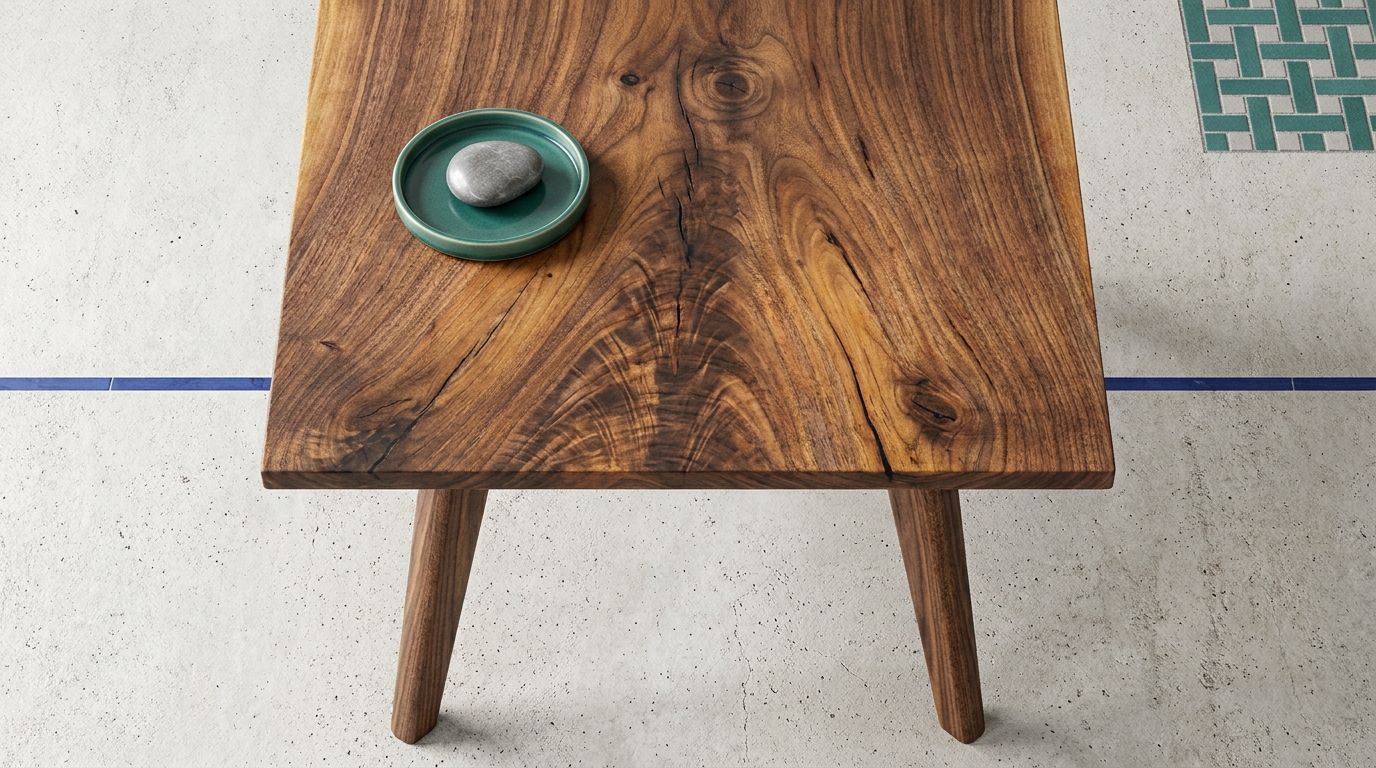
Canadian importers of Korean FSC-certified solid black walnut side tables can reduce their import duty from 4.8% to 0% under the Canada-Korea Free Trade Agreement (CKFTA) — saving approximately USD $3,600 on a 1,000-unit shipment — by securing a Certificate of Origin before cargo departs Busan, per Jet Worldwide. Beyond the duty line, the full landed cost from Busan to a Vancouver warehouse adds ocean freight of USD $7,168–$7,545 for a 40-foot high-cube container (Flexport, June 2026), terminal handling charges, a customs broker fee, and Canada's 5% GST, which is refundable as an input tax credit for registered businesses, per Canada Revenue Agency. This guide builds each cost layer from verified sources so you can model the landed price per unit, confirm the CARM portal registration requirement that became mandatory in October 2024, and make a clear-eyed margin decision before placing a first order.
Canada's furniture market was valued at approximately CAD $18 billion in 2023 and is projected to exceed CAD $20 billion by 2025, growing at a CAGR of 3.5–4% through 2029, according to PopUpSofa's Canadian Furniture Market Analysis. Wood furniture holds approximately 35% of that market. Within the wood segment, sustainability credentials now shape purchasing decisions at the retail level: more than 60% of Canadian consumers report a willingness to pay a premium for environmentally friendly furniture, per the same analysis.
FSC-certified or sustainably sourced solid wood furniture commands a retail price premium of 15–30% over conventional alternatives in the Canadian market, per PopUpSofa. For a solid black walnut side table with FSC chain-of-custody documentation and a water-based zero-VOC oil wax finish, that premium is the basis of a margin thesis — not a compliance add-on.
Under Canada's Harmonized Tariff Schedule, solid walnut side tables fall under HS 9403.60 — other wooden furniture, not for offices, kitchens, or bedrooms. The standard Most-Favoured-Nation (MFN) import duty rate is 4.8% of the customs value, per WTO IDB data via TariffsChart (2025, retrieved June 2026).
Under the Canada-Korea Free Trade Agreement (CKFTA), which entered into force on January 1, 2015, qualifying Korean-origin goods under HS 9403.60 attract a preferential import duty rate of 0%, per Canada Border Services Agency (CBSA) Customs Notice CN14-030. To claim the 0% rate, the importer must obtain a valid Certificate of Origin (CBSA Form BSF760) and confirm the goods meet CKFTA rules of origin.
Being shipped from Korea is not the same as originating in Korea under CKFTA definitions, per Deepbeez Import Duty Intelligence. For a Korean-manufactured solid walnut side table built entirely in Korea, rules-of-origin compliance is generally straightforward — but confirm with your supplier that they can issue the BSF760 before finalising purchase terms.
The math is direct: on a USD $75,000 FOB shipment of 1,000 units, failing to obtain the Certificate of Origin costs approximately USD $3,600 in avoidable customs duty, per Jet Worldwide. That gap closes with one document request to your supplier.
CKFTA vs. MFN Duty: 1,000-Unit Order Scenario
| MFN (No Certificate of Origin) | CKFTA (With CBSA Form BSF760) | |
|---|---|---|
| Duty Rate (HS 9403.60) | 4.8% | 0% |
| Customs Duty on $75,000 FOB | USD $3,600 | USD $0 |
| Certificate of Origin Processing | N/A | ~USD $50 |
| Net Duty Cost per 1,000 Units | USD $3,600 | ~USD $50 |
| Savings per Shipment | — | ~USD $3,550 |
Ocean freight for a 40-foot high-cube (40'HC) full-container-load (FCL) from Busan, South Korea to Vancouver (port code CAVAN) was priced at approximately USD $7,168–$7,545 as of June 2026, with an estimated transit time of 12–14 days, per Flexport's freight marketplace (rate validity: until July 15, 2026).
For a 1,000-unit order at BluePine International's standard MOQ, a 40'HC FCL is the standard shipping approach. One cost lever worth exploring is knock-down (KD) packing. Shipping the walnut side tables flat — top panel, tapered legs, and hardware packaged separately — reduces the assembled cubic meter per unit significantly, fitting more pieces per container and lowering the per-unit freight allocation. Request both assembled and KD shipping quotes from your supplier to compare container utilisation.
Terminal handling charges (THC) at Vancouver for a 40-foot container run USD $400–$620, per Container xChange's 2025 THC benchmark. Some freight forwarders bundle THC into an all-in ocean rate — confirm the scope when comparing quotes.
Formaldehyde regulations — solid walnut is exempt. Canada's Formaldehyde Emissions from Composite Wood Products Regulations (SOR/2021-148), in force from January 7, 2023 and amended December 2024 (SOR/2024-256), regulate composite wood products: hardwood plywood, particleboard, medium-density fibreboard (MDF), thin MDF, and laminated products. Solid black walnut furniture is explicitly exempt from this regulation, per the Government of Canada (Canada Gazette, Part II). No third-party emissions testing is required to import or sell solid walnut side tables in Canada. This is different from composite-wood furniture, where CARB Phase 2-equivalent testing is required before Canadian market entry under the SOR/2021-148 framework.
Solid Walnut Is Exempt from Canadian Formaldehyde Rules
SOR/2021-148 Does Not Apply to Solid Wood Furniture
Canada's Formaldehyde Emissions from Composite Wood Products Regulations (SOR/2021-148, amended SOR/2024-256) cover only composite wood products: hardwood plywood, particleboard, MDF, thin MDF, and laminated products. Solid black walnut furniture is explicitly exempt — no third-party emissions testing or CARB Phase 2-equivalent certification is required to import or sell solid walnut side tables in Canada. This eliminates testing costs that composite-wood importers must budget for every product line.
ISPM 15 wood packaging. Canada has required ISPM 15-compliant wood packaging for all international shipments since September 2005, fully enforced from July 2006, per CBSA. All wood pallets, crates, and dunnage in your shipment must be heat-treated to a minimum core temperature of 56°C for at least 30 consecutive minutes and must bear the official ISPM 15 mark. Non-compliant packaging is subject to treatment, destruction, or re-export at the importer's expense (CBSA). Confirm with BluePine International that export packaging meets this standard — steel or plastic pallets are exempt and avoid this issue entirely.
No Lacey Act equivalent for processed solid wood in Canada. US-focused sourcing guides often reference the Lacey Act timber legality declaration requirement. Canada has no direct equivalent for processed wood furniture: Canada's Wild Animal and Plant Protection and Regulation of International and Interprovincial Trade Act (WAPPRIITA) covers CITES-listed species but does not require timber legality paperwork for traded processed solid walnut furniture. FSC chain-of-custody documentation from BluePine International serves as practical due-diligence evidence and is a requirement for many Canadian mid-to-premium retailers — but it is not a customs declaration requirement.
CARM registration — mandatory since October 2024. As of October 21, 2024 (CARM Release 2), all commercial importers shipping goods into Canada must register on the CBSA Assessment and Revenue Management (CARM) Client Portal and post their own financial security (bond) directly with CBSA, per CBSA. Prior to Release 2, importers could rely on their customs broker's bond. If this is your first Canadian furniture import, complete CARM registration before your first shipment arrives at port — failure to register causes customs release delays.
The landed cost per unit starts with the EXW or FOB quotation from BluePine International. Add the following verified cost layers to model your per-unit landed price:
Ocean freight per unit: Divide the total 40'HC freight cost (USD $7,168–$7,545, Flexport, June 2026) by the number of units per container. KD packing typically increases units per container by 20–40% versus assembled shipping.
THC at Vancouver per unit: Divide USD $400–$620 (Container xChange, 2025) by the unit count per container.
Customs duty: 0% of customs value with the CKFTA Certificate of Origin (BSF760). 4.8% without it. On a $75,000 FOB shipment of 1,000 units, the difference is approximately USD $3,600 (Jet Worldwide).
Customs broker fee: Approximately USD $225 per customs entry, per Deepbeez (2025). This is a flat cost per shipment, so it decreases per unit as order volume grows.
Canadian GST (5%): Applied on the total of customs value plus customs duties at time of import, per Canada Revenue Agency. For a GST-registered Canadian business, GST is refundable as an input tax credit (ITC) — model it as a cash-flow item, not a permanent cost line. Provincial sales tax (Ontario HST 13%, BC PST 7%) applies additionally at the point of sale in destination provinces, per Canada Revenue Agency, and is generally a sales-layer cost not borne at import.
Inland drayage from Vancouver port to a local warehouse and cross-country rail transport to Toronto must be quoted separately — rates vary by carrier and distance.
The FSC retail price premium of 15–30% over conventional wood alternatives in Canada (PopUpSofa) provides meaningful margin space above a well-structured landed cost. With a 0% CKFTA duty rate and solid walnut's exemption from formaldehyde testing costs, Korean FSC walnut furniture lands with a competitive cost structure relative to comparable North American or European sourcing options.
Landed Cost Build-Up: EXW Korea to Vancouver Warehouse
EXW Factory Price (Korea)
Request a formal quotation from BluePine International. FSC-CoC and CARB Phase 2 certifications are already held — no additional compliance surcharge for Canadian destination.
Local Haulage and Korean Export Clearance
Inland trucking from BluePine's factory to Busan port plus Korean export customs documentation. Request this as a separate line item or ask for the FOB Busan all-in price directly.
Ocean Freight: Busan to Vancouver (40'HC FCL)
USD $7,168–$7,545 (Flexport, June 2026). KD (knock-down) packing reduces the assembled CBM per unit, fitting more pieces per container and lowering per-unit freight cost. Transit: 12–14 days.
Terminal Handling Charges (THC) — Vancouver
USD $400–$620 for a 40-foot container (Container xChange, 2025). Some freight forwarders bundle THC into an all-in ocean rate — confirm when comparing quotes.
Customs Duty (CBSA)
CKFTA with Certificate of Origin (BSF760): 0%. MFN without Certificate of Origin: 4.8% of customs value. On a $75,000 FOB shipment of 1,000 units, the gap is USD $3,600 (Jet Worldwide).
Customs Broker Fee and Canadian GST
Broker fee: approximately USD $225 per entry (Deepbeez, 2025). GST: 5% applied on (customs value + customs duties) at entry. GST is refundable as an input tax credit (ITC) for GST-registered importers — model it as a cash-flow item, not a permanent landed cost (Canada Revenue Agency).
A standard solid wood furniture import from Korea into Canada requires the following documentation for CBSA customs clearance:
The Canada Customs Invoice (CCI) is mandatory for all commercial imports valued at CAD 2,500 or more, per CBSA (via Ship4wd). The CCI records the customs value, HS tariff classification, and counterparty details.
The Certificate of Origin (CBSA Form BSF760) is the most cost-critical document in the package: it unlocks the 0% CKFTA preferential duty rate. Missing it means 4.8% MFN duty applies automatically (Jet Worldwide). Request this from BluePine International before finalising shipping terms.
A Bill of Lading issued by the ocean carrier confirms the goods were loaded at Busan.
ISPM 15-marked wood packaging — physical heat-treatment marks on pallets and crates — is a CBSA entry requirement, not just a paper document.
The Advance Commercial Information (ACI) eManifest is a mandatory pre-arrival electronic submission. The carrier or freight forwarder typically handles filing, but the importer is ultimately responsible for compliance — submission must occur before cargo departs the Korean port, per CBSA.
A packing list itemising contents, weights, and dimensions supports tariff classification and physical inspection.
Finally, an FSC Chain-of-Custody certificate from the manufacturer is not a legal customs requirement, but most mid-to-premium Canadian retailers and contract furnishing buyers expect it before listing a new supplier. Request a current copy from BluePine International before placing your first order.
CBSA Documentation Checklist for Korean Solid Walnut Furniture
Last updated: 2026-06. This guide is for general informational and reference purposes. Canadian import duty rates, CKFTA rules of origin, CBSA documentation requirements, CARM registration obligations, federal GST and provincial tax rules, ISPM 15 standards, and Canadian formaldehyde exemption classifications can change. Confirm all current requirements with the Canada Border Services Agency (CBSA), Canada Revenue Agency (CRA), and a licensed customs broker before placing orders or shipping goods.
Under HS 9403.60, the standard MFN import duty rate into Canada is 4.8% of the customs value, per WTO IDB data via TariffsChart (2025). Under the Canada-Korea Free Trade Agreement (CKFTA), which entered into force January 1, 2015, the preferential duty rate for qualifying Korean-origin furniture under HS 9403.60 is 0%, per CBSA Customs Notice CN14-030. To claim the 0% rate, obtain a Certificate of Origin (CBSA Form BSF760) from BluePine International before your shipment departs Busan. On a USD $75,000 FOB shipment of 1,000 units, the duty saving is approximately USD $3,600 (Jet Worldwide).
No. Canada's Formaldehyde Emissions from Composite Wood Products Regulations (SOR/2021-148, amended SOR/2024-256) explicitly apply to composite wood products — hardwood plywood, particleboard, MDF, and similar materials — and not to solid wood furniture. Solid black walnut side tables are exempt from this regulation, per the Government of Canada (Canada Gazette, Part II). No emissions testing or CARB Phase 2-equivalent certification is required to import or sell solid walnut furniture in Canada. This is a meaningful difference versus composite-wood categories, which do require compliance testing.
The core documentation package includes: a Canada Customs Invoice (CCI) for shipments valued at CAD 2,500 or more; a Certificate of Origin (CBSA Form BSF760) to claim the 0% CKFTA duty rate; a Bill of Lading from the ocean carrier; ISPM 15-marked wood packaging (heat-treated pallets and crates bearing the official mark); an Advance Commercial Information (ACI) eManifest submitted before cargo departs Korea; and a packing list. An FSC chain-of-custody certificate from BluePine International is not a customs requirement but is expected by most mid-to-premium Canadian retail buyers (CBSA; Ship4wd).
A 40-foot high-cube (40'HC) FCL container from Busan to Vancouver was priced at USD $7,168–$7,545 in June 2026, with a 12–14 day transit time, per Flexport (rate validity: until July 15, 2026). Terminal handling charges at Vancouver add USD $400–$620 for the container (Container xChange, 2025). Knock-down (KD) packing reduces the assembled CBM per unit, fitting more pieces per container and lowering the per-unit freight allocation directly. For a 1,000-unit order, request both assembled and KD shipping quotations from BluePine International to compare container utilisation and per-unit cost impact.
Yes. As of October 21, 2024 (CARM Release 2), all commercial importers shipping goods into Canada must register on the CBSA Assessment and Revenue Management (CARM) Client Portal (CCP) and post their own financial security (bond) directly with CBSA, per CBSA. Prior to CARM Release 2, importers could rely on their customs broker's bond. Failure to complete CARM registration before your first shipment arrives at the Canadian port will delay customs release. Registration is a one-time administrative step, not a recurring cost. New importers should complete CARM registration well before their first purchase order is placed.
This information is provided for informational and reference purposes only. Import duty rates, CKFTA rules of origin, CBSA documentation requirements, CARM registration obligations, Canadian GST rules, ISPM 15 standards, and formaldehyde exemption classifications can change. Always confirm current requirements with the Canada Border Services Agency (CBSA), Canada Revenue Agency (CRA), and a licensed Canadian customs broker before placing orders or shipping goods.
Comments
Post a Comment