Polymer Cement in Peru: How Seismic Code E.030 and Reconstruction Spending Drive Repair Mortar Demand
Polymer Cement in Peru: How Seismic Code E.030 and Reconstruction Spending Drive Repair Mortar Demand
- Get link
- X
- Other Apps
New Zealand Market Entry · RF Beauty Devices
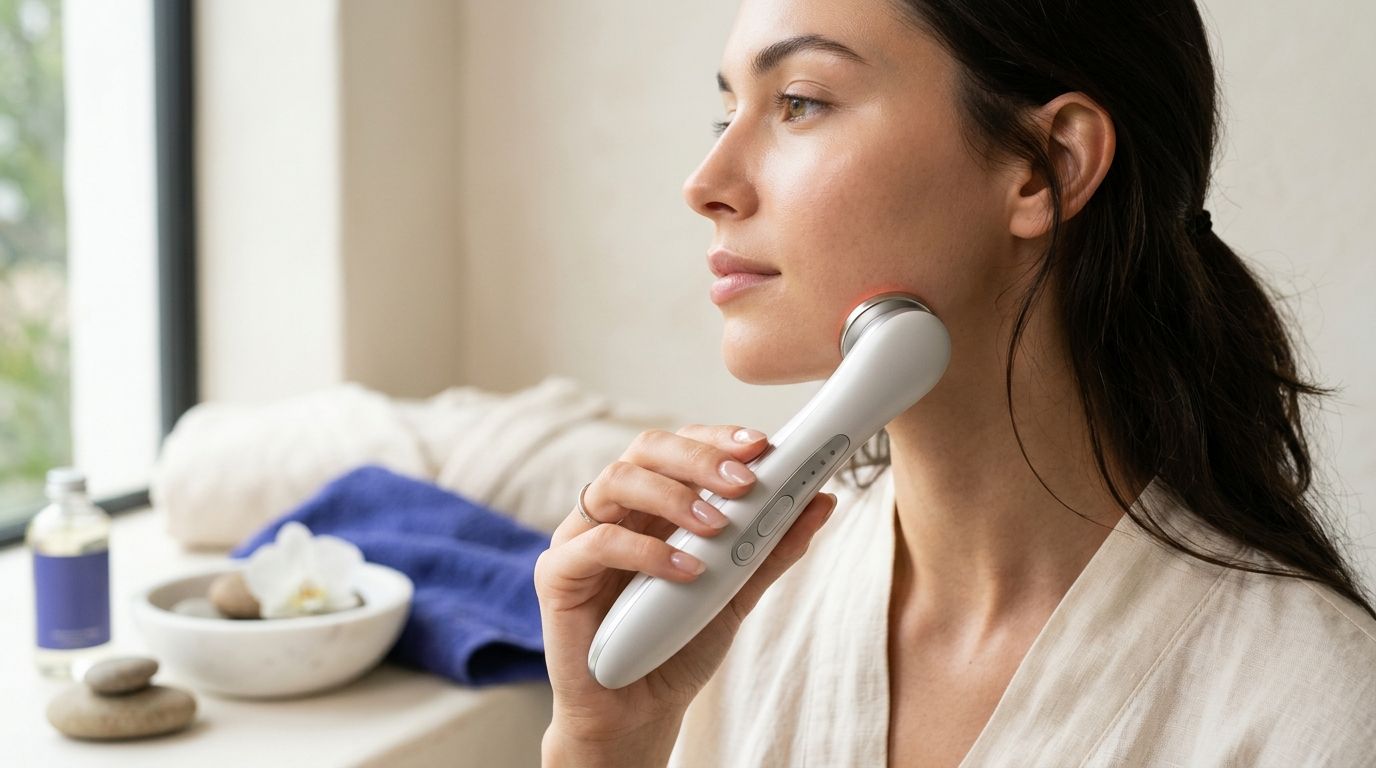
To import an RF Lifting Wand into New Zealand, distributors must clear two parallel compliance tracks: a free Medsafe WAND notification for the device's medical classification, and RCM certification covering electrical safety and Bluetooth wireless compliance — which also requires a separate RSM Licence to Supply for the Bluetooth 5.0 module. New Zealand does not require pre-market device approval or government test fees, but a New Zealand-based Sponsor must be in place before first supply. This guide covers both tracks, how existing CE and FCC certifications reduce your testing burden, required documents, and realistic timelines.
New Zealand's non-invasive aesthetic treatment market was valued at approximately USD 1.2 billion in 2024, according to Ken Research, with an annual growth rate of around 10%. The country sees over 210,000 aesthetic procedures performed annually across more than 550 registered clinics, with Auckland, Wellington, and Christchurch as the primary distribution hubs. The "rise of at-home aesthetic devices" is a documented emerging consumer trend as buyers seek clinic-level results at a lower cost.
Global context reinforces the opportunity. Per Market Business Insights, the global beauty devices market is projected to grow at a CAGR of 14.2% through 2032, with portable RF devices recording 55% adoption growth among users aged 35 to 50. New Zealand's compliance barrier is lower than Australia's, but the two-track process requires careful preparation. Missing either track can block a shipment at the point of sale.
NZ Market Entry: Dual Compliance Steps
Appoint New Zealand Sponsor
Engage a NZ-based legal entity as Medsafe Sponsor — the sole manufacturer-Medsafe liaison, responsible for WAND records and post-market vigilance obligations.
Submit WAND Notification
Sponsor files free WAND notification within 30 calendar days of first supply. CE certificate from an EU Notified Body serves as conformity evidence for Medsafe.
Complete IANZ Lab Testing
Test to AS/NZS 62368-1 (mandatory from January 1, 2025) plus AS/NZS 4268 and CISPR 32:2023 for Bluetooth 5.0. Existing CE and FCC reports reduce testing scope.
Register in EESS and Obtain RSM Licence
Register NZ or AU Responsible Supplier in EESS and obtain RSM Licence to Supply for the Bluetooth radio transmitter. EESS registration is valid for 5 years.
Affix RCM Mark and Begin Supply
Apply permanent RCM mark (minimum 3mm, laser-engraved) on product body with EESS code on labeling. Both compliance tracks must be complete before first supply.
RF Lifting Wands with Bluetooth connectivity must satisfy two separate regulatory authorities before first legal supply in New Zealand:
Track 1 — Medsafe: handles the device's medical classification under the Medicines Act 1981 and the Medicines (Database for Medical Devices) Regulations 2005. The process is WAND notification — not a registration, licence, or approval requiring government review.
Track 2 — WorkSafe NZ and RSM: handles electrical safety, electromagnetic compatibility (EMC), and radio frequency compliance under the RCM (Regulatory Compliance Mark) framework. The Bluetooth 5.0 module separately triggers a Radio Spectrum Management (RSM) Licence to Supply requirement.
Missing either track means non-compliance. Most existing regulatory guides for this product category cover Medsafe or RCM — rarely both in a single source. This article covers all three compliance requirements: Medsafe WAND, RCM, and RSM Licence to Supply.
New Zealand does not require pre-market device approval, a registration certificate, or a government technical review fee, according to Medsafe. Market access runs through WAND notification.
Appoint a New Zealand-based Sponsor. Per Medsafe, foreign manufacturers cannot interact directly with Medsafe. You must appoint a Sponsor — a legal entity based in New Zealand — who acts as the sole liaison between the manufacturer and Medsafe, holds post-market vigilance responsibility, and must update WAND records within 10 working days of any changes to device information.
Submit WAND notification within 30 calendar days of first supply. The notification is free. There are no ongoing Medsafe device fees. Your Sponsor submits through the WAND portal, attaching conformity documentation as evidence.
Accepted conformity evidence. According to MedEnvoy Global, Medsafe accepts evidence from five reference jurisdictions: CE certificates from EU Notified Bodies, FDA 510(k)/PMA clearance, TGA (Australia) ARTG inclusion, Health Canada Medical Device Licences, and Japan PMDA Shonin approvals. Any one of these five qualifies. For a Korean RF device with CE marking from a European Notified Body, that certificate covers the Medsafe conformity requirement directly — no additional NZ government clinical review is needed.
The Trans-Tasman Mutual Recognition Arrangement (TTMRA) between Australia and New Zealand means that a product legally supplied in Australia can often be recognised for NZ supply, per MedEnvoy Global. If the RF Lifting Wand is already listed on Australia's Therapeutic Goods Register (ARTG), this can simplify the NZ Medsafe process.
However, WAND notification may still apply depending on the device category, and not all products benefit uniformly from TTMRA. Confirm with your NZ Sponsor before treating ARTG status as a complete NZ compliance pass.
The RF Lifting Wand is a rechargeable electronic device with Bluetooth 5.0 app connectivity. That places it in scope for two separate requirements under New Zealand's electrical and radio compliance framework.
RCM (Regulatory Compliance Mark). Per WorkSafe New Zealand, all electrical and electronic products supplied in New Zealand must carry the RCM mark, which covers electrical safety, EMC, and radio frequency compliance. The mandatory electrical safety standard from January 1, 2025 is AS/NZS 62368-1, per Radio Spectrum Management (RSM) New Zealand. Test reports based on the previous AS/NZS 60950 standard were no longer valid as of December 31, 2025.
For RCM, the process requires:
RSM Licence to Supply. Because the device includes Bluetooth 5.0, it is classified as a radio transmitting product under New Zealand law. Per RSM New Zealand, suppliers must obtain an RSM Licence to Supply, comply with the Radiocommunications Regulations (Radio Standards) Notice 2025, and display a compliance label. Bluetooth devices operating in the 2.4 GHz band must meet AS/NZS 4268 and AS/NZS CISPR 32:2023.
Per Blue Asia Labs, smart devices with Bluetooth app connectivity are also subject to cybersecurity assessment documentation requirements from 2026 onward. If the app-based skin analysis is a selling point for the device, build this documentation step into your compliance timeline.
The RF Lifting Wand holds KC, CE, FCC, and RoHS certifications. Here is how each maps to the NZ framework:
| Existing Certificate | Application in New Zealand |
|---|---|
| CE (EU Notified Body) | Medsafe WAND conformity evidence — accepted directly by Medsafe |
| FCC (USA — Bluetooth RF) | Reduces IANZ lab testing scope for the Bluetooth RF module |
| KC (Korea) | Not a Medsafe reference jurisdiction; useful as supplementary documentation |
| RoHS | No separate NZ RoHS certificate required |
You will still need a NZ-specific AS/NZS 62368-1 electrical safety test from an IANZ-accredited laboratory, plus Bluetooth-specific test reports for AS/NZS 4268 and CISPR 32:2023. The FCC and CE reports reduce what the lab needs to test from scratch, which shortens both timeline and cost.
Pre-Launch Document Checklist for New Zealand
Before first supply in New Zealand, prepare and verify these documents:
Per Blue Asia Labs, RCM certification for a medium-risk home-use electronic device with Bluetooth takes approximately 3 to 4 weeks under normal conditions. During the September to November peak season, timelines extend by around 50% — plan for 5 to 6 weeks if your launch falls in that period.
WAND notification is typically completed within a few days once the Sponsor has conformity documentation ready. The practical bottleneck in most cases is the IANZ lab testing and EESS registration, not the Medsafe WAND step.
EESS supplier registration is valid for 5 years and requires annual fee renewals. The RSM Licence to Supply also carries its own renewal obligations. Factor these into your ongoing compliance budget.
New Zealand's Ministry of Health plans to introduce the Medical Products Bill to Parliament in 2026. The bill would replace the Medicines Act 1981 and bring NZ device regulation closer to EU MDR standards. According to the Ministry of Health, the new regime is not expected to take effect until approximately 2030.
Current WAND-based notification obligations remain fully in force until the new law is enacted. There is no regulatory reason to delay market entry while waiting for the bill. Entering now also means your Sponsor relationship, EESS registration, and RSM Licence are already established before the regulatory transition.
New Zealand's compliance path for an RF Lifting Wand with Bluetooth 5.0 is manageable once you understand the dual-track structure. The core documents you likely already hold — CE and FCC certifications — cover the most significant portions of both the Medsafe and RCM requirements.
The remaining tasks — AS/NZS 62368-1 testing, EESS registration, RSM Licence to Supply, and Sponsor appointment — are procedural steps with predictable timelines. With the right NZ Sponsor and an IANZ-accredited lab, a distributor carrying CE and FCC documentation can realistically complete both compliance tracks and be ready for first supply within 6 to 8 weeks of project start.
If you are evaluating Korean RF Lifting Wands for the New Zealand market and want guidance on documentation packages, test lab coordination, or Sponsor referrals, our team supports importers through the full compliance and sourcing process.
This guide is for informational and reference purposes only. Regulatory requirements are subject to change, and importers should consult a qualified New Zealand regulatory professional or licensed Medsafe Sponsor before first supply. Always verify current standards directly with Medsafe, Radio Spectrum Management (RSM), and WorkSafe New Zealand.
Yes — WAND notification is required before first supply. It is a notification, not a registration or approval. Your New Zealand Sponsor submits it free of charge within 30 calendar days of assuming the Sponsor role. A CE certificate from a European Notified Body qualifies as conformity evidence; no NZ government technical review is needed.
Yes. Per Radio Spectrum Management (RSM) New Zealand, any supplier of a radio transmitting product — including Bluetooth devices — must obtain an RSM Licence to Supply and comply with the Radiocommunications Regulations (Radio Standards) Notice 2025. This is a separate step from RCM certification and must be completed before first supply.
Yes. According to MedEnvoy Global, Medsafe accepts CE certificates from EU Notified Bodies as direct conformity evidence for WAND notification. The other accepted sources are FDA 510(k)/PMA clearance, TGA ARTG inclusion, Health Canada Medical Device Licences, and Japan PMDA Shonin approvals — any one of these five suffices.
Per Blue Asia Labs, RCM certification for this device category takes approximately 3 to 4 weeks under normal conditions — up to 50% longer during September to November peak season. Existing CE and FCC test reports reduce the scope at the IANZ-accredited lab, but a New Zealand-specific AS/NZS 62368-1 test report is still required.
Not before 2030. According to New Zealand's Ministry of Health, the Medical Products Bill will be introduced to Parliament in 2026 but the new regime will not take effect until approximately 2030. Current WAND notification obligations remain fully in force, so there is no regulatory reason to delay market entry.
Comments
Post a Comment