Polymer Cement in Peru: How Seismic Code E.030 and Reconstruction Spending Drive Repair Mortar Demand
Polymer Cement in Peru: How Seismic Code E.030 and Reconstruction Spending Drive Repair Mortar Demand
- Get link
- X
- Other Apps
Verification Checklist · Kuwait · Excavator
Kuwait's well-known 10-year age limit on used car imports does not reach excavators, per the U.S. Commercial Service's official restricted-imports list — and neither does the country's KUCAS conformity scheme. The paperwork consistency, import-license eligibility, and hour-meter verification steps below are what actually decide whether a used excavator clears Shuwaikh or Shuaiba without a hold.
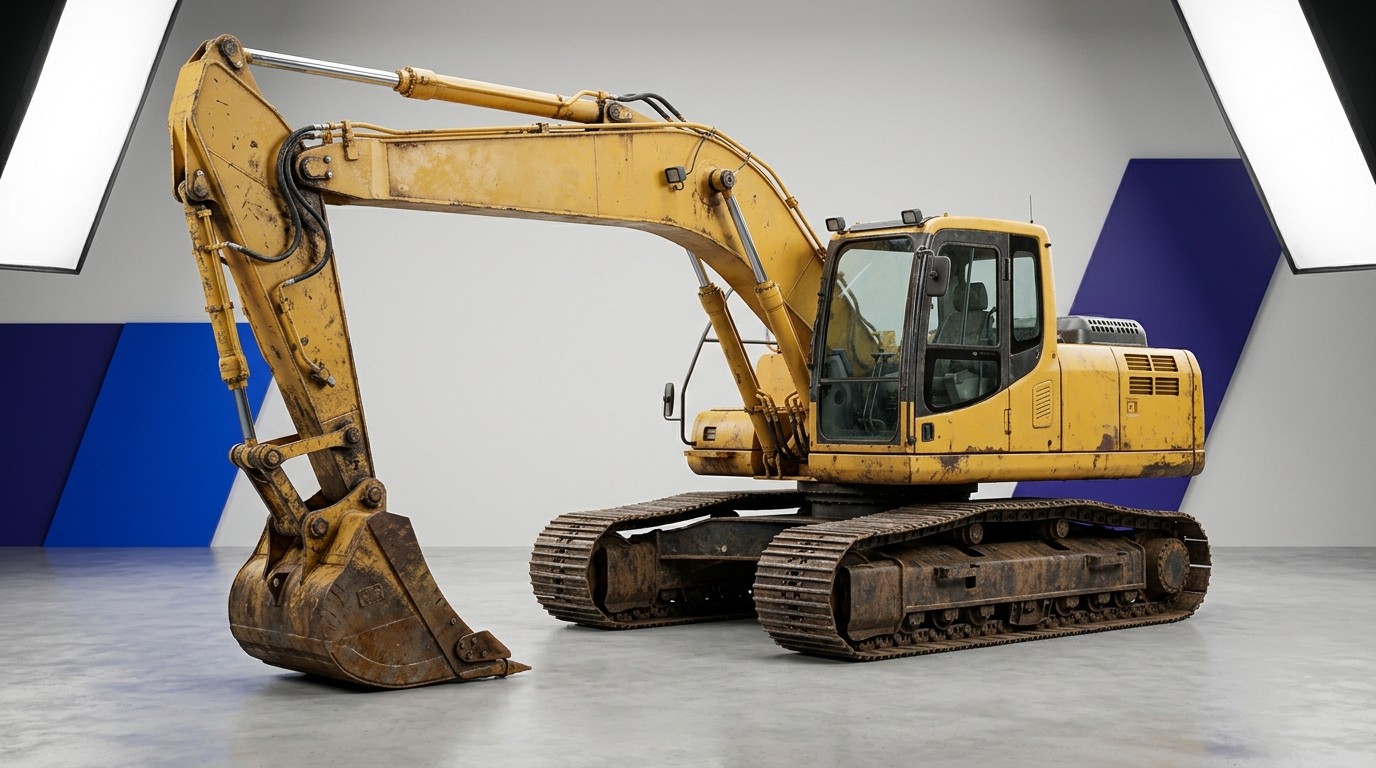
Kuwait's well-known 10-year age limit on used car imports does not extend to excavators or other earthmoving machinery — that restriction names automobiles specifically, and Kuwait's KUCAS conformity scheme does not list construction equipment among its regulated products either. The checks that actually matter before a used excavator ships are document consistency across your invoice, certificate of origin, and bill of lading, the correct HS 8429.52 classification, and independent hour-meter verification before you wire a deposit. This guide walks through each one with the source behind it.
Buyers researching Kuwait's import rules often run into the country's well-publicized restriction on cars older than ten years and assume the same clock applies to any used heavy equipment, excavators included. It doesn't, and mixing up the two rules is one of the most common early mistakes in Kuwait excavator sourcing.
Per the U.S. Commercial Service's official Kuwait Prohibited and Restricted Imports guide, the only used-goods age restriction named on the list covers automobiles more than ten years old and used medical equipment. Construction and earthmoving machinery is not listed as a separate restricted category.
The other rule buyers sometimes confuse with an age or condition mandate is Kuwait's Conformity Assurance Scheme (KUCAS), which requires a Technical Inspection Report (TIR) and Technical Evaluation Report (TER) for "regulated products." Per TÜV Rheinland's approved KUCAS exporter guideline, the scheme's documented scope is automotive, chemical, children's toys, and household or commercial electrical and gas appliances, plus a general "others" catch-all. Excavators fall under HS heading 8429 — mechanical shovels and excavators with a 360-degree revolving superstructure — not the motor-vehicle headings that trigger KUCAS's automotive scope. Neither the car-age rule nor a KUCAS TIR/TER is a documented requirement for a used excavator shipment as it currently stands.
Which Kuwait Import Rule Actually Applies to Your Shipment?
What kind of used equipment are you shipping to Kuwait?
That doesn't mean a used excavator clears Kuwaiti customs with zero scrutiny. It means the real risk points sit somewhere else, starting with the paperwork itself.
Standard Kuwaiti customs clearance for general commercial cargo requires a commercial invoice, a certificate of origin, a packing list, and a bill of lading or airway bill, per the U.S. Commercial Service's import requirements and documentation guide. None of these are excavator-specific — they apply to essentially any container entering the country.
The risk is that these four documents must describe the same machine consistently: the same model, the same manufacture year, and the same serial number, matching each other and the nameplate on the actual unit. This is ordinary customs consistency checking, not a special heavy-equipment law, but it's exactly the kind of mismatch that can stall a container at Shuwaikh or Shuaiba port — sometimes because an exporter, chasing the nonexistent 10-year rule described above, rounds a manufacture year up or down on one document without updating the rest.
Documentation Consistency Checklist
Once a container reaches port, demurrage and detention charges begin accruing on a schedule set by the carrier's own tariff, not by a fixed Kuwaiti government rule, and those free-time windows change periodically. Confirm the current free-time allowance with your forwarder before the vessel departs, so the buyer's customs broker has a real deadline to clear the shipment against rather than an assumed one.
Getting the paperwork internally consistent solves one risk; the second is making sure the right party on the Kuwaiti side is legally positioned to import the machine at all. Import licenses for industrial machinery and spare parts in Kuwait are issued by the Public Authority for Industry, and per the U.S. Commercial Service, importers subject to this licensing must be Kuwaiti citizens or Kuwait-based brokers registered with the Ministry of Commerce and Industry. In practice, a foreign buyer usually cannot hold this license directly and needs a qualifying local importer of record lined up before the machine ships. Once secured, the license is valid for one year, renewable, and covers multiple shipments rather than requiring a fresh application every time.
On classification, self-propelled excavators with a 360-degree revolving superstructure fall under HS/HSN subheading 8429.52, within heading 8429 alongside bulldozers, graders, scrapers, and road rollers. Kuwait applies the GCC Single Customs Tariff, approved in April 2003, which sets a standard 5% duty on the CIF value of most goods; the exemption list covers roughly 417 basic foodstuff, agricultural, medical, and pharmaceutical items, and heavy machinery is not on it. Treat 5% as the general default rather than a confirmed line-item rate — ask your broker to verify the exact 8429.52 rate through Kuwait's official HS lookup service before you finalize a landed-cost estimate.
Import License and HS Classification Path
Confirm your importer of record
Must be a Kuwaiti citizen or a Kuwait-based broker registered with the Ministry of Commerce and Industry — a foreign buyer typically cannot hold this license directly.
Secure the industrial-machinery import license
Issued by Kuwait's Public Authority for Industry, valid for one year, renewable, and usable across multiple shipments.
Declare under HS 8429.52
The subheading for self-propelled excavators, mechanical shovels, and shovel loaders with a 360-degree revolving superstructure.
Apply the 5% GCC default duty, then confirm the line-item rate
5% of CIF value is the general GCC Single Customs Tariff rate; confirm the exact 8429.52 line-item rate with your broker via Kuwait's official HS lookup service.
No Kuwaiti authority inspects or certifies the mechanical condition of a used excavator before import — which means this step is entirely on the buyer, and skipping it is the costly mistake, not missing a certificate that doesn't apply to this product category in the first place.
For Korea-sourced machines, condition verification tools exist independent of any customs requirement. Caterpillar dealers can issue a Product Status Report (PSR), Komatsu machines log usage through the Komtrax telematics system, and Volvo Construction Equipment machines report operating hours, fuel consumption, and operator behavior through the MATRIS system. Ask the seller for the actual OEM report tied to the specific chassis or engine serial number on the unit you're buying, not a verbal hour count or a generic printout that could belong to any machine of the same model.
Condition Verification Checklist Before Wiring a Deposit
Cross-check that serial number against the nameplate and against every customs document in your paperwork stack. A mismatch here is a red flag on its own, independent of any regulatory rule — and catching it before the deposit clears is far cheaper than catching it after the container reaches Shuwaikh or Shuaiba.
The rule most buyers worry about — Kuwait's 10-year age limit — turns out not to govern excavators at all, and neither does the KUCAS conformity scheme most exporters have never heard of. The checks that actually decide whether a used excavator clears Shuwaikh or Shuaiba without a hold are more mundane: paperwork that agrees with itself, a legally qualified importer of record, the correct HS 8429.52 classification, and an OEM condition report you verify before the deposit leaves your account.
Last updated: 2026-07. Kuwait's customs, licensing, and conformity requirements are subject to change. This guide is for informational purposes only — verify current requirements directly with a licensed Kuwaiti customs broker and Kuwait's Public Authority for Industry before shipping.
No. Per the U.S. Commercial Service's official Kuwait Prohibited and Restricted Imports list, the only explicitly named used-goods age restriction covers automobiles more than ten years old and used medical equipment. Construction and earthmoving machinery, including excavators, does not appear as a separate line item, and excavators are classified under HS heading 8429 rather than the motor-vehicle headings the car rule targets.
Based on the documented scope, no. TÜV Rheinland's official KUCAS exporter guideline lists the scheme's regulated product categories as automotive, chemical, children's toys, and household or commercial electrical/gas appliances, plus a general "others" catch-all. Construction and earthmoving machinery is not named in that scope, so a used excavator does not fall under the mandatory Technical Inspection Report (TIR) / Technical Evaluation Report (TER) requirement as currently documented.
Ask the seller for the machine's own OEM telematics or status report rather than a verbal hour count. Caterpillar dealers can issue a Product Status Report (PSR), Komatsu machines log usage through the Komtrax system, and Volvo Construction Equipment machines report operating hours through MATRIS — all tied to the specific chassis or engine serial number, so you can verify the report matches the exact unit you're buying.
Import licenses for industrial machinery and spare parts in Kuwait are issued by the Public Authority for Industry, and importers subject to this licensing must be Kuwaiti citizens or Kuwait-based brokers registered with the Ministry of Commerce and Industry. A foreign buyer generally cannot hold this license directly and needs a qualifying local importer of record lined up before the machine ships. The license itself is valid for one year, renewable, and covers multiple shipments once secured.
HS 8429.52, the subheading under heading 8429 for self-propelled mechanical shovels, excavators, and shovel loaders with a 360-degree revolving superstructure. The general GCC Single Customs Tariff default duty is 5% of CIF value, since heavy machinery is not on Kuwait's exempted-goods list — but confirm the exact line-item rate for 8429.52 with your broker through Kuwait's official HS lookup service before finalizing your landed-cost estimate.
Comments
Post a Comment